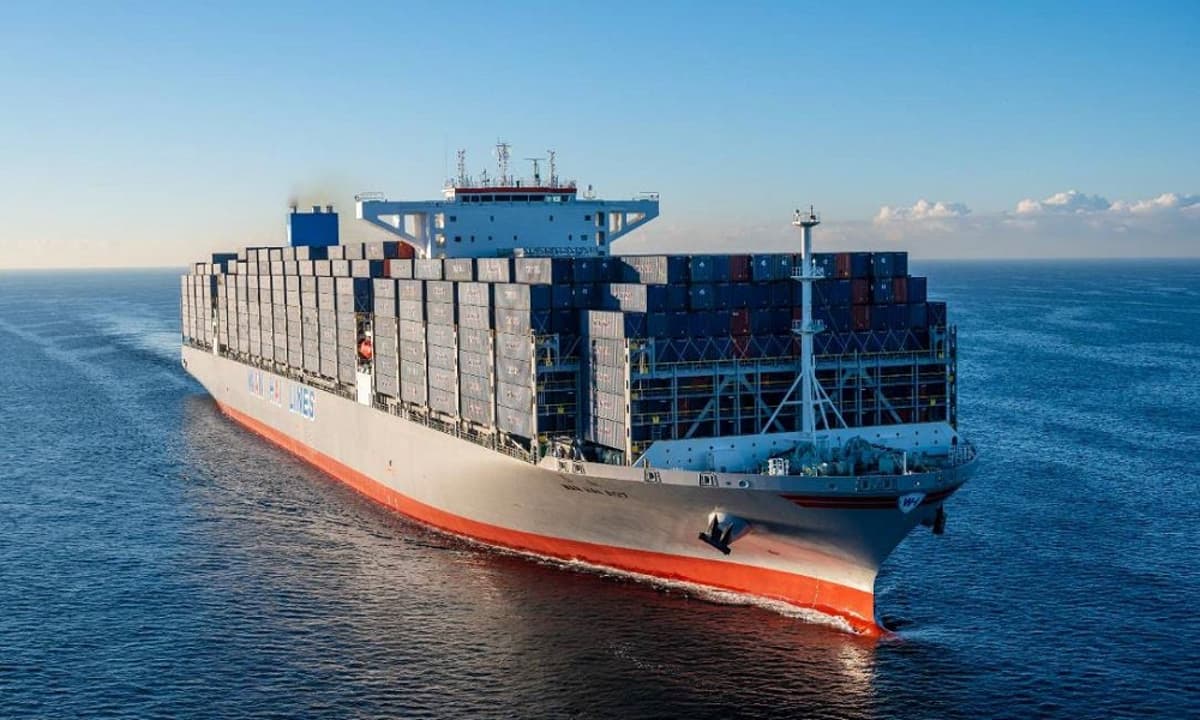
Wan Hai Deepens Newbuild Push with LNG and Methanol-Ready Boxships
•March 10, 2026
0
Why It Matters
The orders accelerate Wan Hai’s fleet modernization and decarbonisation, strengthening its position in the fast‑growing intra‑Asia market. They also signal confidence in alternative‑fuel vessels despite higher capital costs.
Key Takeaways
- •Six new builds: four LNG, two methanol-ready.
- •LNG ships cost $75‑82 million each.
- •Methanol-ready vessels priced $102‑112 million each.
- •Total new orders value exceeds $500 million.
- •Over 40 vessels now on order, boosting capacity.
Pulse Analysis
Wan Hai Lines’ latest procurement underscores a broader industry shift toward lower‑emission propulsion. LNG dual‑fuel and methanol‑ready containers address tightening IMO regulations and regional ports’ growing demand for cleaner fuels. By targeting intra‑Asian routes, the carrier taps a market segment that values speed, reliability, and environmental compliance, positioning itself ahead of rivals still reliant on conventional bunker fuel vessels.
Financially, the $500‑plus million commitment represents a sizable capital outlay, but it also diversifies Wan Hai’s asset base. The higher per‑unit cost of methanol‑ready ships reflects emerging technology premiums, yet the long‑term fuel‑cost savings and potential carbon‑credit earnings can improve margins. Coupled with the sale of three older 5,600‑teu ships, the moves free up cash and streamline the fleet, enhancing balance‑sheet resilience amid volatile freight rates.
Looking ahead, delivery schedules extending to 2030 align with the carrier’s strategic timeline for capacity growth. As Asian trade volumes rebound, the expanded 6,000‑teu and 9,200‑teu fleet will bolster service frequency and market share. Moreover, the sizable orderbook—spanning 8,000‑teu and 16,000‑teu projects in South Korea—signals Wan Hai’s commitment to scale and technology adoption, setting a benchmark for peers navigating the transition to greener shipping.
Wan Hai deepens newbuild push with LNG and methanol-ready boxships
0
Comments
Want to join the conversation?
Loading comments...