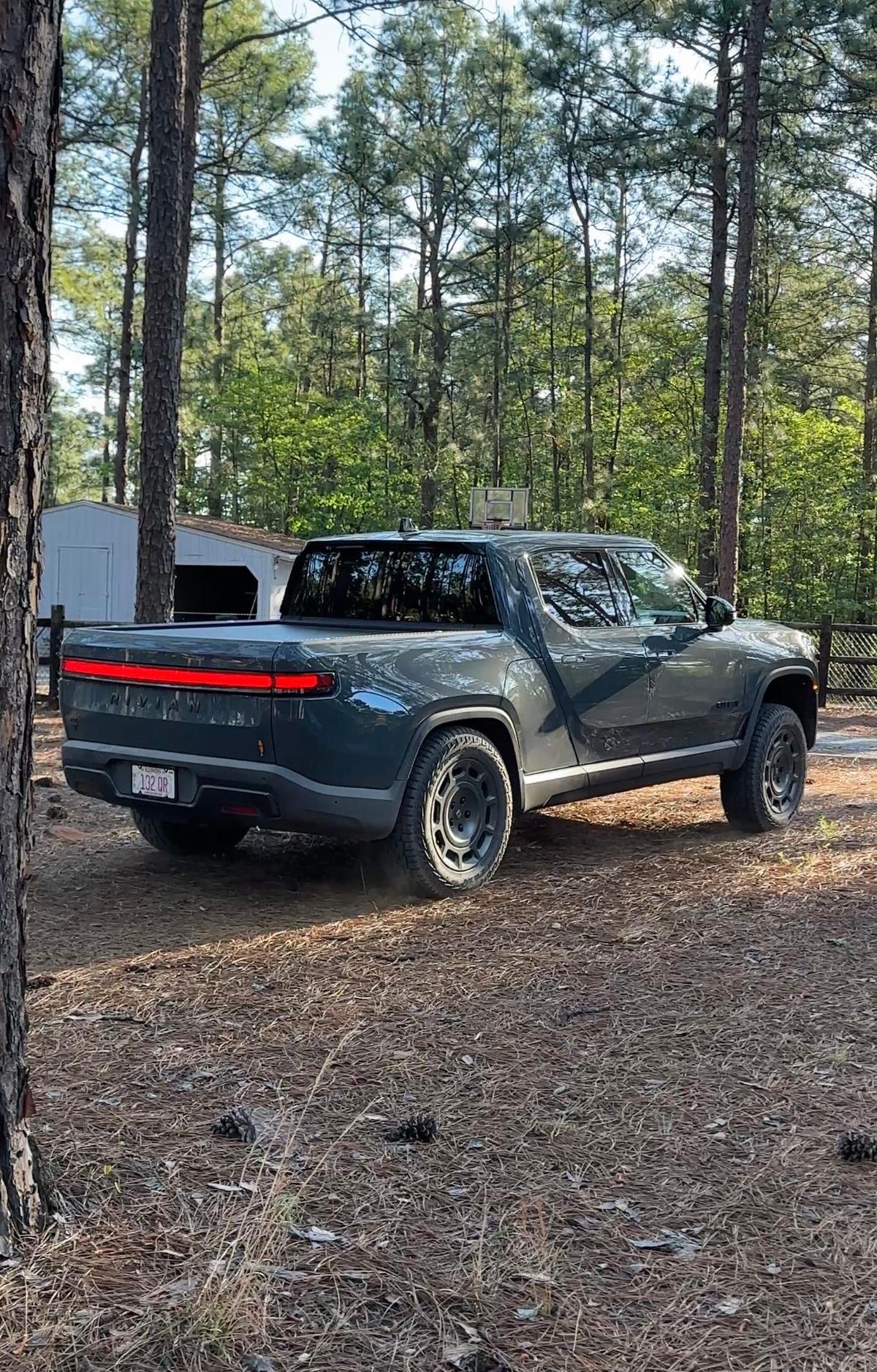
We Figured Out How to Trick a Rivian R1T Into Carolina Squatting
Companies Mentioned
Why It Matters
The hack demonstrates how adjustable EV suspensions can be weaponized for non‑standard uses, prompting manufacturers and regulators to consider safety and compliance implications. It also underscores a growing aftermarket culture around electric trucks.
Key Takeaways
- •Rivian R1T Quad Max’s Camp mode levels a truck on uneven ground
- •Users exploit Camp mode to create a “Carolina squat” by front‑jacking
- •The squat mimics Baja prerunner look, often illegal in NC
- •Air‑spring system lets owners quickly revert to normal ride
- •Car and Driver highlights creative, off‑label EV suspension hacks
Pulse Analysis
The Rivian R1T Quad Max’s air‑suspension system is a showcase of modern EV engineering, offering drivers a menu of chassis adjustments through the RAD Tuner. Camp mode, originally designed to level the vehicle for overnight stays, uses hydraulic air springs to raise or lower each axle independently. This capability gives owners a level platform for tents, but it also provides the mechanical freedom to manipulate the truck’s stance in ways the manufacturer never intended. The recent Car and Driver piece illustrates how a simple software selection can transform a high‑tech electric pickup into a platform for the controversial Carolina squat, a stunt that mimics a heavily loaded, rear‑heavy truck.
The Carolina squat has become a niche subculture among off‑road enthusiasts, especially in North Carolina where law enforcement has begun targeting the practice. By leveraging the R1T’s leveling function, drivers can quickly raise the front and lower the rear, creating the illusion of a heavily loaded bed without actually adding weight. This not only skirts vehicle height regulations but also raises safety concerns, as the altered center of gravity can affect handling and braking. Rivian’s ability to revert to a normal ride profile with a few taps mitigates long‑term wear, yet the ease of execution invites more drivers to experiment, potentially prompting stricter oversight from both manufacturers and state agencies.
From a market perspective, the incident highlights a broader trend: electric trucks are being embraced not just for utility but as platforms for personalization and performance tuning. As OEMs roll out more sophisticated suspension and software controls, the line between factory‑approved features and aftermarket modifications blurs. Companies may need to embed safeguards or usage warnings within their vehicle software to prevent unintended applications that could attract regulatory penalties. Meanwhile, enthusiasts see these tools as a playground for innovation, suggesting that future EV designs will need to balance flexibility with compliance to satisfy both tech‑savvy consumers and safety regulators.
We Figured Out How to Trick a Rivian R1T into Carolina Squatting
Comments
Want to join the conversation?
Loading comments...