WEBINAR: Want to Scale ITS ? Edge AI Can Help
•March 6, 2026
0
Why It Matters
Edge AI offers a cost‑effective path to modernize ITS without replacing legacy infrastructure, directly impacting city budgets and service quality. Deploying the right edge hardware accelerates real‑time decision making, enhancing safety and efficiency in transportation networks.
Key Takeaways
- •Edge AI cuts latency for real‑time traffic decisions
- •OnLogic provides rugged, fan‑less edge compute platforms
- •Intel processors enable low‑power AI inference at the edge
- •Asset maximization extends legacy sensor lifespan
Pulse Analysis
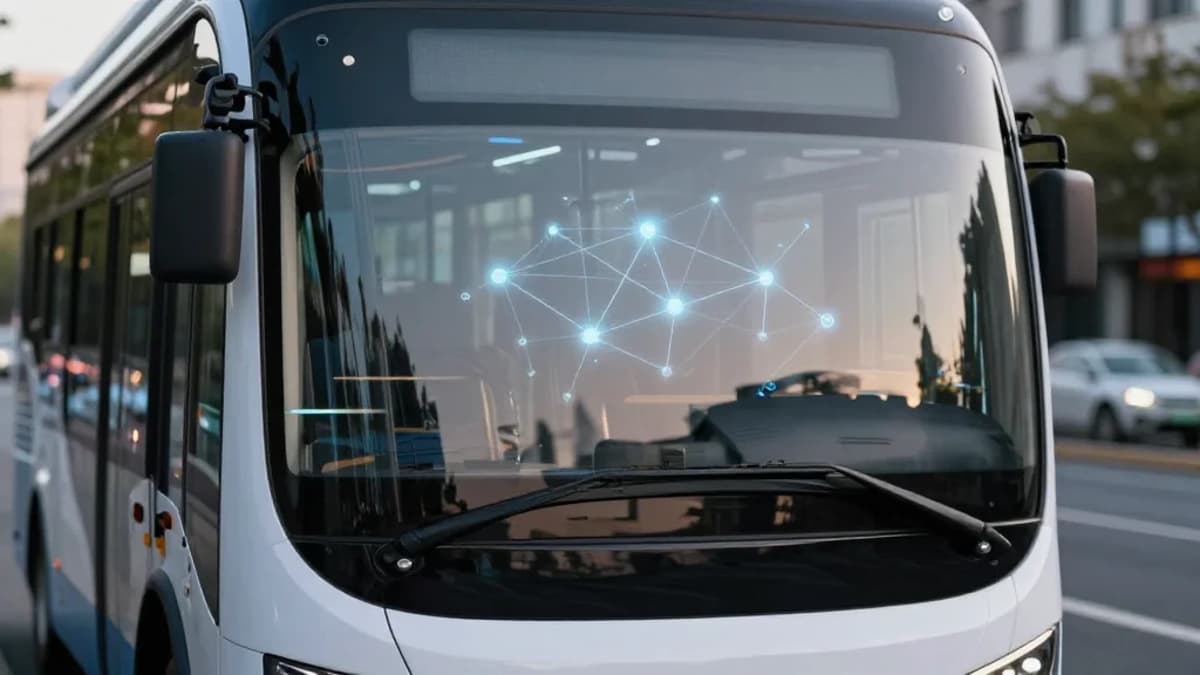
Intelligent transportation systems are under pressure to handle growing data volumes from connected vehicles, sensors, and infrastructure. Traditional cloud‑centric models introduce latency and bandwidth constraints that can hinder real‑time decision making. Edge artificial intelligence—processing data at the source—offers a way to offload compute, deliver sub‑second responses, and keep sensitive data local. This shift also reduces dependence on centralized data centers, lowering operational expenditures. As cities adopt autonomous buses, dynamic lane control, and predictive maintenance, edge AI becomes a strategic layer for scaling ITS without overhauling legacy networks.
The webinar highlighted two hardware pillars essential for edge‑ITS deployments. OnLogic’s rugged, fan‑less platforms provide industrial‑grade reliability, extended temperature ranges, and modular I/O that align with roadside cabinets and vehicle‑mounted units. Intel’s Xeon‑D and Movidius processors deliver AI inference at the edge while maintaining low power envelopes, enabling existing sensor arrays to be repurposed rather than replaced. The modular design simplifies field upgrades, allowing firmware and AI models to be refreshed remotely. By matching the right compute to the asset, operators can extract additional value from cameras, LIDAR, and V2X modules without costly infrastructure upgrades.
For municipalities and private operators, the business case hinges on cost avoidance and service improvement. Edge AI can extend the lifespan of legacy ITS hardware by adding analytics capabilities, reducing the need for frequent sensor replacements. Moreover, localized processing improves cybersecurity by keeping raw video and telemetry within the edge node. Early adopters report up to 30% faster incident response times, translating into measurable safety gains. As standards such as ISO 21217 evolve, vendors that combine robust edge hardware with scalable AI frameworks will capture the next wave of smart‑city contracts, positioning edge AI as a cornerstone of future transportation ecosystems.
WEBINAR: Want to scale ITS ? Edge AI can help
0
Comments
Want to join the conversation?
Loading comments...