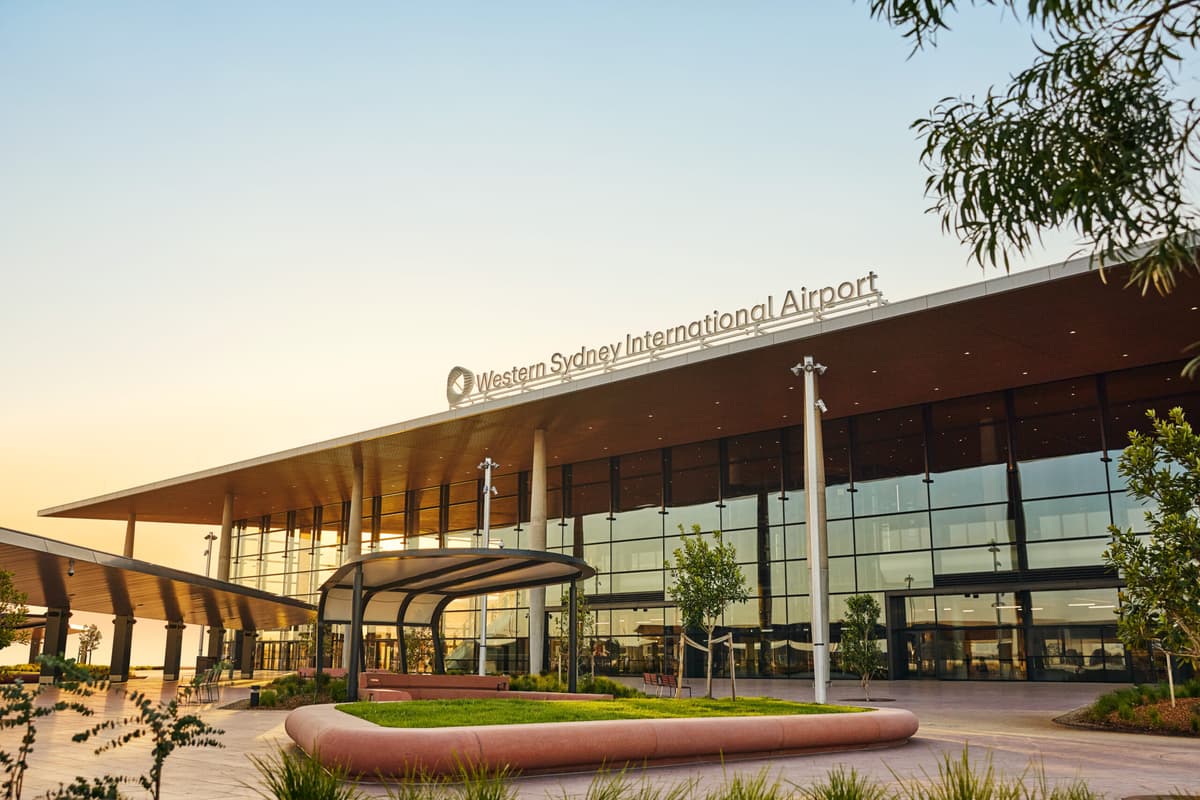
Western Sydney International Airport Publishes 2025–45 Master Plan
Why It Matters
The roadmap positions WSI as a catalyst for regional economic expansion and a competitive alternative to Sydney’s existing airports, while embedding long‑term environmental and infrastructure planning.
Key Takeaways
- •Master Plan outlines 2025‑45 growth, infrastructure, and sustainability roadmap.
- •Projected 10 million annual passengers by 2030s creates 8,500 jobs.
- •151 public submissions shaped the plan during June‑July 2025 consultation.
- •Airport will operate 24‑hour, serving domestic, international, and freight traffic.
- •Land use, transport links, and utilities detailed for long‑term precinct development.
Pulse Analysis
Western Sydney International Airport’s first Master Plan signals a strategic shift in Australia’s aviation landscape. By mapping out a two‑decade horizon, the plan not only satisfies the Airports Act’s five‑year update mandate but also provides a clear blueprint for integrating air travel, cargo logistics, and ancillary services. The document’s four pillars—context, forecasting, sustainability, and forward planning—offer investors and policymakers a granular view of how the airport will evolve from a construction project into a fully operational, 24‑hour gateway.
Economically, the Master Plan projects a passenger throughput of 10 million by the 2030s, a volume that could generate roughly 8,500 jobs within the airport precinct. This employment potential spans construction, airline operations, retail, and ancillary services, promising a substantial boost to the Western Sydney labor market. The influx of travelers and freight is also expected to stimulate surrounding commercial zones, attracting businesses that rely on efficient logistics and international connectivity. Such growth aligns with broader government initiatives aimed at decentralising economic activity from central Sydney.
Sustainability and connectivity are woven into the plan’s core. Environmental objectives target carbon‑neutral operations through renewable energy adoption and advanced waste management. Simultaneously, the plan outlines extensive transport linkages, including rail, road, and utility upgrades, ensuring seamless access for passengers and cargo alike. By addressing land‑use planning and non‑aviation development, the airport positions itself as a mixed‑use precinct that can adapt to future market demands, reinforcing its role as a long‑term asset for both the region and the national aviation sector.
Western Sydney International Airport Publishes 2025–45 Master Plan
Comments
Want to join the conversation?
Loading comments...