What Are The Practical Limits Of Turbo Boost Pressure?
•March 8, 2026
0
Why It Matters
Understanding boost limits helps manufacturers balance performance with reliability, while tuners can avoid costly engine damage. It also guides aftermarket parts development and regulatory compliance.
Key Takeaways
- •Stock cars typically run 6–8 psi boost.
- •High‑performance engines can exceed 40 psi safely.
- •Material strength limits boost pressure more than turbo size.
- •Upgrading internals is required for extreme boost levels.
- •Wastegates prevent over‑boost and protect engine components.
Pulse Analysis
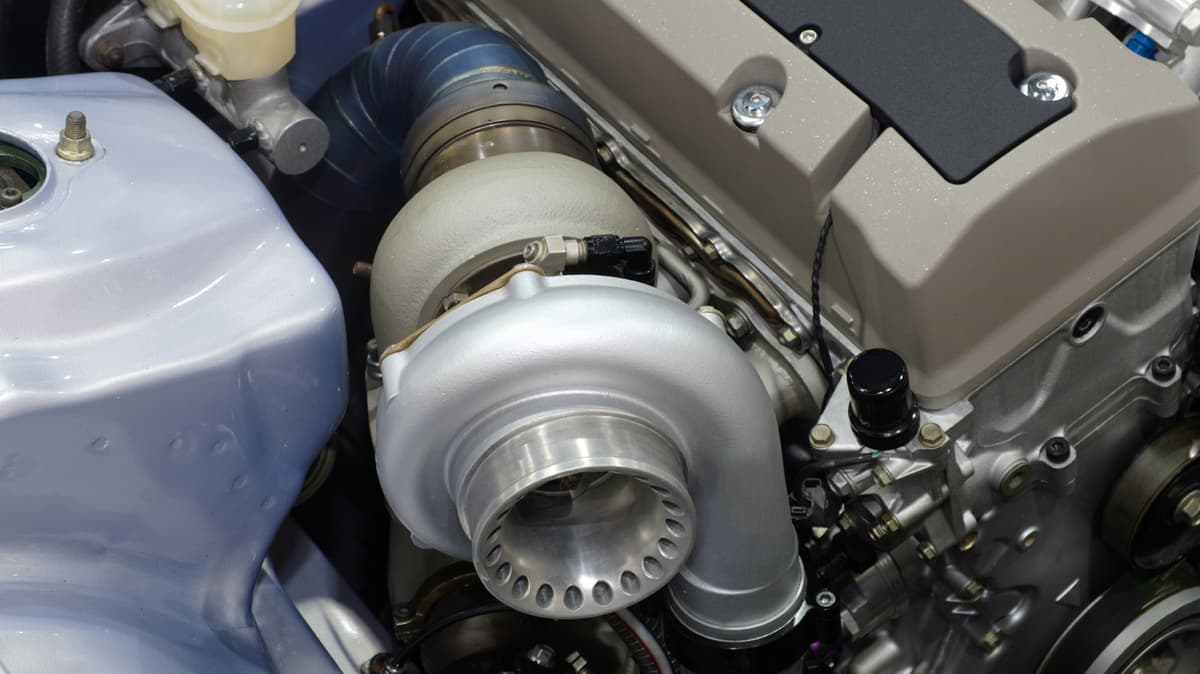
Turbocharging and supercharging both force more air into the combustion chamber, but turbos harvest exhaust energy, making them more efficient than belt‑driven superchargers. The resulting pressure—measured in psi or bar—directly translates to higher horsepower, a key selling point for performance‑focused brands. However, the boost advantage comes with a trade‑off: increased mechanical stress on pistons, rods, heads, and crankshafts. For OEMs, this means engineering a balance between power output and component durability, especially as emissions standards push for smaller, turbo‑charged engines.
Real‑world limits are dictated by material strength and design. A typical daily‑driver engine manages 6‑8 psi, while the Ferrari F80’s race‑derived V8 tolerates a staggering 55.5 psi, and the Bugatti Chiron’s quad‑turbo V16 runs around 40 psi. Historic Offenhauser units handled 30 psi, and some diesel trucks have been tuned beyond 180 psi with reinforced blocks. These examples illustrate that turbo size alone doesn’t guarantee higher boost; the engine’s internals must be engineered to survive the added cylinder pressures and heat.
For the aftermarket and tuning community, the practical ceiling of boost drives product development. Upgraded forged pistons, stronger connecting rods, and reinforced heads become prerequisites for anyone chasing double‑digit psi gains. Wastegate technology and electronic boost controllers now provide precise pressure management, protecting engines from over‑boost. Looking ahead, electric‑assist turbos and variable‑geometry designs promise higher boost with reduced lag, but they still rely on robust hardware. Understanding these limits helps manufacturers, tuners, and consumers make informed decisions that maximize performance while preserving engine longevity.
What Are The Practical Limits Of Turbo Boost Pressure?
0
Comments
Want to join the conversation?
Loading comments...