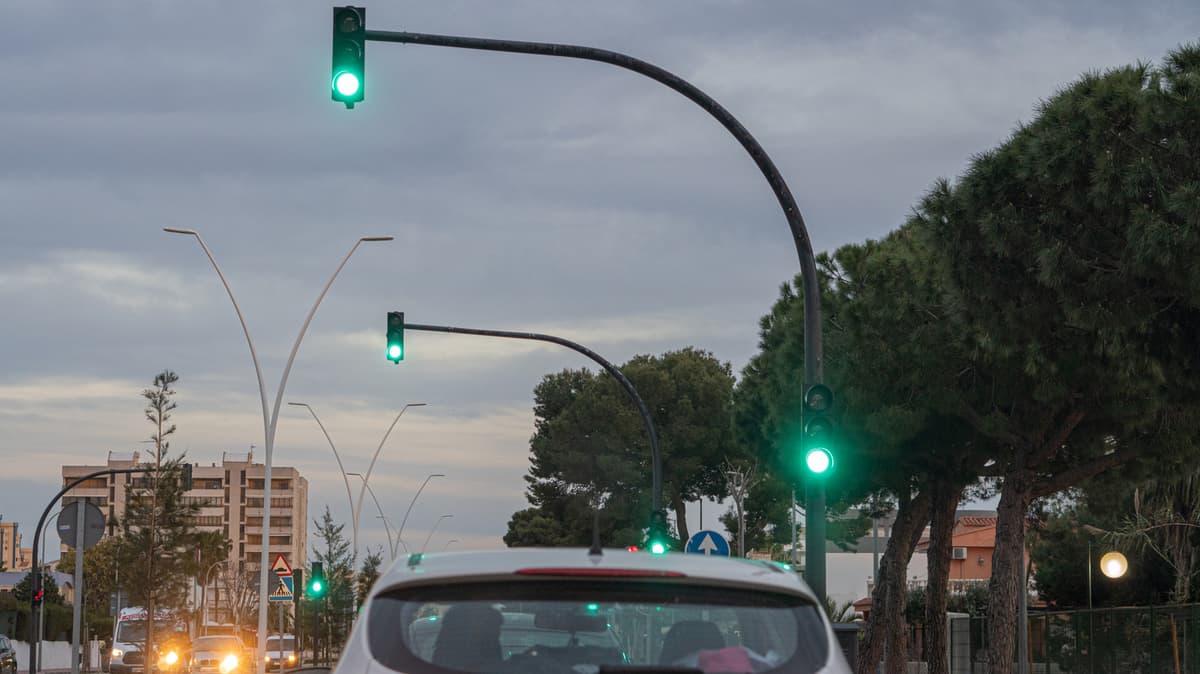
What Is The 'Green Wave' When It Comes To Traffic Lights?
Why It Matters
A green wave improves commuter efficiency and lowers greenhouse‑gas output, delivering economic and environmental gains for congested urban areas.
Key Takeaways
- •Green wave synchronizes lights to reduce stops on busy corridors
- •Improves traffic flow during peak commuting hours
- •Cuts vehicle idling, lowering greenhouse gas emissions
- •Often applied on one‑way streets with restricted turns
- •Cities may ban left or right turns to enhance wave efficiency
Pulse Analysis
The green wave concept dates back to early traffic‑engineering experiments, but modern implementations rely on precise timing algorithms and real‑time data feeds. By calculating average vehicle speeds and adjusting cycle lengths, traffic managers can create a corridor where a car traveling at the prescribed speed hits successive green lights. This coordination reduces the number of acceleration‑deceleration events, which not only speeds up trips but also diminishes wear on brakes and fuel consumption, delivering measurable cost savings for drivers and municipalities alike.
Beyond speed, the environmental impact of a green wave is significant. Idling engines emit carbon dioxide, nitrogen oxides, and particulate matter; eliminating frequent stops can cut local emissions by up to 15 percent in dense corridors. The smoother flow also lowers the risk of rear‑end collisions that often occur at sudden red lights, contributing to safer streets. Urban planners therefore view the green wave as a low‑cost, high‑return tool that aligns traffic efficiency with climate‑action goals, especially in cities with ambitious sustainability targets.
Implementing a green wave, however, presents challenges. It requires accurate traffic‑volume forecasts, robust communication between signal controllers, and often the temporary removal of turning movements that could disrupt the synchronized pattern. Emerging technologies such as connected‑vehicle data, AI‑driven adaptive signal control, and vehicle‑to‑infrastructure (V2I) communication promise to refine wave timing dynamically, responding to real‑time congestion. As smart‑city initiatives expand, the green wave could evolve from a static schedule to an adaptive, city‑wide network that continuously optimizes flow, further amplifying its economic and environmental benefits.
What Is The 'Green Wave' When It Comes To Traffic Lights?
Comments
Want to join the conversation?
Loading comments...