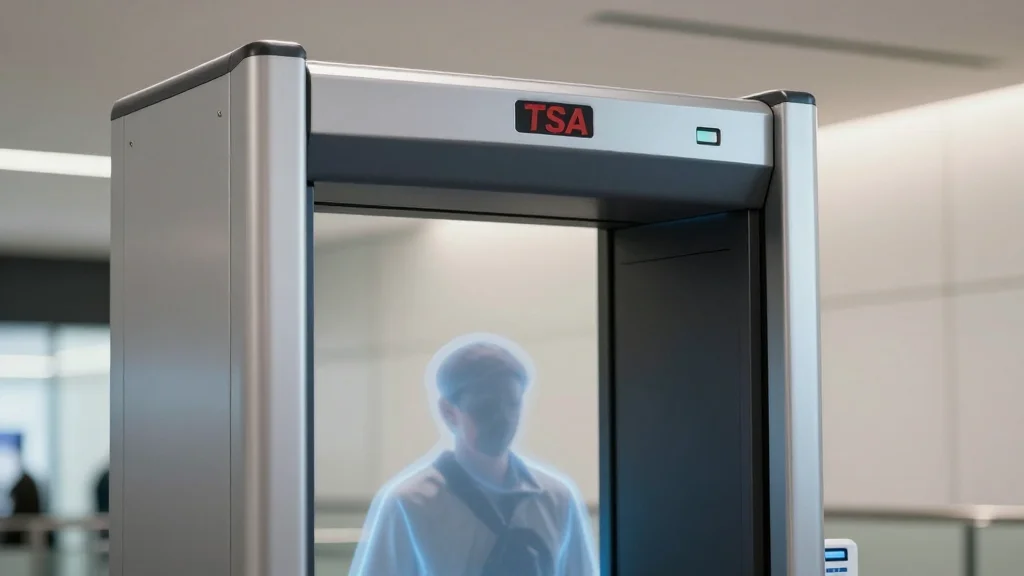
What Kind Of Heat Sensor Does TSA Use? What To Know Before You Step Into The Scanner
Why It Matters
Understanding the true nature of TSA’s millimeter‑wave scanners clarifies health safety, privacy expectations, and the practical options travelers have when navigating airport security.
Key Takeaways
- •TSA scanners employ millimeter‑wave AIT, not thermal heat sensors
- •The technology emits low‑power, non‑ionizing radio waves for threat detection
- •Automated target recognition shows only a generic outline, protecting privacy
- •Travelers can decline the scan and request a same‑gender pat‑down
- •Opt‑out may be limited for passengers flagged for enhanced security
Pulse Analysis
Modern airport security hinges on Advanced Imaging Technology, which uses millimeter‑wave radio frequencies to detect concealed threats. Unlike thermal cameras that map infrared heat, these scanners transmit low‑energy, non‑ionizing waves that pass through clothing, creating a digital silhouette rather than a temperature profile. This distinction is crucial for health‑conscious travelers, as the CDC confirms the radiation dose is negligible compared with everyday background exposure. By focusing on shape anomalies—such as wallets, medical devices, or dense fabrics—the system enhances threat detection without compromising passenger safety.
Privacy has been a persistent flashpoint for body‑scanner deployments. Early backscatter X‑ray units produced detailed body images, sparking public outcry and congressional scrutiny. In response, the TSA retired those machines in 2013 and mandated automated target recognition software that replaces personal images with a generic outline. Today’s scanners flag only the area of concern, limiting visual detail and reducing the risk of embarrassment or discrimination. Nonetheless, the process can still lead to targeted pat‑downs, especially for individuals wearing prosthetics, religious garments, or bulky clothing, keeping privacy debates alive.
Travelers retain the right to opt out of millimeter‑wave screening, opting instead for a manual pat‑down conducted by an officer of the same gender. While most passengers can exercise this choice, those selected for enhanced security may be required to undergo the scan if a credible threat is suspected. The opt‑out policy underscores a balance between individual comfort and collective safety, a dynamic that will shape future upgrades as the TSA explores next‑generation, privacy‑first imaging solutions.
What Kind Of Heat Sensor Does TSA Use? What To Know Before You Step Into The Scanner
Comments
Want to join the conversation?
Loading comments...