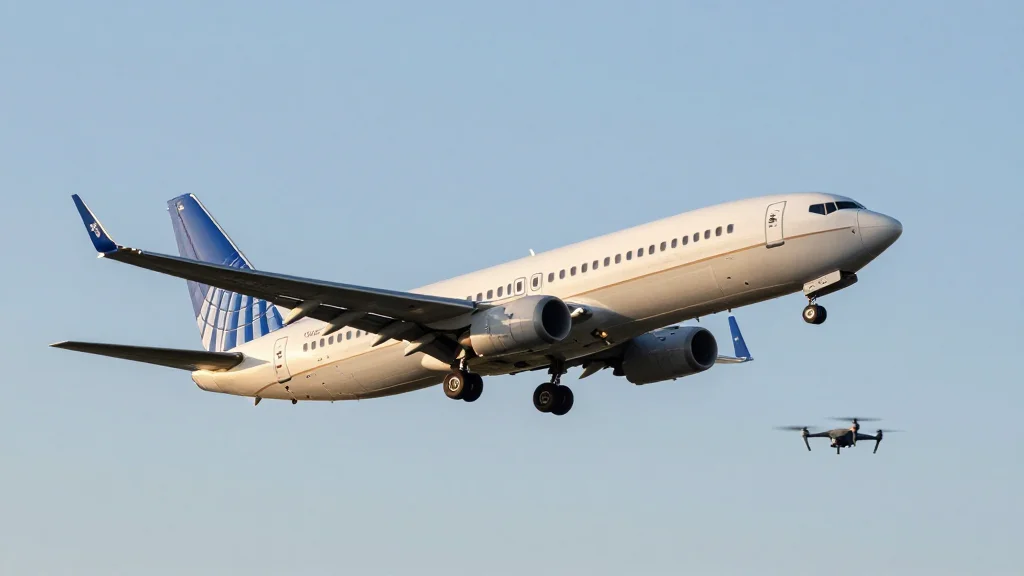
What You Should Know About a Near-Miss Between a United Plane and a Small Drone
Companies Mentioned
Why It Matters
The incident underscores the escalating safety risk drones pose to commercial aviation and highlights gaps in enforcement of existing FAA drone‑airspace rules.
Key Takeaways
- •United 737 reported drone at 3,000 feet during San Diego approach
- •Pilot described drone as small, red, shiny; no aircraft damage confirmed
- •FAA requires Remote ID and authorization for drones in controlled airspace
- •Near‑misses highlight growing risk as hobby drone usage expands
Pulse Analysis
The near‑miss between a United 737 and an unidentified drone over San Diego illustrates how quickly a routine commercial flight can become a safety flashpoint. While the aircraft suffered no damage and the 48 passengers disembarked without delay, the pilot’s description of a “red, shiny, really small” object at 3,000 feet raises questions about how such devices evade detection until they intersect a flight path. Air‑traffic control’s immediate alert to nearby pilots prevented further incidents, but the lack of additional reports suggests that many drone operators remain unaware of the strict altitude and authorization limits that apply near busy airports.
Federal aviation regulators have long mandated that drones operating in controlled airspace obtain FAA authorization and adhere to altitude caps, typically below 400 feet for hobbyists. The Remote ID requirement, essentially a digital license plate, is designed to broadcast a drone’s identity and location to authorities, yet compliance remains uneven. Enforcement challenges stem from the sheer number of hobbyists, the ease of acquiring inexpensive quadcopters, and the limited resources available for real‑time monitoring. As the FAA tightens rules—such as expanding geofencing mandates and increasing penalties for violations—operators must adapt to a more regulated environment, or risk severe penalties and heightened scrutiny.
Industry analysts view the incident as a bellwether for a broader trend: the convergence of consumer drone proliferation and dense commercial air traffic corridors. Airlines are investing in onboard detection technologies and collaborating with the FAA on joint safety initiatives. Meanwhile, policymakers are debating stricter certification pathways for commercial‑grade drones and expanded use of automated detection systems at major hubs. For airlines, the priority remains mitigating risk through rigorous crew training and rapid response protocols, while for regulators, the focus is on closing compliance gaps before another near‑miss escalates into a catastrophic event.
What you should know about a near-miss between a United plane and a small drone
Comments
Want to join the conversation?
Loading comments...