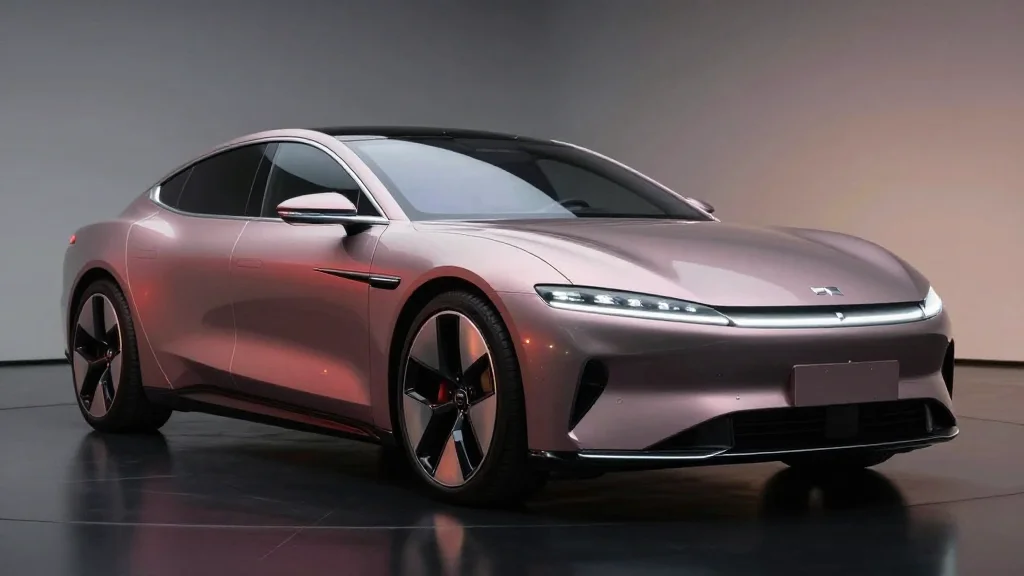
Where the Industry Is Heading: Five Takeaways From the 2026 Beijing Auto Show
Companies Mentioned

Why It Matters
China’s evolving automotive strategies now dictate global market dynamics, shaping multinational investment, technology standards, and supply‑chain power structures.
Key Takeaways
- •Beijing show spanned 380,000 sq m, featuring 1,451 vehicles and 181 global premieres.
- •Multinationals shift from “In China, For China” to co‑development with Chinese partners.
- •Chinese OEMs debut standalone pavilions, unveiling multi‑brand architectures for global expansion.
- •Flagship SUV launches demonstrate Chinese R&D efficiency as a new competitive moat.
- •Tier‑1 suppliers showcase AI agents and in‑car LLMs, gaining direct consumer visibility.
Pulse Analysis
The 2026 Beijing Auto Show cemented China’s role as a new gravitational center for the global automotive industry. With 380,000 sq m of floor space, 1,451 vehicles on display and 181 global premieres, the event dwarfed traditional shows in Munich and Detroit. Domestic sales of roughly 23 million passenger vehicles and exports exceeding 7 million units illustrate the scale that now drives worldwide trends, while the high EV penetration—over 50%—positions China at the forefront of the electrification wave.
Strategic realignments were evident across the exhibition halls. Multinational automakers are abandoning the old "In China, For China" playbook, opting for deep co‑development with Chinese partners to tap local technology platforms. Simultaneously, leading Chinese OEMs are shedding the "Made in China" label, debuting standalone pavilions that showcase multi‑brand architectures designed for global market segmentation. The synchronized launch of several flagship SUVs highlighted a leap in R&D efficiency, signaling that Chinese engineering and supply‑chain coordination have matured into a formidable competitive moat.
Technology took center stage, turning the auto show into a quasi‑CES for mobility. Suppliers demonstrated commercial‑ready in‑vehicle AI agents powered by large language models, while drones, flying‑car concepts, and humanoid robots hinted at a future where cars are extensions of personal digital ecosystems. The rising visibility of Tier‑1 suppliers reflects a structural shift: core technologies are now consumer‑facing, granting these firms direct brand influence. As AI agents evolve from functional assistants to genuinely intuitive companions, the first automaker to master this experience will secure a durable loyalty advantage, reshaping the competitive landscape for years to come.
Where the Industry Is Heading: Five Takeaways from the 2026 Beijing Auto Show
Comments
Want to join the conversation?
Loading comments...