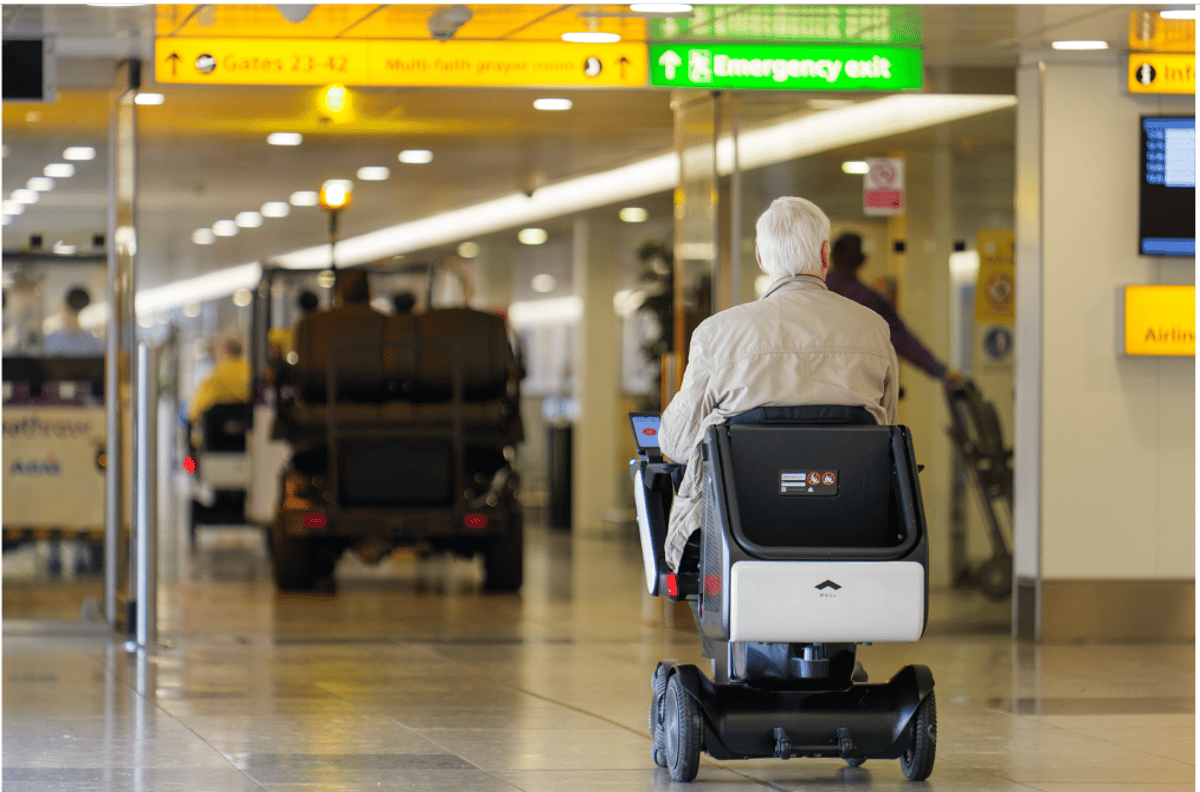
WHILL Launches Autonomous Mobility Service at LHR Terminal 3
Companies Mentioned
Why It Matters
The deployment demonstrates how autonomous mobility can enhance airport accessibility while reducing staffing costs, signaling a shift toward smarter, contact‑less passenger transport in major hubs.
Key Takeaways
- •WHILL’s autonomous service now operates at 26 global airports.
- •Trial at Heathrow’s Terminal 3 began in late April 2026.
- •Devices use 360‑degree sensors and obstacle‑detection for safety.
- •Over 1 million autonomous rides have been completed worldwide.
Pulse Analysis
The aviation sector is rapidly adopting autonomous solutions to streamline passenger flow and address accessibility gaps. Companies like WHILL, a leader in personal electric mobility, have leveraged advances in lidar, AI navigation and battery efficiency to create self‑driving pods that can operate in crowded terminal environments. As global travel rebounds, airports are under pressure to enhance the experience for passengers with reduced mobility while maintaining throughput. Autonomous mobility services promise a blend of convenience, operational cost savings, and data‑driven insights that can reshape how terminals manage ground transport.
WHILL’s latest trial at Heathrow Airport’s Terminal 3, launched in late April, marks its entry into one of the world’s busiest hubs. Partnering with facilities‑management firm ABM, the service offers travelers a touchscreen‑guided ride to any gate or amenity, after which the pod autonomously returns to its docking station. The devices are equipped with 360‑degree sensor arrays, real‑time obstacle detection and automatic stopping capabilities, ensuring safe navigation through luggage belts, crowds and variable lighting. Early feedback highlights reduced wait times for passengers with reduced mobility and smoother staff workflows.
The Heathrow deployment is a proof point for WHILL’s broader ambition to scale across more than 30 major airports by 2027. With over one million autonomous rides already logged worldwide, the company can leverage aggregated route data to refine algorithms, improve energy efficiency and tailor services to each terminal’s layout. Regulators are closely watching safety protocols, but the industry’s appetite for contact‑less, on‑demand transport is growing. If the trial delivers measurable gains in passenger satisfaction and operational cost, it could accelerate adoption of autonomous mobility as a standard amenity in global aviation hubs.
WHILL Launches Autonomous Mobility Service at LHR Terminal 3
Comments
Want to join the conversation?
Loading comments...