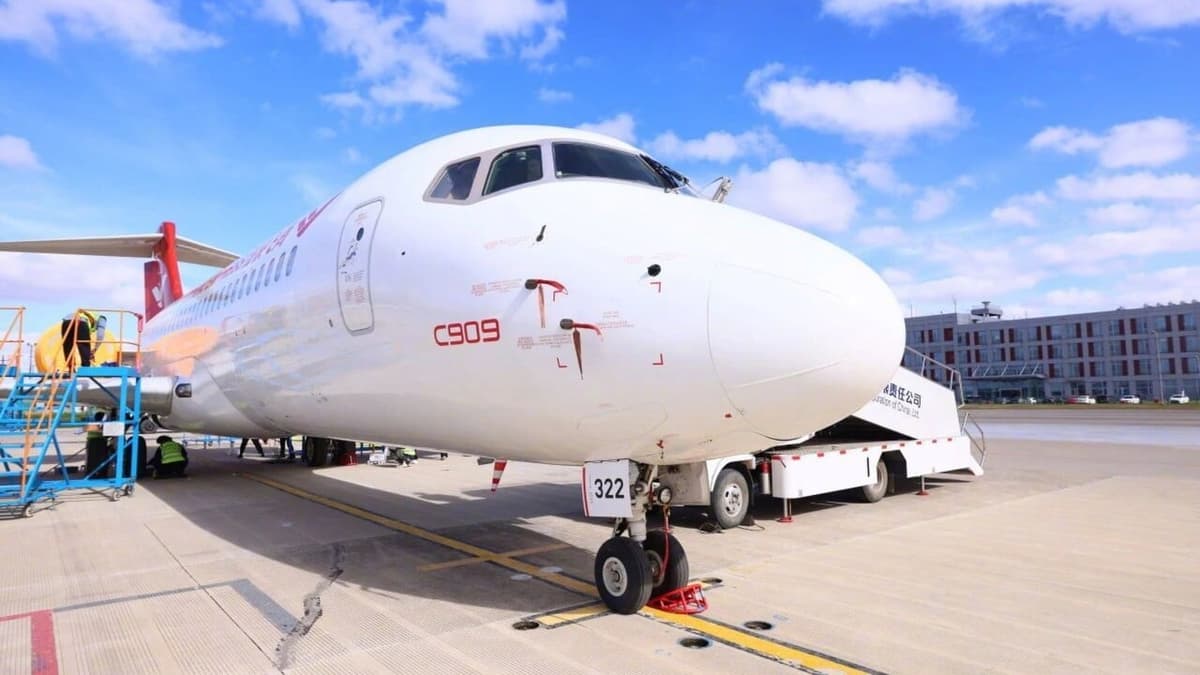
Why China’s C909 Jet Is Rapidly Being Deployed in Xinjiang
Why It Matters
The C909’s profitability on thin routes could reshape regional aviation economics in China and provide a springboard for Comac’s global ambitions against the Airbus‑Boeing duopoly.
Key Takeaways
- •30 C909s operate 120+ Xinjiang routes, boosting regional connectivity
- •Contribution margin $890‑$1,480 per hour exceeds Boeing 737 on low‑density flights
- •Double subsidies make C909 financially attractive for new, off‑peak routes
- •Comac leverages Xinjiang success to pursue Southeast Asian and African markets
Pulse Analysis
The C909, Comac’s 78‑to‑97‑seat regional jet, is finding a natural fit in Xinjiang’s sprawling, low‑density landscape. The province’s vast distances and sparse population make air travel the most efficient link between cities, yet demand on many routes remains modest. In such an environment, larger narrow‑body aircraft like the Boeing 737 or Airbus A320 run the risk of low load factors and higher per‑seat costs. By contrast, the C909’s smaller cabin aligns with passenger volumes, allowing airlines to maintain frequency without sacrificing economic viability.
A decisive factor behind the jet’s rapid rollout is the double subsidy regime that China grants to regional aircraft, effectively lowering operating expenses. Comac’s internal study shows the C909 generates an extra $890‑$1,480 of contribution margin per flight hour compared with a 737, a margin boost that can tip the scales on thin routes. Airlines such as Chengdu, Urumqi Air and China Express are using the jet to secure airport slots and test new city pairs, planning to up‑size to narrow‑bodies once traffic matures. This incremental approach reduces financial risk while expanding network coverage.
Beyond the domestic frontier, the Xinjiang experiment serves as a proof point for Comac’s broader export ambitions. The firm has already placed the C909 on 20 routes across Southeast Asia, with carriers in Laos, Indonesia and Vietnam adding the type to their fleets. Success in low‑density markets could convince other developing economies—particularly in Africa—to consider a home‑grown alternative to Airbus and Boeing, where acquisition costs and after‑sales support are critical. If the jet continues to deliver cost savings and reliable performance, it may become a stepping stone for China’s bid to erode the long‑standing duopoly in the global commercial‑aircraft arena.
Why China’s C909 jet is rapidly being deployed in Xinjiang
Comments
Want to join the conversation?
Loading comments...