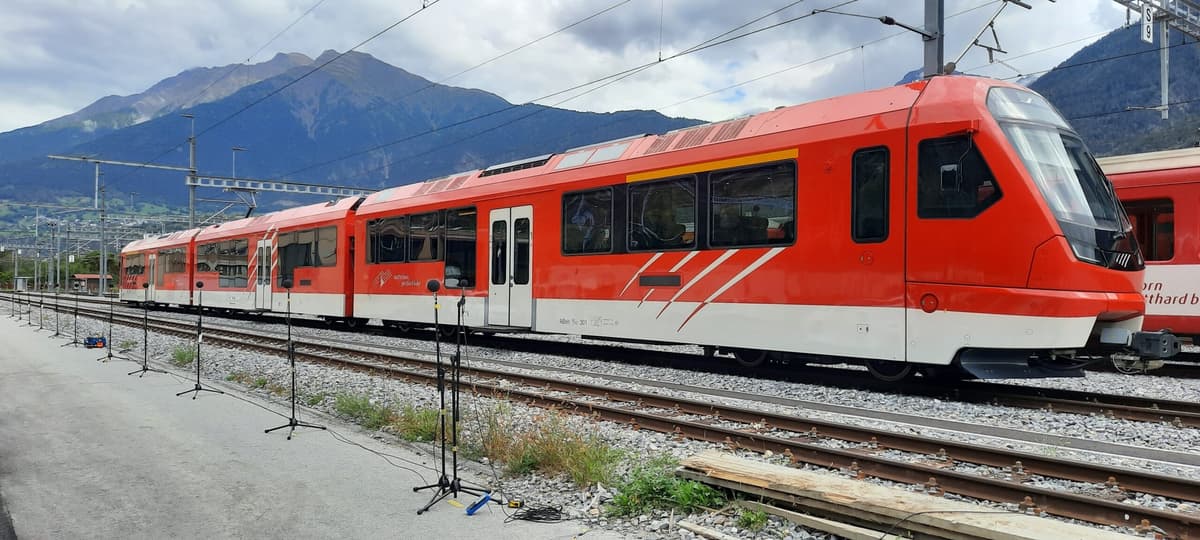
Why Collaboration Matters in Rail Measurement and Testing
Companies Mentioned
Why It Matters
By internalising most tests, Stadler cuts expenses, gains flexibility, and accelerates product development—advantages that are increasingly critical as rail manufacturers face tighter schedules and stricter performance targets.
Key Takeaways
- •In‑house testing covers ~90% of required rail tests.
- •imc’s CRONOSflex modules enable scalable 500‑m measurement setups.
- •Partnership cuts outsourcing costs and speeds decision‑making.
- •High‑precision devices exceed homologation standards, boosting confidence.
- •Collaborative development yields custom sensors and software solutions.
Pulse Analysis
The rail industry is moving away from fragmented, outsourced certification labs toward integrated, in‑house testing hubs. Manufacturers like Stadler Rail benefit from tighter control over test schedules, immediate access to data, and the ability to iterate designs rapidly. This shift aligns with broader digital‑first strategies, where real‑time measurement feeds directly into simulation models, shortening the time from prototype to market while containing costs.
A key enabler of such capabilities is modular data‑acquisition hardware. imc’s CRONOSflex platform, built around a base unit with plug‑in amplifiers, lets engineers expand channel counts and measurement length without redesigning the system. For trains that span 200‑500 metres, the ability to link modules across long distances ensures consistent, high‑resolution data capture for fatigue, acoustic, EMC, and aerodynamic tests. The single‑supplier approach also simplifies maintenance, calibration, and training, delivering a leaner operational footprint.
Beyond hardware, the partnership’s collaborative development model creates strategic value. By involving imc early in sensor and software design, Stadler can tailor solutions to its specific standards, reducing integration friction and accelerating innovation cycles. This co‑creation mindset not only improves test accuracy but also builds a knowledge base that can be leveraged across future projects, giving the company a competitive edge in a market where speed, precision, and cost efficiency are paramount.
Why Collaboration Matters in Rail Measurement and Testing
Comments
Want to join the conversation?
Loading comments...