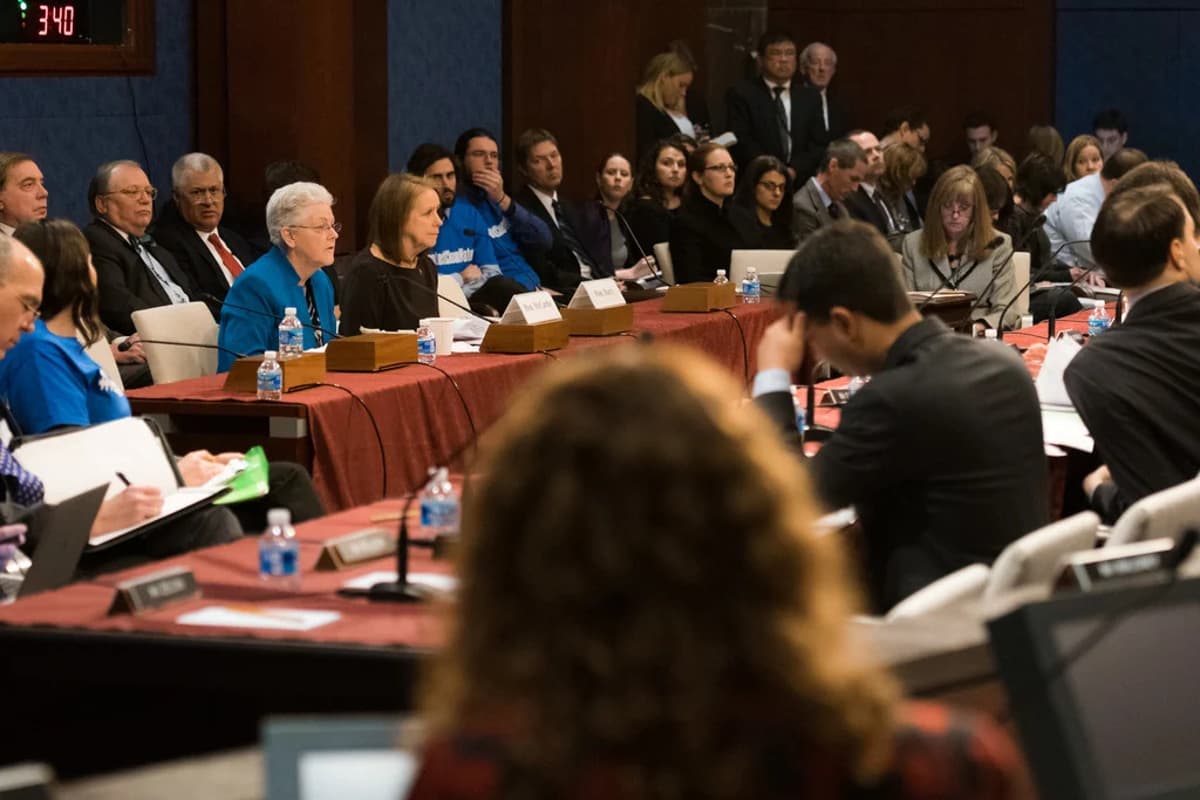
“Why Do We Do This Bill?”: Preparing Congressional Staff for Surface Transportation Reauthorization
Key Takeaways
- •Most staffers are in first reauthorization cycle, lacking institutional memory.
- •Reauthorization occurs every five years, leading to inertia and output focus.
- •Over $1 trillion spent, yet roads remain unsafe and congested.
- •Congress rescinded $2.3 billion and the administration canceled $963 million in projects.
- •T4America urges outcome‑based metrics instead of blank‑check funding.
Pulse Analysis
The federal surface‑transportation reauthorization, a statute refreshed roughly every five years, serves as the legislative engine that channels billions of dollars into highways, bridges, transit and emerging mobility projects. Because the cycle is infrequent, many congressional offices rotate staff who have never worked on a reauthorization, creating a knowledge gap that often reduces debate to simple questions of “how much money” and “which state gets it.” T4America’s recent briefings for House and Senate staff aimed to fill that gap by exposing the structural inertia that has allowed the program to persist with minimal scrutiny.
Despite more than $1 trillion in cumulative spending since the program’s modern incarnation, the nation’s infrastructure remains plagued by unsafe bridges, chronic congestion and deteriorating road conditions. Recent legislative actions illustrate the volatility of the funding stream: Congress pulled $2.3 billion from the Infrastructure Investment and Jobs Act in the FY‑26 spending bill, while the Department of Transportation under the current administration canceled another $963 million earmarked for clean‑transport projects. These setbacks, coupled with a historic reliance on output‑oriented metrics, have sparked calls for a performance‑based framework that ties dollars to measurable safety and mobility outcomes.
Adopting outcome‑oriented criteria could reshape the next reauthorization, steering resources toward projects that demonstrably reduce crashes, cut travel times and support equitable access to transit. For policymakers, this shift offers a way to justify new borrowing—potentially another $200 billion—by showing a clear return on investment rather than perpetuating a “blank‑check” mentality. T4America’s advocacy underscores that informed staff, armed with data on program effectiveness, can pressure members of Congress to demand accountability, ultimately delivering infrastructure that truly serves American commuters and taxpayers.
“Why Do We Do This Bill?”: Preparing Congressional Staff for Surface Transportation Reauthorization
Comments
Want to join the conversation?