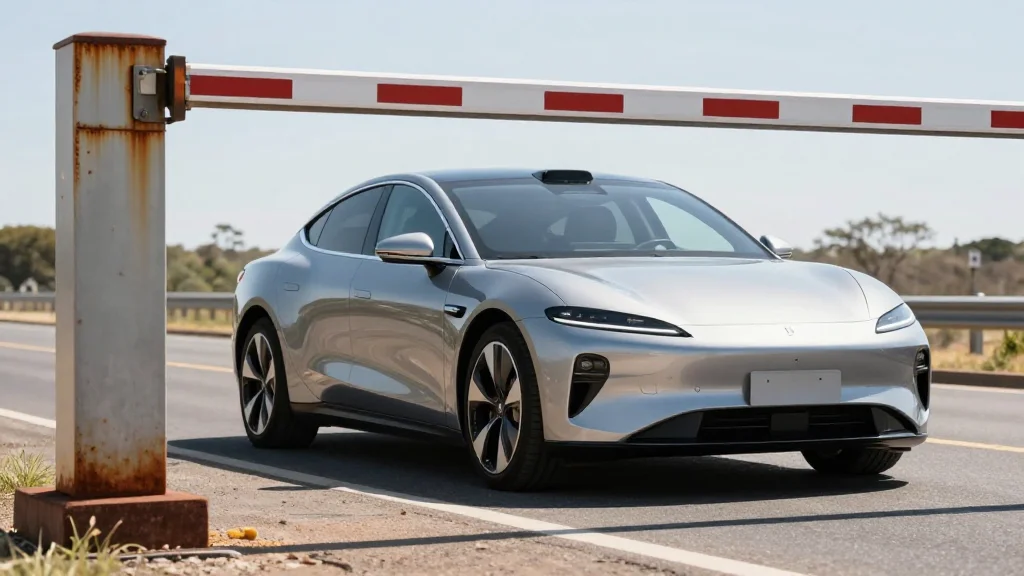
Why South Africa’s EV Market Is Going Nowhere Slowly
Companies Mentioned
Why It Matters
The analysis underscores how fiscal policy directly shapes EV adoption, affecting South Africa’s climate goals and the future of its automotive sector. Aligning duties and incentives could unlock a sizable market for both local manufacturers and foreign brands.
Key Takeaways
- •EV import duty 25% versus 18% for petrol cars
- •Premium EV sales fell, now under 1% of market
- •Audi’s R2 million EV (~$108k) priced out of reach
- •Volvo EX30 at R800k (~$43k) achieved meaningful volume
- •Government tax deduction starts 2026, but doesn’t lower consumer price
Pulse Analysis
South Africa’s electric‑vehicle outlook illustrates a classic case where tariff policy outweighs consumer enthusiasm. While many emerging markets are leveraging lower duties to accelerate green mobility, South Africa imposes a 25% levy on EV imports—significantly higher than the 18% applied to internal‑combustion vehicles. This price gap inflates the sticker price of models such as Audi’s R2 million ($108,000) offering, pushing them beyond the reach of most buyers. The result is a premium‑segment contraction and an overall EV share that remains below 1% of total vehicle registrations, despite global trends toward electrification.
The lack of fiscal incentives also hampers the total cost‑of‑ownership narrative that advocates often cite. Although battery‑electric cars can deliver lower operating expenses—especially for owners with residential solar—upfront cost remains the decisive barrier. Competitors like Volvo have demonstrated that a more affordable entry point, exemplified by the EX30 at roughly R800,000 ($43,000), can generate meaningful volume even in a price‑sensitive market. This suggests that price elasticity, rather than range anxiety alone, dictates South African consumer behavior, a reality reinforced by the country’s sparse public charging network and vast geography.
Policy reform could reshape the market dynamics. Germany’s experience shows that generous subsidies boost EV sales, while their removal triggers rapid demand collapse. South Africa’s recent 150% tax deduction for new‑energy vehicle manufacturers, effective from March 2026, signals a willingness to support production but does little to lower dealer prices. Industry leaders are now urging the government to equalize or reduce import duties for EVs, a move that would align South Africa with global best practices and unlock a latent demand pool, fostering both environmental benefits and a revitalized automotive sector.
Why South Africa’s EV market is going nowhere slowly
Comments
Want to join the conversation?
Loading comments...