Why This '80s Transmission Used Three Shifters Instead Of One
•February 25, 2026
0
Why It Matters
The three‑lever setup demonstrated an early attempt to blend automatic convenience with driver involvement, a concept that foreshadows today’s paddle‑shift and dual‑clutch systems. It highlights how manufacturers can use mechanical innovation to offset performance gaps.
Key Takeaways
- •Hurst Lightning Rod used three levers for manual‑like control
- •1983 Cutlass featured 5.0‑L HO V8, 180 hp
- •Sequential cable‑actuated shifter prevented gear skipping
- •Design aimed to boost driver engagement despite modest power
- •Similar concepts appeared in Porsche Sportomatic and Lenco units
Pulse Analysis
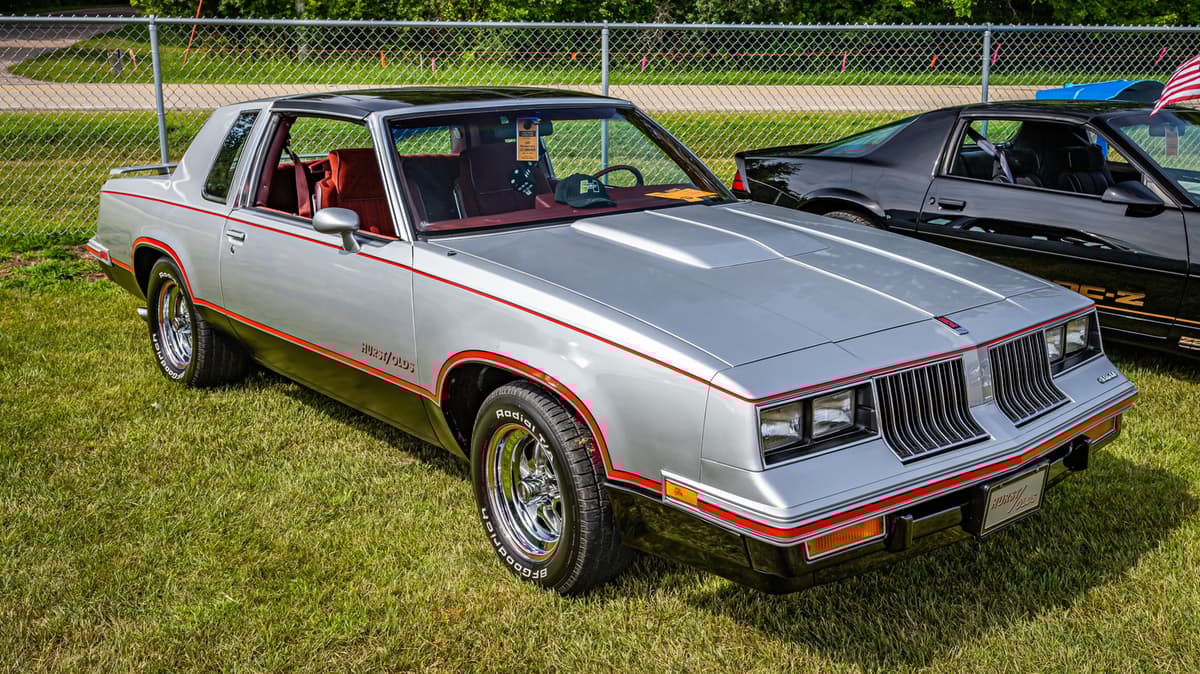
The early 1980s were a period of experimentation for automatic transmissions, as automakers sought ways to retain the fun factor of a manual gearbox while offering the ease of an automatic. Hurst’s partnership with Oldsmobile produced the Lightning Rod, a three‑lever console that turned a conventional torque‑converter automatic into a sequential shifter. By moving each lever in a prescribed order, drivers could select first, second, and third gears without a clutch, while an over‑drive lever provided a fourth ratio. This mechanical choreography gave the under‑powered Cutlass a sense of involvement that pure automatics of the era lacked.
Technically, the Lightning Rod relied on a cable‑driven sequential selector and a fluid‑pressure boost that accelerated shift timing when the outer lever engaged. Unlike later electronic systems such as Porsche’s Tiptronic, the Hurst solution was purely mechanical, yet it achieved comparable driver control. Comparable concepts appeared in Porsche’s Sportomatic, which used a dry clutch to enable H‑pattern shifts, and the Lenco transmission, which employed multiple shifters to lock planetary gearsets for drag‑race durability. These designs illustrate a broader trend of hybridizing manual engagement with automatic convenience before electronic controls became mainstream.
The legacy of the three‑lever system is evident in today’s performance cars that feature paddle shifters, dual‑clutch units, and selectable driving modes. Modern engineers continue to grapple with the same challenge Hurst faced: delivering excitement without sacrificing reliability or fuel efficiency. By studying the Lightning Rod’s mechanical ingenuity, contemporary designers can appreciate how tactile driver input can be engineered even in low‑output platforms, reinforcing the timeless market demand for engaging, controllable driving experiences.
Why This '80s Transmission Used Three Shifters Instead Of One
0
Comments
Want to join the conversation?
Loading comments...