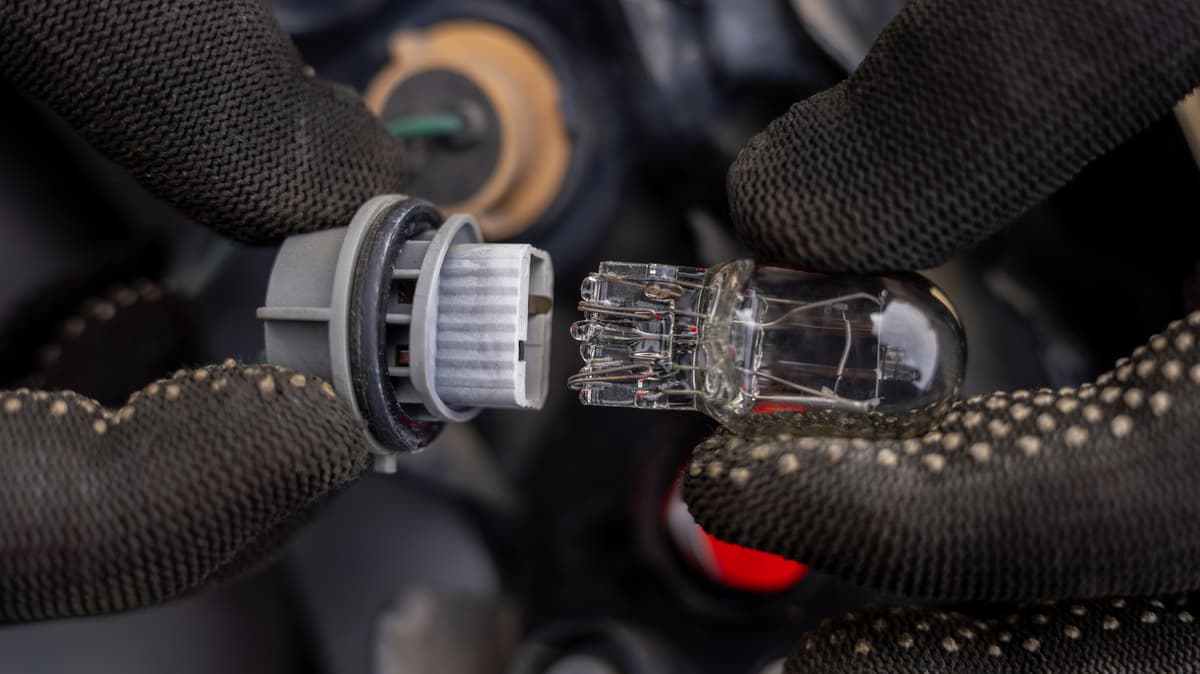
Why You Should Never Touch A Halogen Headlight Bulb With Your Bare Hands
Why It Matters
Improper handling can cause premature headlight failure, compromising driver safety, while the industry’s move to LEDs improves durability, energy efficiency, and compliance with new regulations.
Key Takeaways
- •Oil residue creates weak spot, can crack bulb.
- •Halogen bulbs operate up to 1300 °F, risk shattering.
- •LED headlights run cooler, last 30,000‑50,000 hours.
- •US ban 2023 removed halogen for home lighting.
- •Use gloves or cloth; alcohol wipes clean bulb.
Pulse Analysis
The chemistry behind a halogen headlight is deceptively fragile. When a fingertip deposits skin oils onto the glass, those organic compounds carbonize at extreme temperatures, forming microscopic stress concentrators. As the bulb reaches its operating range of roughly 1300 °F, the contaminated area expands unevenly, increasing the likelihood of a crack that can propagate quickly. Beyond the risk of sudden failure, the residue can migrate onto the reflector, diminishing luminous efficiency and giving the beam a yellowed appearance that reduces nighttime visibility.
Compared with halogen technology, light‑emitting diode (LED) systems deliver a dramatically different thermal profile. LEDs operate with heatsinks that stay between 140 °F and 212 °F, a fraction of halogen heat, which not only extends bulb life to 30,000‑50,000 hours but also improves safety by eliminating the high‑temperature glass envelope. This longevity aligns with vehicle service intervals, reducing maintenance costs and waste. The automotive sector has embraced LEDs since 2015, and a 2023 U.S. federal ban on general‑service incandescent and halogen bulbs for household use underscores a broader regulatory push toward energy‑efficient lighting.
For DIY enthusiasts, the practical takeaway is straightforward: handle replacement bulbs with gloves, a clean cloth, or disposable tools, and if contamination occurs, wipe the glass with a lint‑free cloth dampened with isopropyl alcohol, allowing it to dry fully before installation. As LED adoption widens, the need for such precautions will diminish, but for the many vehicles still equipped with halogens, proper handling remains essential to maintain headlight performance and road safety.
Why You Should Never Touch A Halogen Headlight Bulb With Your Bare Hands
Comments
Want to join the conversation?
Loading comments...