Wide Barge Could Reduce Crane Needs for Turbine Foundation Installation
Companies Mentioned
Why It Matters
The barge could eliminate dependence on a handful of mega‑crane vessels, reducing capital costs and schedule risk for offshore wind projects while enhancing Norway’s competitive position in the global market.
Key Takeaways
- •Barge measures 166 m long and 73 m wide, among world’s widest
- •Can lower deck 22.5 m below water, enabling substructure flotation
- •Eliminates need for ultra‑large crane vessels, cutting installation costs
- •Tests show stable lifting in varied wave conditions using onboard hinge system
- •Supports Norwegian offshore wind supply chain, boosting global competitiveness
Pulse Analysis
Installing the massive substructures that support fixed offshore wind turbines has become a logistical bottleneck. Each foundation can weigh several thousand tonnes, and only about five crane vessels worldwide can lift that load, driving charter rates upward and limiting project timelines. Developers therefore face higher capital expenditures and schedule risk, especially as Europe accelerates its renewable‑energy targets. The scarcity of heavy‑lift assets also forces contractors to sequence installations inefficiently, prompting the industry to explore more versatile, cost‑effective transport and installation methods.
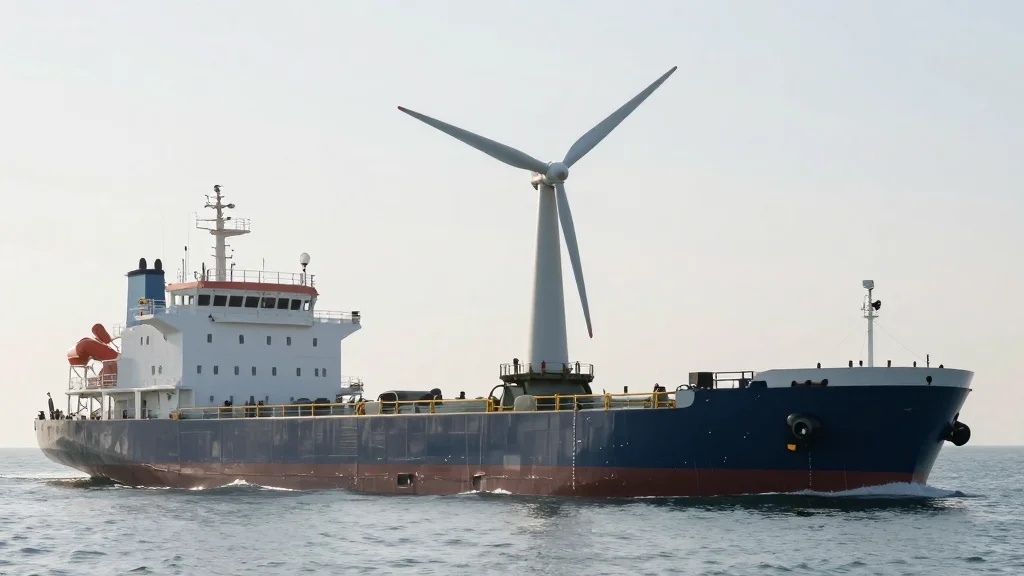
A collaborative test program led by Aker Solutions, Sarens, BOA and Norway’s SINTEF Ocean Basin proposes an unusually wide barge as a game‑changer. At 166 m long and over 73 m wide, the vessel can submerge its deck 22.5 m below the surface, allowing two turbine foundations to be floated off without a dedicated crane ship. The barge’s integrated lifting frame and hinge mechanism demonstrated stable performance across a range of wave conditions, proving that smaller, more readily available vessels can handle the final lift, dramatically reducing reliance on ultra‑large cranes.
If the concept moves from trials to commercial deployment, it could reshape offshore wind economics. Lowering crane charter fees and shortening installation windows directly improve project EBITDA, while the ability to transport multiple foundations simultaneously boosts fleet utilization. For Norway, the technology strengthens its emerging offshore‑wind supplier ecosystem, positioning local shipyards and engineering firms to capture a larger share of the global market. Other regions with burgeoning wind pipelines are likely to monitor the results closely, as the barge model offers a scalable solution to a universal challenge.
Wide Barge Could Reduce Crane Needs for Turbine Foundation Installation
Comments
Want to join the conversation?
Loading comments...