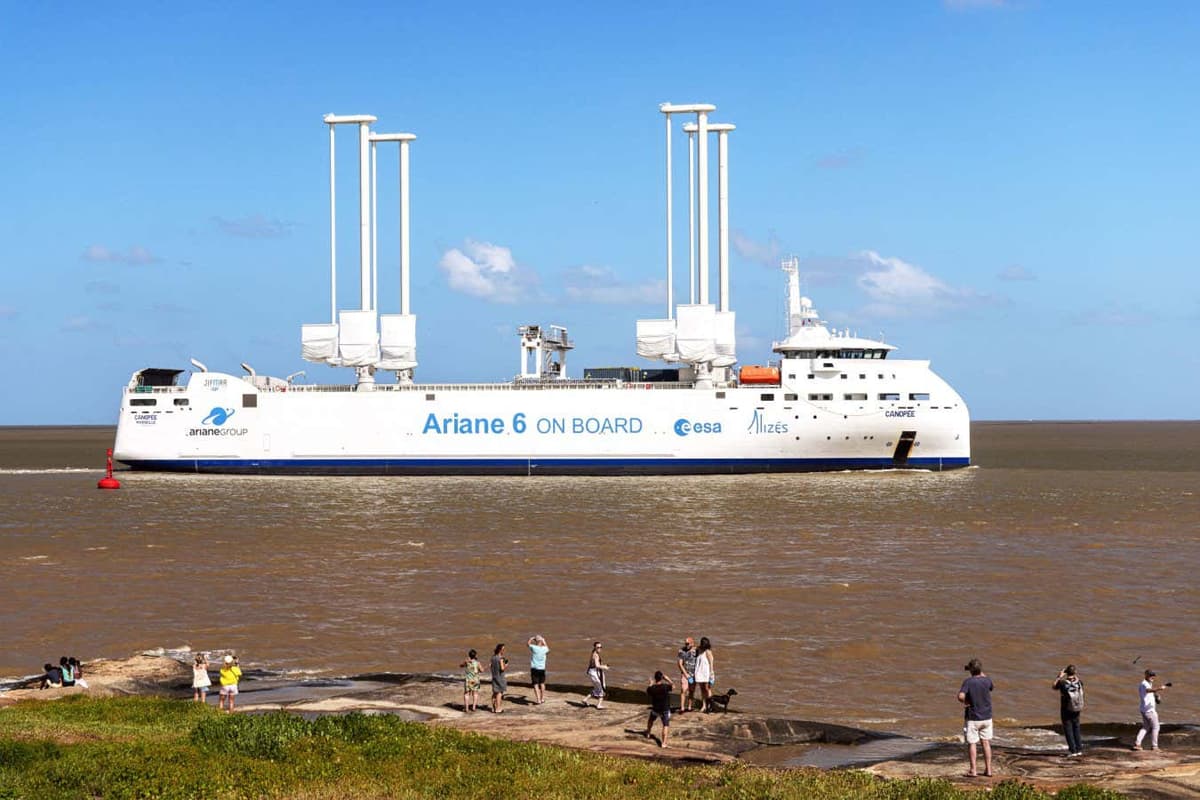
Wind-Assisted Cargo Ships Could More than Halve Shipping Emissions
Why It Matters
Halving maritime emissions directly supports international decarbonisation goals while delivering significant fuel‑cost savings for carriers, accelerating the shift toward sustainable logistics.
Key Takeaways
- •Shipping emits ~3% of global CO₂
- •Wind‑assist could slash emissions over 50%
- •Companies explore new‑build sails and retrofitted rigs
- •Automated sails lower fuel consumption and operating costs
- •Favorable wind routes enhance savings beyond hardware
Pulse Analysis
Maritime transport is under increasing scrutiny as it contributes about 3% of worldwide carbon dioxide output, a figure that the International Maritime Organization aims to halve by 2050. Stricter emissions caps and rising fuel prices are pressuring operators to seek alternatives that can meet regulatory targets without eroding profitability. Wind‑assisted propulsion, a concept dating back centuries, is now being revitalised with modern materials, computer‑controlled rigs and aerodynamic rotors, positioning it as a viable decarbonisation lever for the industry.
Recent pilots such as the French‑built Canopée and the Dutch‑engineered rotor‑sail retrofit on bulk carriers have demonstrated tangible gains. Early data suggest fuel consumption drops of 15‑30% on routes with steady tailwinds, translating into emissions reductions that exceed 50% when combined with optimal routing software. Automated kite systems and rigid sails can be installed on existing hulls, reducing capital outlay compared with building entirely new vessels, while purpose‑built ships integrate sails into hull design for maximal efficiency.
For shipowners, the financial calculus is compelling. Lower bunker usage directly improves margins, and the modest incremental cost of sail hardware can be amortised over a vessel’s service life. However, widespread adoption hinges on standardised certification, crew training, and integration with digital navigation platforms. As green logistics becomes a market differentiator, investors are likely to favour operators that embed wind‑assist technology, signalling a broader shift toward resilient, low‑carbon supply chains.
Wind-assisted cargo ships could more than halve shipping emissions
Comments
Want to join the conversation?
Loading comments...