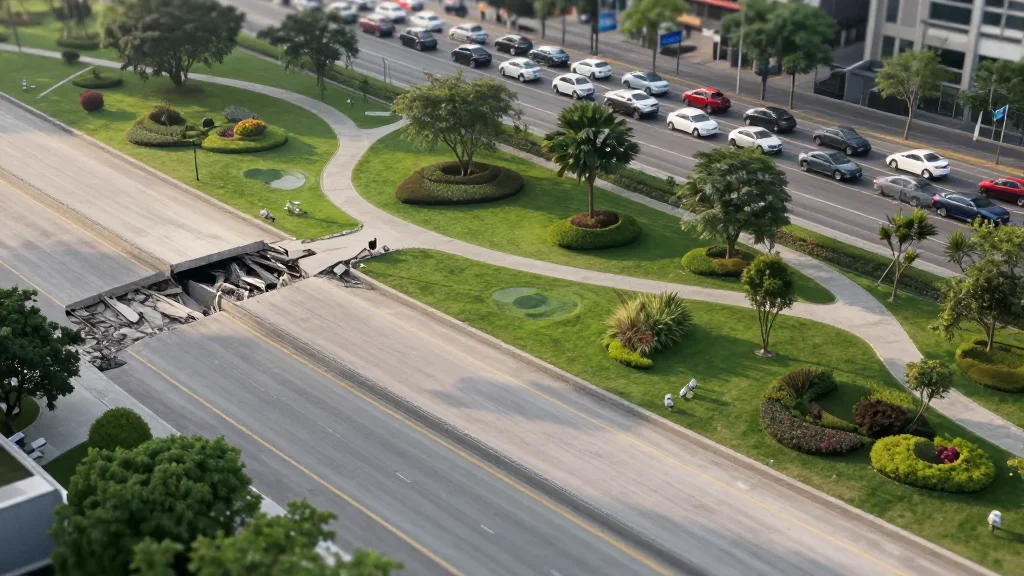
WisDOT Study Says I‑794 Removal Could Unlock $500 M of Development but Raise Crash Risk

Why It Matters
The I‑794 study is a bellwether for how U.S. cities address aging highway infrastructure that bisects dense urban cores. A decision to remove the freeway could catalyze a wave of similar projects, reshaping land use patterns, property values, and municipal tax bases across the Midwest. At the same time, the safety findings underscore the need for rigorous traffic modeling and mitigation strategies—such as enhanced pedestrian crossings, traffic signal upgrades, and demand‑management policies—to ensure that redevelopment does not come at the expense of public health. Moreover, the projected $500 million development pool signals significant private‑sector interest in downtown Milwaukee, potentially attracting national investors and spurring ancillary projects like transit‑oriented housing and mixed‑use complexes. The financial stakes, combined with the $675 million‑to‑$1.25 billion price tag for construction, mean that state and federal funding decisions will be closely scrutinized, influencing future infrastructure financing frameworks.
Key Takeaways
- •WisDOT study projects up to $500 million in development by 2050 if I‑794 is removed.
- •Four options under review cost $675 million to $1.25 billion, with removal opening 16 acres.
- •Removal scenario predicts 14,000‑26,000 daily vehicles on an eight‑lane Clybourn Street.
- •Reconfiguration alternatives would handle 6,900‑8,400 vehicles daily on three‑to‑four lanes.
- •Study warns of increased crash risk and longer pedestrian crossing distances if freeway is removed.
Pulse Analysis
The I‑794 controversy illustrates the shifting calculus of urban mobility. Historically, freeways were built to move cars efficiently, often at the expense of neighborhood cohesion. Today, cities are re‑evaluating that legacy, weighing the economic upside of reclaimed land against the safety net that elevated highways provide. Milwaukee’s case is unique because the freeway runs through a compact downtown with a strong historic district, making any change highly visible to residents and businesses.
From a market perspective, the $500 million development estimate is a compelling lure for developers, especially given the national shortage of downtown office and residential space. However, the projected increase in traffic volumes suggests that without complementary investments—such as dedicated bus lanes, improved cycling infrastructure, and adaptive signal control—congestion could erode the very quality‑of‑life benefits that the project promises. The safety data also raises a red flag for insurers and municipal budgets, potentially inflating costs that offset some of the anticipated tax gains.
Looking ahead, the decision timeline—selection in 2027, design thereafter, and a possible 2030 groundbreaking—means that stakeholders have a multi‑year window to shape the outcome. Advocacy groups, business coalitions, and transportation planners will likely lobby for hybrid solutions that blend removal with targeted traffic calming measures. If Milwaukee can demonstrate a successful balance, it could become a template for other mid‑size cities wrestling with similar infrastructure dilemmas, influencing federal grant criteria and state policy on freeway decommissioning.
WisDOT study says I‑794 removal could unlock $500 M of development but raise crash risk
Comments
Want to join the conversation?
Loading comments...