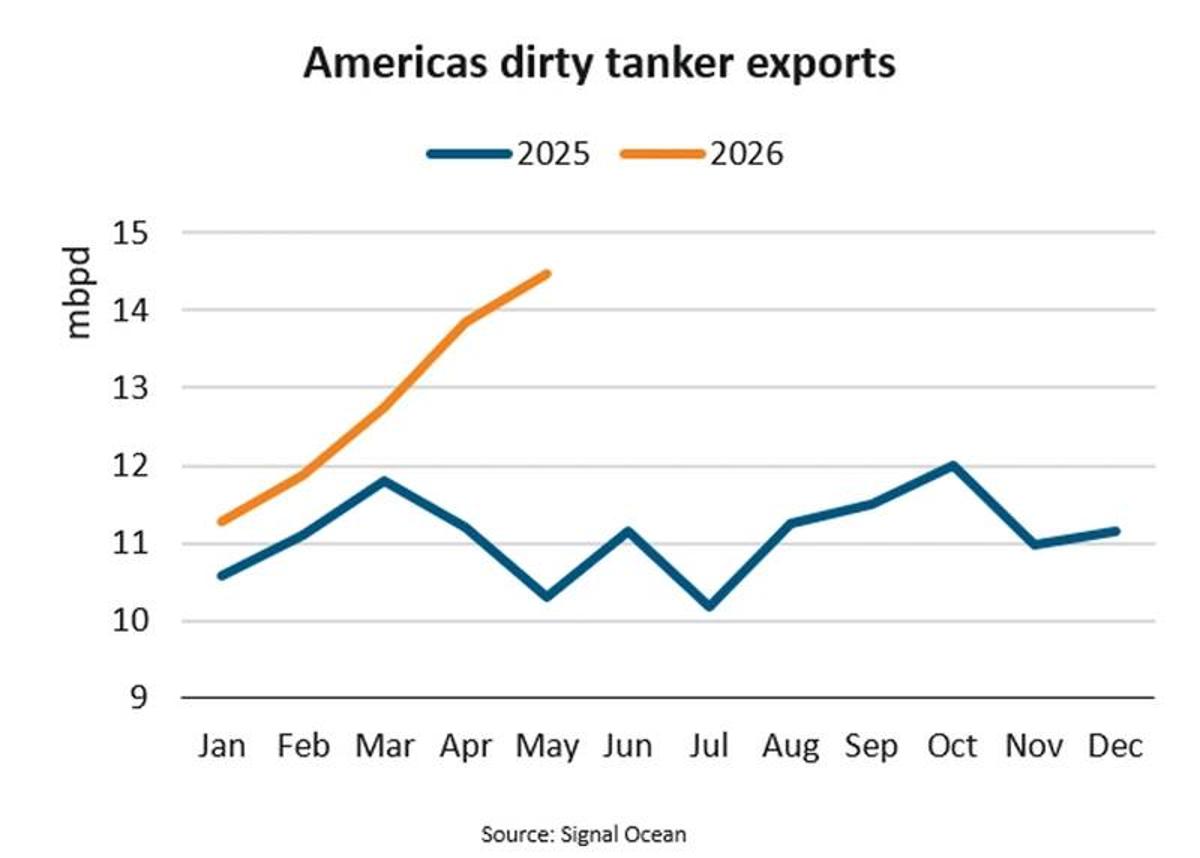
With War, Americas Dirty Tanker Exports Soar to Record in May
Companies Mentioned

Why It Matters
The surge underscores the Americas’ growing role in offsetting Middle‑East supply disruptions, reshaping global crude logistics and freight markets. Sustained export strength could cushion global oil demand rebounds if Persian Gulf flows normalize.
Key Takeaways
- •Americas dirty tanker exports hit 14.5 mbpd in May, record high
- •US shipments up 32% YoY, driving most of the regional increase
- •Venezuela, Brazil, Canada, Guyana all expanded crude export volumes
- •Aframax/LR2 tankers carried 85% of volume growth, despite lower freight rates
Pulse Analysis
The ongoing Iran‑related conflict has tightened Persian Gulf oil flows, prompting buyers to turn to alternative sources. In response, the Americas have accelerated crude shipments, with May volumes reaching 14.5 million barrels per day—a 40% year‑on‑year jump. The United States, benefitting from a rebound in shale output, posted the steepest growth, while Venezuela’s relaxed sanctions, Brazil’s new floating production storage and offloading units, and Guyana’s Yellowtail field have collectively expanded the export base. This diversification reduces reliance on traditional Middle‑East supplies and offers shippers greater routing flexibility.
A notable shift in trade patterns is the rise of East Asian demand. For the first time since 2023, Asian refiners absorbed more American crude than North American counterparts, accounting for roughly half of the regional volume increase. The Aframax/LR2 segment has been the workhorse, delivering 85% of the added cargoes, especially to Asia, even as freight rates in this class have slipped due to an influx of LR2 vessels repurposed for dirty trades. VLCC and Suezmax ships contributed the remaining growth, highlighting a broader fleet adaptation to the evolving market.
The implications extend beyond shipping rates. Persistent high export volumes from the Americas could mitigate the global oil supply shortfall if the Strait of Hormuz remains constrained, providing a buffer for rising demand and inventory rebuilding. However, once Persian Gulf exports normalize, the market may face a rebalancing pressure, potentially compressing freight rates further and testing the durability of the Americas’ export surge. Stakeholders should monitor geopolitical developments, sanction regimes, and new field start‑ups, as these factors will dictate whether the current momentum translates into a longer‑term realignment of global oil flows.
With War, Americas Dirty Tanker Exports Soar to Record in May
Comments
Want to join the conversation?
Loading comments...