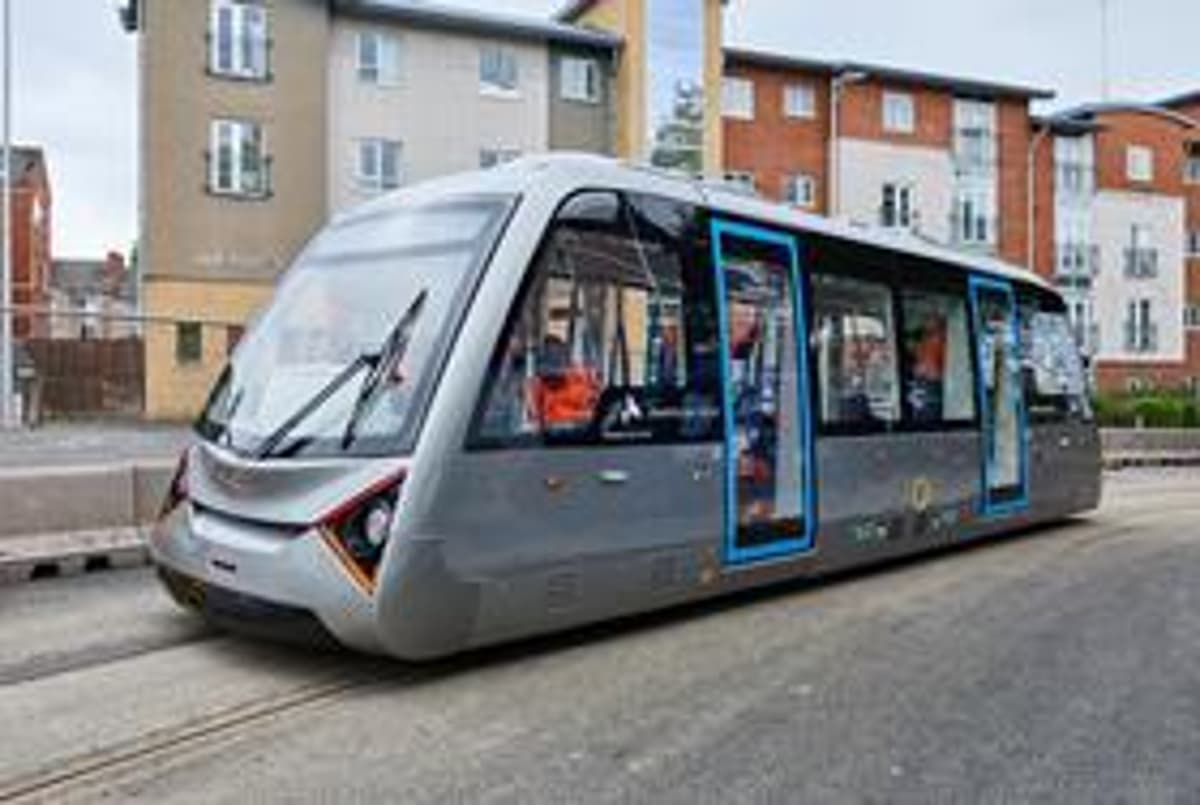
Work Begins on Next Phase of Coventry Very Light Rail Demonstration Programme
•March 5, 2026
0
Why It Matters
The project proves a cost‑effective, rapid‑deployment light‑rail model for midsize cities, potentially reshaping urban mobility and infrastructure investment strategies.
Key Takeaways
- •800 m VLR track under construction between university and station.
- •VLR aims to halve tramway cost and build time.
- •Phase 2 adds service area and battery charging at Mile Lane.
- •Operational target set for October 2027 ahead of ITS World Congress.
- •Successful demo could become permanent Coventry light‑rail network.
Pulse Analysis
Very Light Rail (VLR) represents a paradigm shift in urban transit, marrying battery‑electric propulsion with a minimalist track architecture. By eliminating deep excavations and extensive utility relocations, VLR can be installed in a fraction of the time required for traditional tramways, delivering a lower‑cost, lower‑disruption solution that aligns with sustainability goals. This technology is especially attractive to cities that lack the density or capital to justify full‑scale light‑rail systems, offering a scalable bridge between bus services and heavy rail.
Coventry’s demonstration programme exemplifies how municipalities can test VLR viability before committing to permanent infrastructure. The first 220 m pilot on Queen Victoria Road validated the trackform’s ease of installation and allowed a prototype vehicle to run under real‑world conditions. The current 800 m extension, built by Colas Rail, incorporates a dedicated service depot and on‑site battery charging, addressing operational logistics that are critical for daily service. Targeting an October 2027 launch aligns the rollout with the Intelligent Transport Systems World Congress, providing a high‑visibility platform for stakeholders and potential investors.
If the Coventry trial meets performance and reliability benchmarks, it could catalyze broader adoption across the UK and Europe, offering a template for other mid‑size cities seeking affordable, rapid‑deployment transit. The success of VLR would not only reduce capital outlays but also accelerate the shift toward electrified public transport, supporting emissions‑reduction targets and enhancing urban connectivity. Policymakers and transport planners will be watching closely, as VLR could become a cornerstone of next‑generation, cost‑effective mobility networks.
Work begins on next phase of Coventry Very Light Rail demonstration programme
0
Comments
Want to join the conversation?
Loading comments...