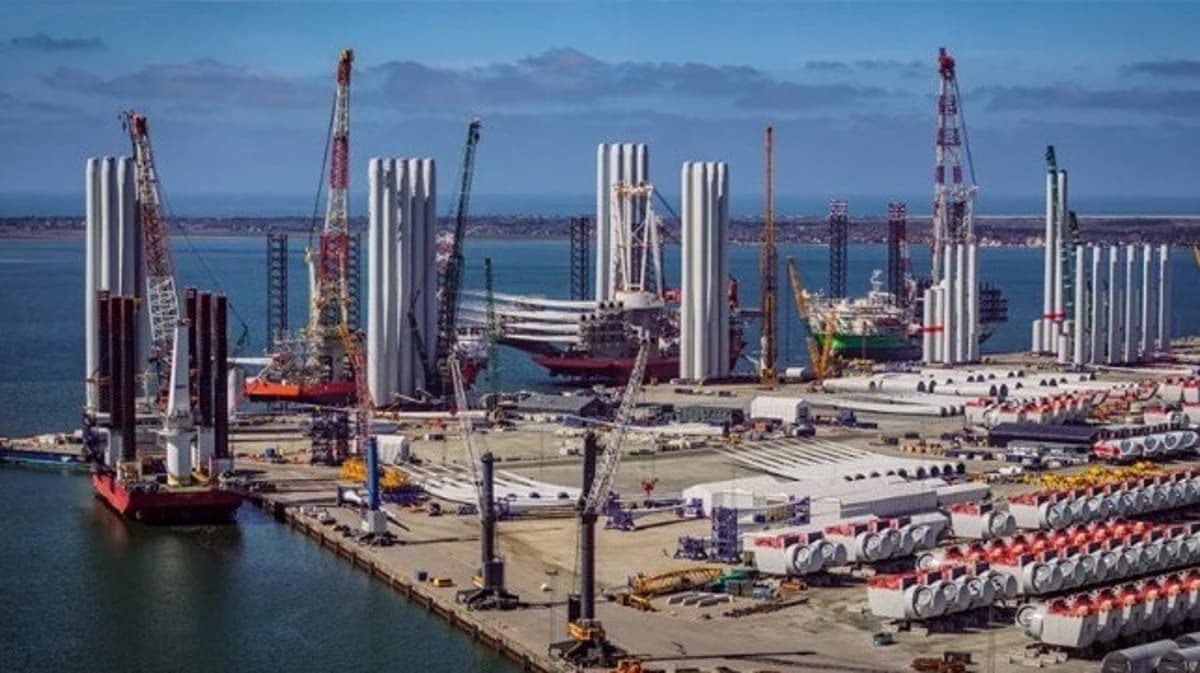
WTIV Loses Control in Danish Port Damaging Blades for Offshore Wind Farm
Companies Mentioned
Why It Matters
The accident highlights safety and logistical risks in fast‑growing offshore wind ports and could postpone the commissioning of Denmark’s flagship renewable project, impacting regional clean‑energy targets and supply‑chain earnings.
Key Takeaways
- •Brave Tern collided with docked Wind Keeper, damaging crane and pier.
- •Damage exceeds $150,000; each blade valued around $3.9 million.
- •Incident delays Denmark’s Thor offshore wind farm, slated for 2024 completion.
- •Detention ordered by Danish Maritime Authority pending inspection of vessels.
- •High winds cited as primary cause, highlighting port safety challenges.
Pulse Analysis
Offshore wind construction is accelerating worldwide, with Europe leading the charge. Ports like Esbjerg have become critical hubs where massive turbine components are loaded onto specialized vessels. The convergence of large jack‑up ships, heavy lifts, and variable weather creates a high‑risk environment that demands rigorous navigation protocols and real‑time meteorological monitoring. Recent incidents across the sector underscore that even seasoned operators can be caught off‑guard when gusts exceed safe maneuvering thresholds.
The Esbjerg allision involved the 15,300‑gross‑ton WTIV Brave Tern, which struck the 22,500‑gross‑ton Wind Keeper, a crane and the pier. Financial loss estimates top $150,000, while the nine damaged blades represent roughly $35 million in assets, given an approximate $3.9 million value per blade. Although injuries were limited to a precautionary hospital check‑up, the Danish Maritime Authority’s decision to detain the vessel reflects heightened regulatory scrutiny and the need for thorough damage assessments before resuming operations.
For the offshore wind industry, the incident serves as a cautionary tale about port congestion and weather‑related hazards. Delays to the Thor project—a 72‑turbine, 1‑gigawatt farm slated for completion this year—could ripple through supply chains, affect turbine manufacturers, and modestly shift Denmark’s renewable energy timeline. Stakeholders are likely to invest in enhanced berth scheduling, advanced tug assistance, and stricter wind‑speed limits to mitigate future risks, reinforcing the sector’s commitment to safety while maintaining rapid deployment momentum.
WTIV Loses Control in Danish Port Damaging Blades for Offshore Wind Farm
Comments
Want to join the conversation?
Loading comments...