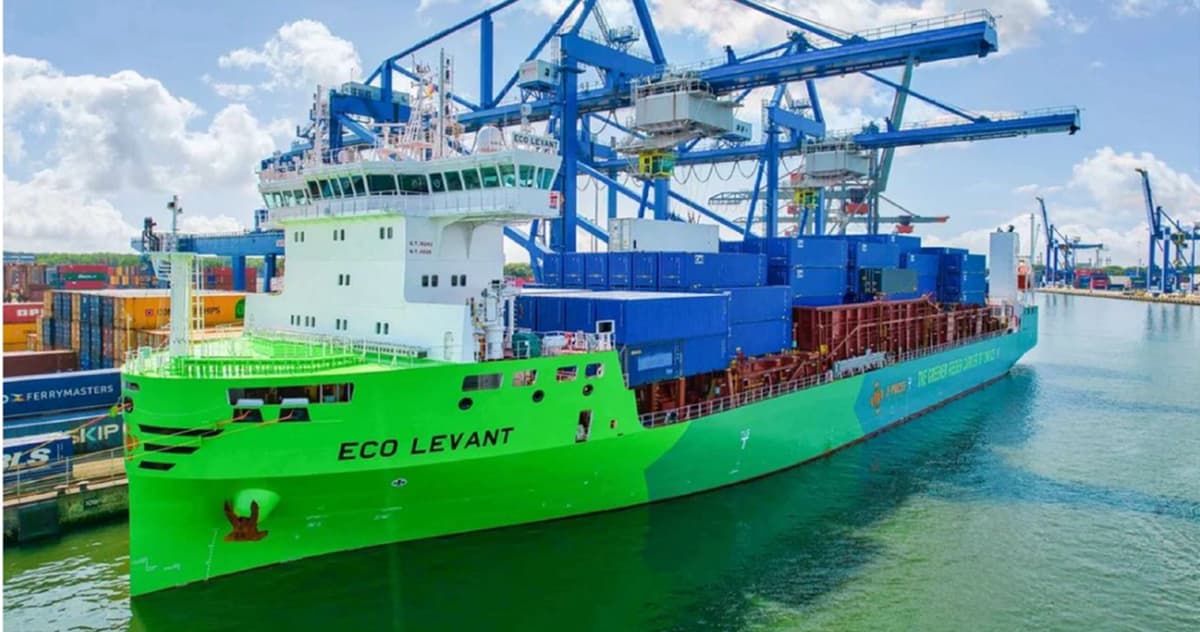
X-Press Feeders Trials Ethanol-Methanol Fuel Blend
Why It Matters
The successful trial shows ethanol‑methanol blends can be viable low‑carbon marine fuels, giving shipowners more flexible pathways to meet tightening emissions regulations.
Key Takeaways
- •10% ethanol, 90% methanol blend tested on Eco‑Levant.
- •Trial conducted in Rotterdam under controlled conditions.
- •X‑Press Feeders aims to meet long‑term decarbonisation goals.
- •Blend could offer operational flexibility and new commercial pathways.
Pulse Analysis
Maritime decarbonisation has accelerated since the IMO set a 2050 net‑zero target, prompting operators to explore alternatives to traditional heavy fuel oil. While methanol has gained traction for its lower carbon intensity and existing supply chains, ethanol offers a renewable carbon‑neutral component when sourced from sustainable feedstocks. Blending the two creates a hybrid fuel that leverages methanol’s infrastructure compatibility and ethanol’s renewable credentials, potentially smoothing the transition for vessels that cannot yet run on pure green fuels.
The Rotterdam trial on Eco‑Levant provided a controlled environment to assess engine performance, emissions, and fuel handling characteristics of the 10/90 blend. Early data suggest comparable power output to conventional methanol, with a modest reduction in CO₂ emissions and lower NOx formation due to ethanol’s higher oxygen content. Operational considerations such as bunkering logistics, storage stability, and material compatibility were closely monitored, revealing that existing methanol‑ready tanks can accommodate the blend without significant retrofits. These findings help shipowners quantify cost‑benefit ratios and identify any necessary modifications before wider deployment.
Industry observers view the experiment as a proof point for diversified low‑carbon fuel strategies. If the blend proves scalable, it could open new commercial avenues, allowing carriers to source ethanol from regions with abundant bio‑ethanol production while maintaining methanol supply contracts. Methanave’s involvement signals growing collaboration between fuel innovators and ship operators, a trend likely to accelerate as investors demand clearer pathways to sustainability. Ultimately, successful ethanol‑methanol blends could broaden the fuel palette, reduce reliance on a single alternative, and support the broader goal of greener, more resilient global shipping networks.
X-Press Feeders trials ethanol-methanol fuel blend
Comments
Want to join the conversation?
Loading comments...