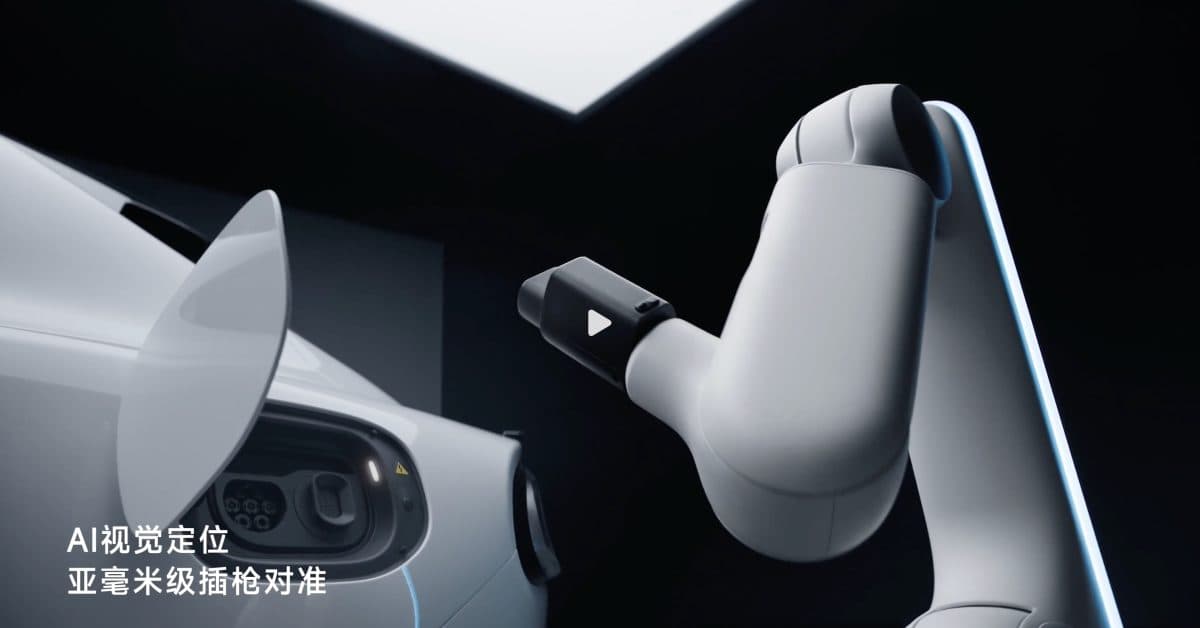
Xiaomi Delivers on Tesla’s Decade-Old Robot Charger Vision with New Home Robotic Arm
Companies Mentioned
Why It Matters
By offering a retrofit‑friendly, high‑efficiency hands‑free charging solution, Xiaomi could accelerate mainstream EV adoption and challenge wireless‑charging roadmaps. Its aggressive pricing could make automated home charging affordable for a broader consumer base.
Key Takeaways
- •Xiaomi's 152 mm robotic arm fits tight home garages
- •AI vision enables sub‑millimeter plug insertion precision
- •Arm maintains ~95% efficiency, beating wireless 88‑93%
- •Works with any EV standard port, no vehicle changes
- •Pricing unknown; Xiaomi may price competitively
Pulse Analysis
The home‑charging market has long been dominated by manual plug‑in stations, even as industry giants like Tesla teased autonomous solutions a decade ago. Tesla’s 2015 snake‑like charger never reached production, and the company shifted toward wireless experiments that have stalled. Xiaomi’s entry arrives at a time when roughly 80% of EV charging occurs at residences, creating a clear gap for a convenient, retrofit‑ready system that doesn’t require vehicle redesign.
Xiaomi’s robotic arm leverages AI‑driven visual recognition to align the connector within sub‑millimeter tolerances, ensuring a reliable seal and preserving the ~95% energy efficiency of conductive charging. This efficiency edge matters because wireless inductive pads typically lose 7‑12% of power, translating into higher electricity bills over a vehicle’s lifetime. Moreover, the arm’s compatibility with any standard Type‑2 or CCS port eliminates the need for costly vehicle modifications, offering a universal solution for the fragmented EV ecosystem.
From a market perspective, Xiaomi’s aggressive pricing history suggests the robot could be priced well below premium wireless pads, potentially democratizing hands‑free charging for mid‑range consumers. Integrated with the company’s broader “human‑car‑home” IoT platform, the arm also opens avenues for data‑driven energy management and remote monitoring. As competitors like Hyundai test similar robots in commercial settings, Xiaomi’s home‑focused design may set the benchmark for the next wave of EV convenience, prompting automakers and charging networks to reconsider the balance between wireless and robotic‑arm technologies.
Xiaomi delivers on Tesla’s decade-old robot charger vision with new home robotic arm
Comments
Want to join the conversation?
Loading comments...