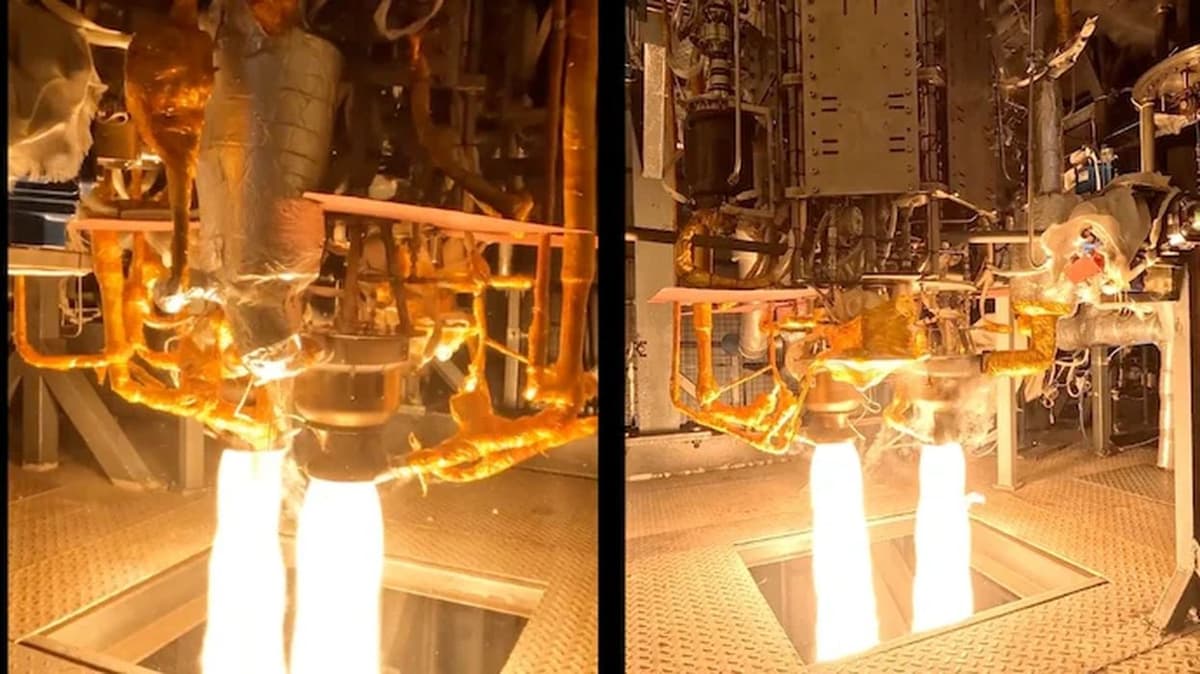
3D Printing Continues to Reshape Rocket Engine Design as Agnikul Tests New Engine
Key Takeaways
- •Agnikul’s 3D‑printed semi‑cryogenic engine achieved full‑thrust test
- •Engine uses liquid oxygen and standard aviation fuel for throttling
- •Single‑piece printed design cuts weight and removes seam‑failure risk
- •Throttleable engine enables reusable booster landing, lowering launch costs
- •Success showcases India’s additive‑manufacturing edge in space sector
Pulse Analysis
Additive manufacturing has moved from niche prototyping to a core technology for rocket propulsion. Companies such as SpaceX, Rocket Lab, and Relativity Space have already leveraged 3D‑printing to produce complex engine parts in fewer steps, reducing part count and material waste. The technology’s ability to create intricate cooling channels and monolithic structures improves thermal performance while shaving kilograms off the vehicle, a critical advantage in the cost‑sensitive launch industry.
Agnikul’s latest milestone centers on a semi‑cryogenic engine that blends liquid oxygen with standard aviation fuel, a combination that offers both high specific impulse and operational simplicity. By printing the entire thrust chamber and injector as a single unit, the firm eliminates traditional welds and fasteners that can become failure points under extreme thermal cycling. The engine’s throttle capability is essential for the company’s reusable booster concept, mirroring the landing‑first approach pioneered by SpaceX. If successful, Agnikul could offer lower‑priced launch slots from Indian spaceports, challenging established players and expanding access for commercial satellite operators.
The broader implications extend beyond a single test. As 3D‑printing matures, supply chains become more localized, reducing dependence on overseas machining and allowing rapid design iterations. Investors are increasingly viewing additive‑manufactured rockets as a pathway to higher margins and faster time‑to‑market. For the Indian aerospace sector, this breakthrough could catalyze a new wave of startups, stimulate skilled‑labor growth, and attract foreign capital seeking diversified launch options. In a market where launch cost per kilogram remains a decisive factor, the convergence of 3D‑printing and reusable technology promises to reshape the economics of space access.
3D Printing Continues to Reshape Rocket Engine Design as Agnikul Tests New Engine
Comments
Want to join the conversation?