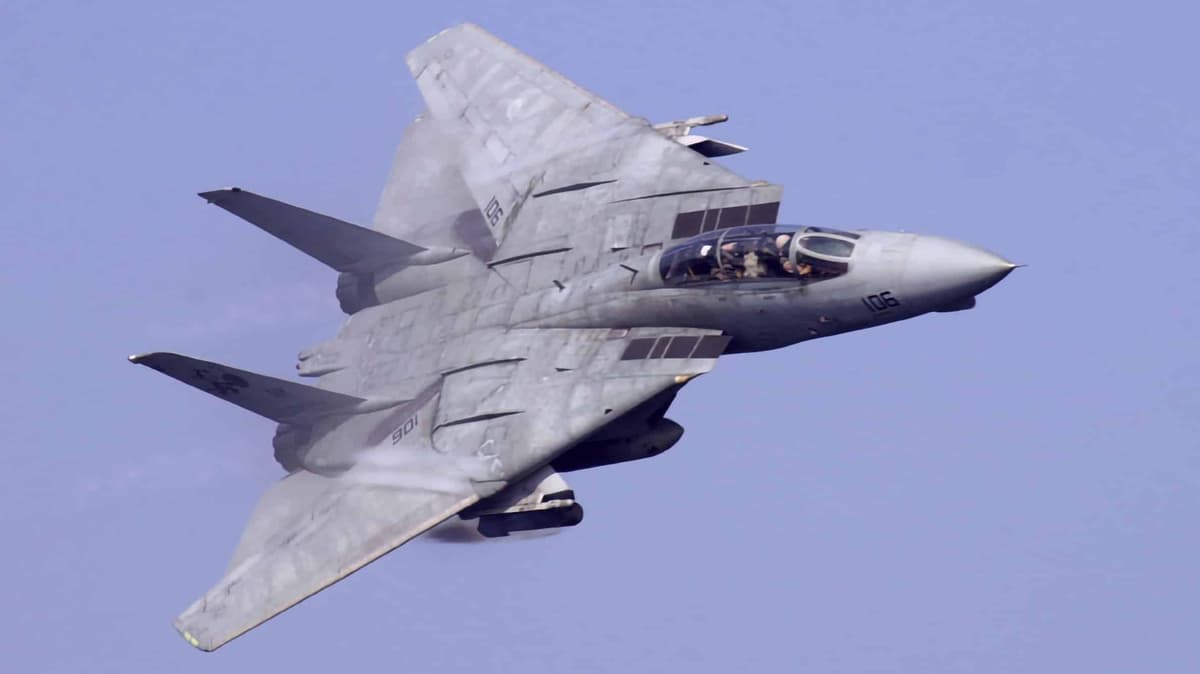
A U.S. Navy F-14D Tomcat Might Return to the Skies Thanks to Congress’ “Maverick Act”
Key Takeaways
- •Maverick Act moves three F‑14Ds to Huntsville museum
- •One Tomcat may be restored using existing Navy spare parts
- •Restoration costs and FAA certification fall on the museum
- •Limited parts and desert storage make flight restoration expensive
- •Successful flight could spark heritage airshows and public engagement
Pulse Analysis
The Grumman F‑14 Tomcat, a two‑seat, variable‑sweep wing fighter that dominated carrier decks from the 1970s until its 2006 retirement, has long been a symbol of U.S. naval power. Earlier this year, the Senate unanimously approved the so‑called Maverick Act, a bipartisan bill introduced by Sen. Tim Sheehy and co‑sponsored by Sen. Mark Kelly. The legislation would transfer three retired F‑14D airframes—bureau numbers 164341, 164602, and 159437—to the U.S. Space & Rocket Center in Huntsville, Alabama, with the explicit permission to restore one to flightable condition using existing Navy inventory. The move marks the first congressional effort to return a Tomcat to the skies after two decades of dormancy.
Restoring a 20‑year‑old Tomcat is far from straightforward. Most spare parts were destroyed or removed after the fleet’s decommissioning to prevent illicit sales, especially to former operator Iran, leaving a fragmented supply chain. The bill requires the Navy to provide only excess parts already in stock, while the museum must fund all inspections, structural repairs, and system overhauls needed for Federal Aviation Administration certification. Engineers will need to conduct deep airframe fatigue analyses, replace aging avionics, and address corrosion from desert storage—processes that can run into the millions of dollars and take several years.
If the museum succeeds, a flying F‑14D could become a centerpiece for heritage airshows, educational programs, and fundraising events, drawing enthusiasts and boosting tourism in Huntsville’s already vibrant aerospace corridor. The project also signals a broader willingness among lawmakers to preserve historic military technology for public benefit, potentially opening doors for similar restorations of other retired platforms. While sustained operational costs remain high, limited demonstration flights would showcase the Tomcat’s legendary performance, reinforce naval aviation legacy, and provide a tangible link between past combat capabilities and today’s aerospace innovation.
A U.S. Navy F-14D Tomcat Might Return to the Skies Thanks to Congress’ “Maverick Act”
Comments
Want to join the conversation?