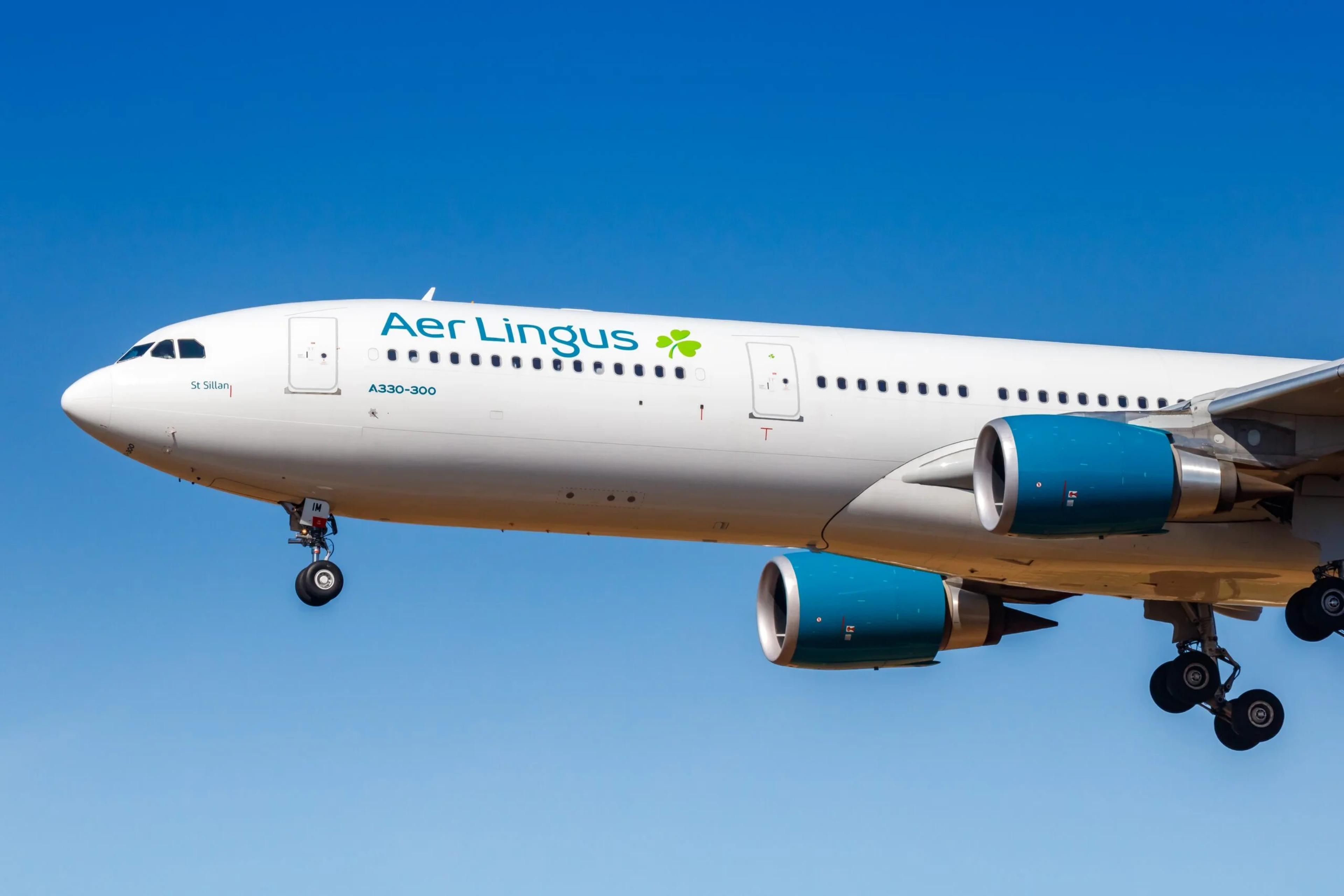
Aer Lingus Confirms Its Closing Manchester Long-Haul Base After Cabin Crew Asked For More Money
•January 29, 2026
0
Why It Matters
The closure highlights how labor disputes and underperforming routes can force airlines to reshape networks, impacting jobs and passenger connectivity in the UK‑Ireland market.
Key Takeaways
- •Aer Lingus closes Manchester long‑haul base March 31, 2026.
- •200 cabin crew jobs eliminated due to base shutdown.
- •Base underperformance cited versus Dublin operations.
- •Strike over 9% pay rise preceded closure announcement.
- •Passengers must rebook via Dublin; no direct alternatives.
Pulse Analysis
Aer Lingus launched its Manchester long‑haul operation in 2021 to capture residual capacity from the Thomas Cook collapse, positioning the UK airport as a gateway for leisure transatlantic traffic. While the initial strategy promised higher aircraft utilization, the route mix—primarily New York, Orlando and seasonal Barbados—struggled to achieve the yields of the carrier’s Dublin‑based network. Analysts point to higher airport fees, limited connecting traffic, and a fragmented UK market as factors that eroded the base’s profitability, prompting the airline to reassess asset allocation.
The timing of the shutdown coincides with a hard‑line cabin‑crew strike demanding a 9% wage increase and better conditions. Union negotiations stalled, and Aer Lingus’s threat to close the base was perceived as a bargaining chip, a tactic not uncommon in legacy carriers facing cost pressures. The eventual decision to cease operations, while framed as a commercial necessity, underscores the delicate balance between labor costs and route economics. Passengers booked beyond the March deadline face indirect rebooking via Dublin, a move that may dilute brand loyalty and increase operational complexity for the airline’s short‑haul fleet.
Looking ahead, the withdrawal from Manchester signals a broader industry trend where airlines prune peripheral long‑haul hubs to concentrate on core, high‑margin corridors. The two wide‑body aircraft formerly based in Manchester are likely to be redeployed to strengthen Dublin’s schedule or leased to other carriers, preserving fleet efficiency. For the UK leisure market, the loss of a direct Aer Lingus option may open space for competitors such as Virgin Atlantic or low‑cost long‑haul entrants, reshaping competitive dynamics and passenger choice in the post‑pandemic recovery phase.
Aer Lingus Confirms Its Closing Manchester Long-Haul Base After Cabin Crew Asked For More Money
Aer Lingus has confirmed that it will shutter its transatlantic long-haul base in Manchester, with the loss of 200 cabin crew jobs, after workers went on strike in a dispute over pay and conditions.
The airline claims the decision is due to the base underperforming compared to its Dublin operation, although the timing, first threatened just a month after cabin crew went on strike, has raised eyebrows across the industry.
In this article…

Aer Lingus opened a transatlantic long-haul base at Manchester, which operated flights to New York, Orlando, and Barbados.
Aer Lingus stops transatlantic flights from April 2026
On Wednesday, Irish flag carrier Aer Lingus confirmed it was shuttering its transatlantic long-haul base in Manchester after concluding a mandatory consultation period with the union that represents cabin crew.
The threat to close the base was first announced in November 2025, and earlier this month, flights were removed from sale from the end of March 2026.
Aer Lingus says that while the base will be permanently closed on March 31, 2026, its Manchester to New York JFK route will cease operations on February 23.
In a statement, the airline did not address the impact that the decision will have on workers, but said: “We understand that this is disappointing news and apologise for the disruption to our customers. All impacted customers are being informed of the cancellation of flights directly and provided with reaccommodation and refund options.”
The statement added: “We appreciate our customers’ patience and cooperation during this time, as we contact customers directly regarding their flights.”
Threat followed cabin crew strike over pay and working conditions
Aer Lingus first posed the possibility of closing the base in November 2025, claiming that the financial performance of its long-haul flights from Manchester “significantly lagged” its operations in Dublin.
In an internal memo, the airline warned that the disparity in the operating margin between its operations in Manchester and Dublin made it “difficult to justify further investment in the Manchester base and raises the question as to whether there are potentially better alternative uses of the two aircraft that are in the Manchester base.”
The timing was, however, highly questionable, as the announcement came just a month after workers rejected a 9% pay rise and voted in favor of strike action and staged a series of walkouts that disrupted flights.
It was suspected that Aer Lingus was using the threat of closing the base as a bargaining chip in negotiations, but despite the Unite union pleading with the airline to explore ways to keep its Manchester long-haul operation up and running, those talks ultimately failed.
Passengers refused rebooking on direct flights from Manchester
Passengers who had already booked to fly with Aer Lingus from Manchester to New York, Orlando, and Barbados after March 31 have been scrambling to get rebooked on alternative flights.
Aer Lingus has, however, refused to offer customers direct rebooking options, notably with Virgin Atlantic, which has its own base in Manchester.
Instead, Aer Lingus is expecting passengers to first fly on short-haul services from Manchester to Dublin and then transfer onto one of its long-haul flights.
As Aer Lingus doesn’t ordinarily serve Barbados from Dublin, the airline said on Wednesday that it intends to operate a temporary service on this route in April and May to reaccommodate affected passengers.
Why was Aer Lingus operating long-haul flights from Manchester in the first place?
In 2021, Aer Lingus had long-haul aircraft that weren’t being used and was on the hunt for opportunities to get them back in the air. The airline spotted an opening at Manchester Airport following the collapse of the leisure carrier Thomas Cook.
Aer Lingus set up a seperate UK business to operate long-haul leisure flights from Manchester, along with a seperate Air Operators Certificate (AOC) that is distinct from its Irish operation.
During the last few years, Aer Lingus has hired around 200 cabin crew under this British AOC to operate these long-haul flights, and, until only recently, it was believed that the operation was performing well.
What Aer Lingus now plans to do with the two widebody aircraft that were based in Manchester remains to be seen.
Will affected passengers be able to claim compensation?
It’s unlikely that passengers who have booked tickets on flights that are set to depart after March 31, 2026, will be eligible to claim compensation under British or European passenger rights regulations because Aer Lingus has provided a sufficient notice period.
Generally speaking, airlines do not have to provide compensation if they provide at least two weeks’ notice of the cancellation. Aer Lingus said in a statement that it is proactively contacting affected customers and is providing them options.
Customers have been told that they can choose between a full refund or a rerouting to their intended destination.
The post Aer Lingus Confirms Its Closing Manchester Long-Haul Base After Cabin Crew Asked For More Money appeared first on PYOK.
0
Comments
Want to join the conversation?
Loading comments...