Airbus’ Next New Airplane Part 4. How Does the ZEROe Fit In?
Key Takeaways
- •Airbus received ~€200 M (≈$215 M) French pandemic aid.
- •ZEROe concepts target 2035 hydrogen‑powered commercial service.
- •Airbus delayed hydrogen program in 2025, citing technical hurdles.
- •ATR, 50% owned by Airbus, plans hybrid‑electric turboprop by 2029.
- •Uncertainty reshapes Airbus Next New Airplane roadmap toward greener tech.
Pulse Analysis
The COVID‑19 crisis forced governments to inject capital into the aerospace sector, and Airbus was a primary beneficiary of French state support. While Boeing relied on Treasury‑backed bond purchases, Airbus accepted direct subsidies, reinforcing its historic reliance on public funding to launch new programs. This financial cushion enabled the company to announce the ZEROe initiative, a bold commitment to develop a hydrogen‑fueled commercial jet by 2035, positioning Airbus as a potential leader in zero‑emission aviation.
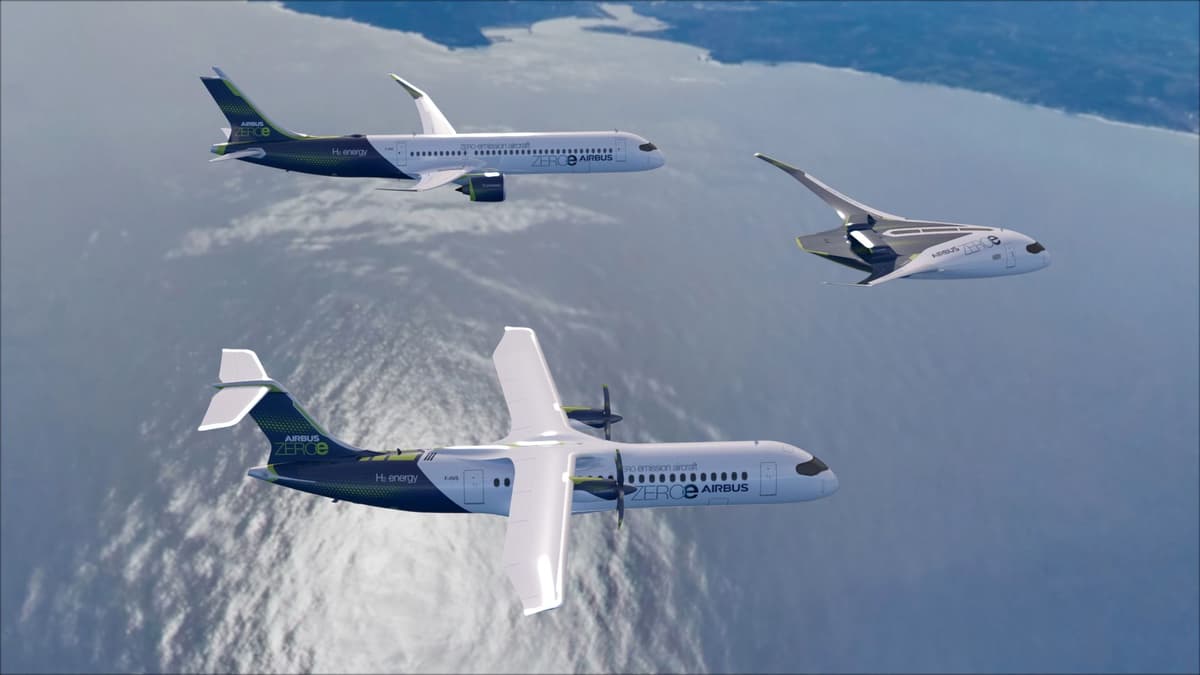
The ZEROe portfolio showcased three divergent designs: a turboprop‑style propeller aircraft, a conventional tube‑and‑wing jet, and an ambitious blended‑wing‑body. Each aimed to demonstrate the feasibility of liquefied hydrogen storage and combustion at scale. However, by 2025 Airbus admitted the timeline was overly optimistic, citing the weight penalties of hydrogen tanks, infrastructure gaps, and rising development costs. Concurrently, its subsidiary ATR announced a hybrid‑electric turboprop slated for 2029, leveraging its 50 % ownership stake to diversify Airbus’s clean‑flight portfolio and hedge against the hydrogen program’s delays.
These developments reshape the Airbus Next New Airplane (NNN) agenda. The postponement of the hydrogen flagship forces Airbus to prioritize incremental, lower‑risk technologies—such as hybrid‑electric powerplants and advanced aerodynamics—while still signaling a long‑term commitment to carbon‑neutral flight. Competitors like Boeing and emerging Chinese OEMs are watching closely, as the pace of sustainable propulsion adoption will dictate market share in the next generation of narrow‑body and regional aircraft. Airbus’s ability to integrate these divergent pathways will determine whether the NNN becomes a cohesive, future‑proof platform or a fragmented set of experimental projects.
Airbus’ Next New Airplane Part 4. How does the ZEROe fit in?
Comments
Want to join the conversation?