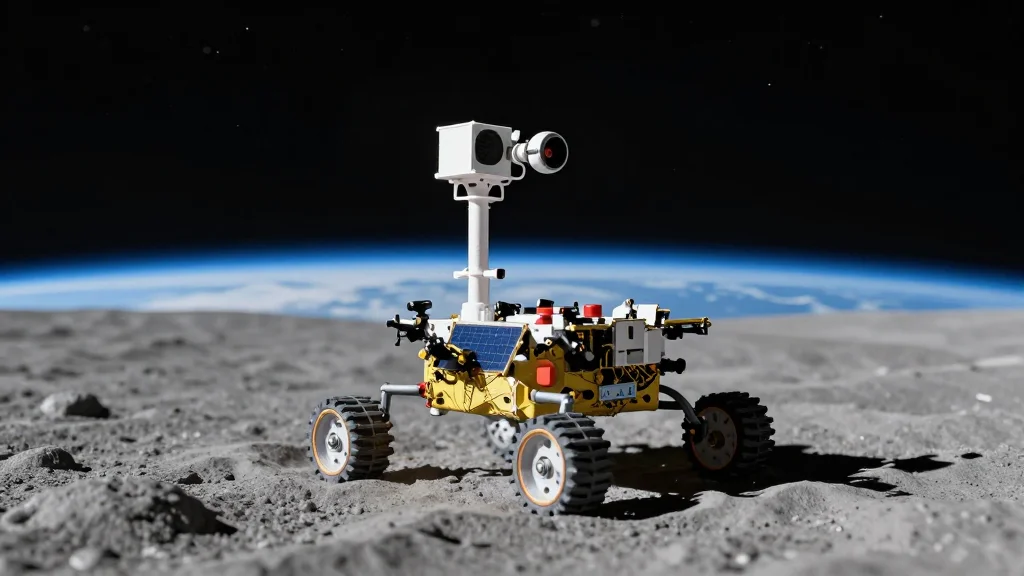
Articles: Science From Chandrayaan 3
Key Takeaways
- •Rover's APXS performed 23 X‑ray measurements of lunar soil and rock
- •Thermal experiment revealed subsurface water ice potential for future landers
- •Spectral data suggest possible exposure of mantle material on lunar surface
- •Orbiter captured Earth’s disk, informing exoplanet observation techniques
- •Chandrayaan 3’s findings reshape models of Moon’s magma‑ocean era
Pulse Analysis
Chandrayaan 3’s scientific payload has turned the Moon into a laboratory for planetary scientists. The rover’s Alpha‑Particle X‑ray Spectrometer (APXS) generated a co‑added spectrum from 23 distinct soil and rock sites, delivering the most granular compositional map of the lunar near‑side to date. By pinpointing variations in iron, titanium, and rare‑earth elements, researchers can now trace the differentiation history of the lunar crust and test competing theories about the Moon’s giant‑impact origin.
Beyond surface chemistry, the mission’s thermal probe has uncovered subtle temperature gradients that hint at buried water‑ice deposits in permanently shadowed regions. This discovery is pivotal for the emerging lunar economy, where in‑situ resource utilization could lower launch costs for habitats, fuel, and life‑support systems. The data also provide a benchmark for NASA’s Artemis and private lunar lander programs, which are racing to secure water sources for sustainable operations.
Perhaps most intriguingly, Chandrayaan 3’s orbiter captured high‑resolution images of Earth’s illuminated disk, offering a rare analog for exoplanet studies. By analyzing Earth’s reflected light curves, astronomers can refine techniques to detect biosignatures on distant worlds. Coupled with the possible identification of mantle material on the surface, the mission bridges lunar geology and exoplanetary science, reinforcing the Moon’s role as a stepping stone for broader cosmic exploration.
Articles: Science from Chandrayaan 3
Comments
Want to join the conversation?