The disruption underscores the vulnerability of major European hubs to extreme winter weather and raises questions about passenger compensation under EU regulations.
Berlin’s capital airport is a bellwether for how European infrastructure copes with increasingly volatile winter storms. While BER is equipped with winter‑weather teams, the sudden onset of freezing rain created a thin, transparent layer of black ice that standard snow‑plows cannot melt. Unlike roadways, where salt can be spread, airfields rely on high‑performance liquid de‑icers and mechanical scrapers, a process that demands precise timing to keep runways safe for take‑off and landing. The recent two‑day suspension illustrates the narrow margin between operational continuity and safety mandates when temperatures hover around the freezing point.
Beyond the immediate operational headaches, the incident spotlights the regulatory landscape governing passenger rights. Under EU Regulation EC‑261, airlines must provide care—meals, accommodation, re‑routing—but may invoke “extraordinary circumstances” to deny monetary compensation for delayed or cancelled flights caused by weather. This legal nuance leaves travelers in a gray area, especially when disruptions extend over multiple days. Airlines, therefore, balance cost‑recovery against reputational risk, often opting for vouchers or re‑booking to maintain goodwill while navigating the fine print of the law.
The broader economic ripple extends to Berlin’s municipal services and health system. A surge in slip‑related injuries, with hospitals reporting 30‑40 cases daily, strains emergency resources and fuels public debate over the city’s ban on road‑salt usage. Policymakers must weigh environmental goals against public safety, potentially revisiting de‑icing strategies for both streets and runways. For airlines and logistics firms, the episode reinforces the need for robust contingency planning, real‑time weather analytics, and flexible scheduling to mitigate revenue loss and preserve passenger confidence during extreme weather events.
Flights at Berlin Brandenburg, the German capital’s main airport, have been grounded for the second day in a row after freezing rain and black ice made the airfield so dangerous that operations had to be suspended.
The German Weather Service has issued a severe weather warning for the region, saying there is a danger to life and limb due to the slippery conditions that have already caused a spike in hospitalizations.

Berlin has experienced a particularly long and bitter cold spell this year, but operations at Berlin Brandenburg Airport (BER) had remained largely unaffected until Thursday morning, when a spell of freezing rain caused havoc, delaying and cancelling multiple flights.
Operations were able to resume later on Thursday, but the freezing rain has persisted into Friday. A spokesperson for the airport said that the airfield was being closed sporadically so that winter weather teams could work on clearing the taxiways and runways of black ice.
Flight operations have been suspended on several occasions on Friday, although the airport is not completely closed. Passengers are advised to check the status of their flight before attempting to make their way to the airport.
Black ice is a thin, transparent layer of ice on roads, concrete, and tarmac that is so-named because not only is it incredibly hard to see, but it is also very slippery and, therefore, very dangerous.
Although Berlin Brandenburg is accustomed to dealing with winter weather operations, black ice is notoriously difficult to deal with because it forms so quickly and is quite difficult to clear.
In this case, the black ice is being formed by the freezing rain, which freezes very quickly on impact with concrete. A smooth, glass-like layer is then formed and must be cleared before flights can take off or land.
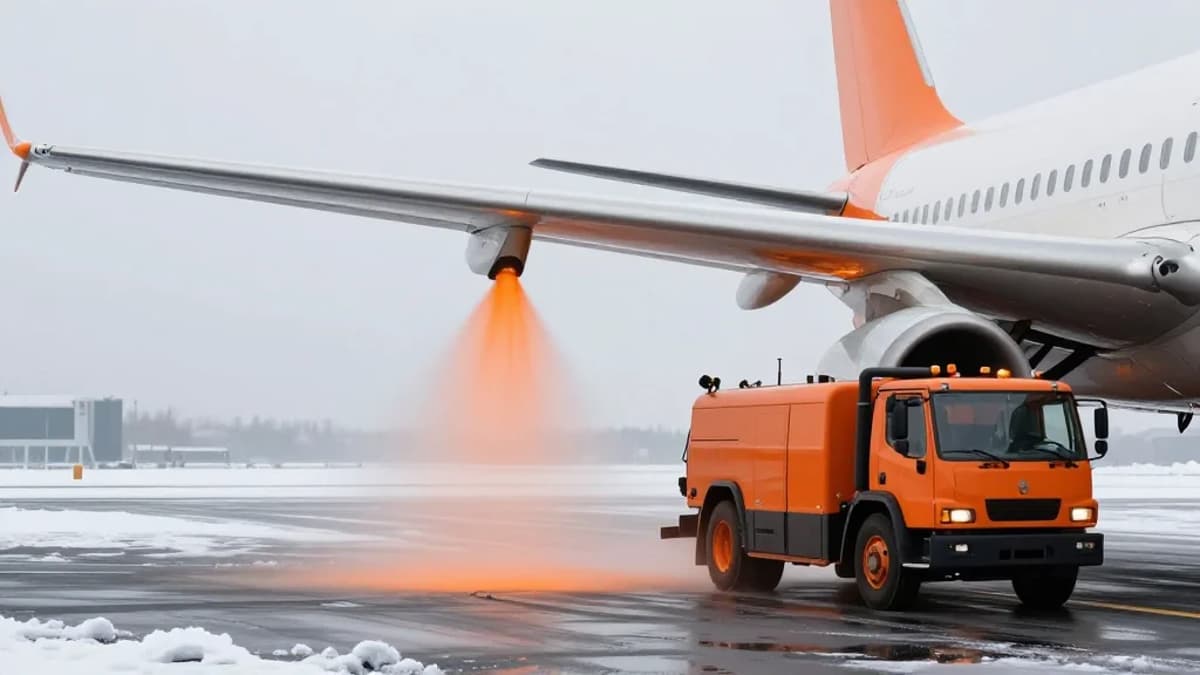
Unlike roads, salt can’t be used to melt the ice, but instead, special liquid de-icers, which are used in conjunction with traditional airfield sweepers and scrapers.
Given that this is an unusual event, passengers who have been affected by a significantly delayed or cancelled flight might not be eligible to claim compensation under the European Union’s EC-261 passenger rights regulations because airlines are likely to argue that the weather is an extraordinary circumstance.
That being said, no matter the cause of the delay or cancellation, airlines are required to provide care and assistance:
For flights 1,500km or less – the delay must be at least two hours
For flights within the EU more than 1,500km and for all other flights between 1,500 and 3,000km – the delay must be at least three hours
For all other flights – the delay must be at least four hours
Assistance covered by the regulations includes:
Meals and refreshments appropriate to the length of the delay
Hotel accommodation for overnight delays
Transport to and from the place of accommodation
Passengers who have their flight cancelled have additional rights:
Airlines must re-route passengers to their final destination at the earliest opportunity.
Passengers can also choose to be rerouted at a later date under comparable transport conditions to what they booked.
Or passengers can abandon their journey and request a refund. If they are partway through a connecting itinerary, the airline must make arrangements to return them to their point of origin.
The slippery conditions have gripped Berlin for several weeks, and they are proving to be no laughing matter, made worse by environmental regulations that ban the use of salt on footpaths.
As a result, the number of slip-related accidents has skyrocketed. On Monday alone, the police reported 201 accidents, and one of Berlin’s biggest hospitals says between 30 and 40 people a day are turning up at the emergency department with injuries from slipping on the ice, including broken wrists and concussions.
Local lawmakers attempted to temporarily suspend the salt ban law, but the Berlin Administrative Court intervened, saying that the Berlin authorities had no legal right to suspend a nationwide law.
The post Berlin Airport Grounds Flights For Second Day In A Row As Freezing Rain And Black Ice Cause Havoc appeared first on PYOK.
Comments
Want to join the conversation?
Loading comments...