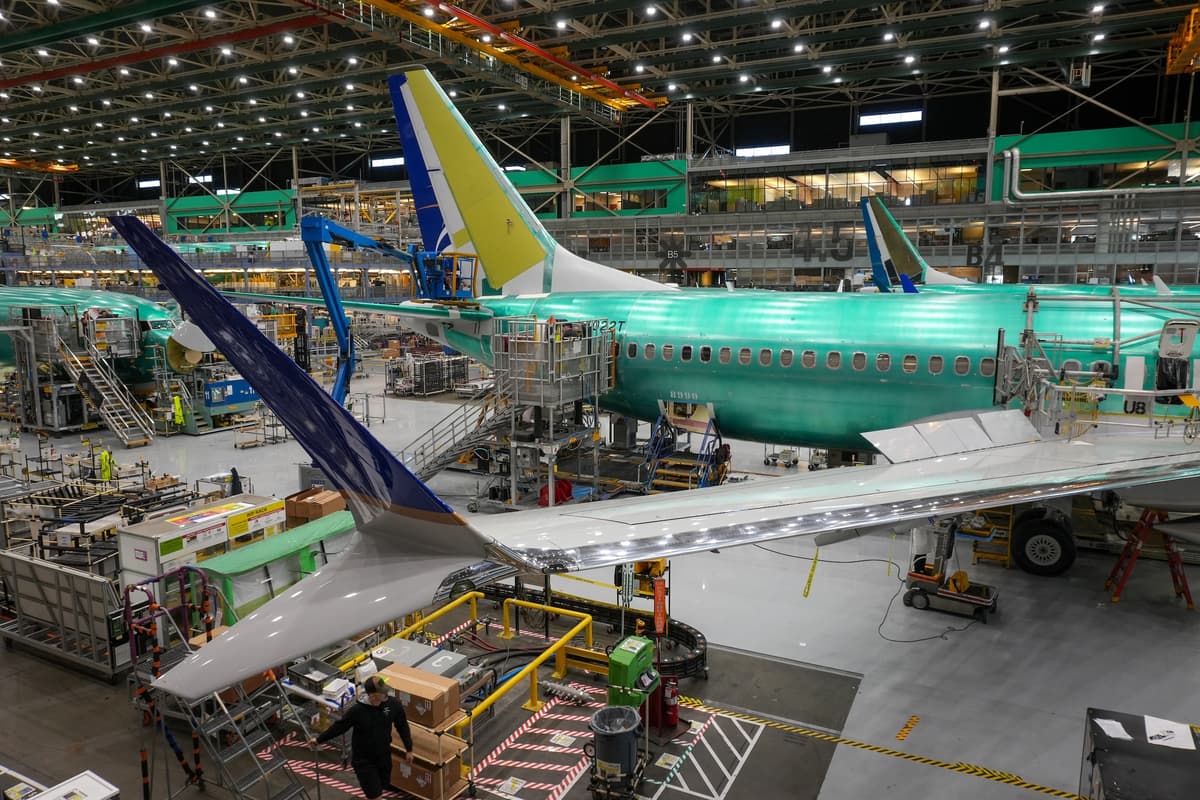
Boeing Explores Hiking 737 Production Close to Rival Airbus’s Stratospheric Target
Key Takeaways
- •Boeing studies 70‑jet monthly 737 output, exceeding current 63‑jet peak.
- •Target rivals Airbus’s 75‑jet monthly goal for A320neo by 2027.
- •Supply chain capacity and supplier pacing remain critical uncertainties.
- •Boeing’s backlog of 4,872 single‑aisle orders supports higher production.
- •Higher output could boost cash flow and narrow Airbus’s market lead.
Pulse Analysis
Boeing’s contemplation of a 70‑jet‑per‑month 737 cadence reflects a strategic push to capitalize on a robust order book and to close the gap with Airbus’s ambitious 75‑jet target for its A320neo family. The narrow‑body segment, which accounts for the bulk of global commercial deliveries, has rebounded sharply post‑COVID, leaving both manufacturers with backlogs that extend well into the 2030s. By nudging production upward, Boeing aims to translate excess demand into higher revenue streams and to reinforce its position in a market where Airbus has held a decade‑long lead.
Achieving such a ramp‑up, however, tests the resilience of a tightly interwoven supply chain shared by the duopolists. Suppliers must accelerate component deliveries, manage tighter inventory turns, and sustain quality standards amid a history of disruptions, including Boeing’s 2024 Seattle strike that halted output for nearly two months. The company’s recent adherence to its master schedule suggests disciplined coordination, yet scaling production every six months will require suppliers to expand capacity, potentially incurring higher costs and longer lead times. Any bottleneck could reverberate across both OEMs, given the overlap in parts and sub‑assemblies.
Financially, a sustained 70‑jet monthly rate could lift Boeing’s cash flow considerably, offsetting recent earnings volatility and funding future technology investments. It also positions the firm to capture a larger share of the lucrative leasing and aftermarket services market tied to higher fleet numbers. For airlines, increased delivery velocity may ease backlog pressures, enabling fleet modernization and route expansion. Nonetheless, the ultimate payoff depends on demand staying strong and suppliers keeping pace, making the initiative a high‑stakes gamble that could redefine the competitive landscape of commercial aviation.
Boeing explores hiking 737 production close to rival Airbus’s stratospheric target
Comments
Want to join the conversation?