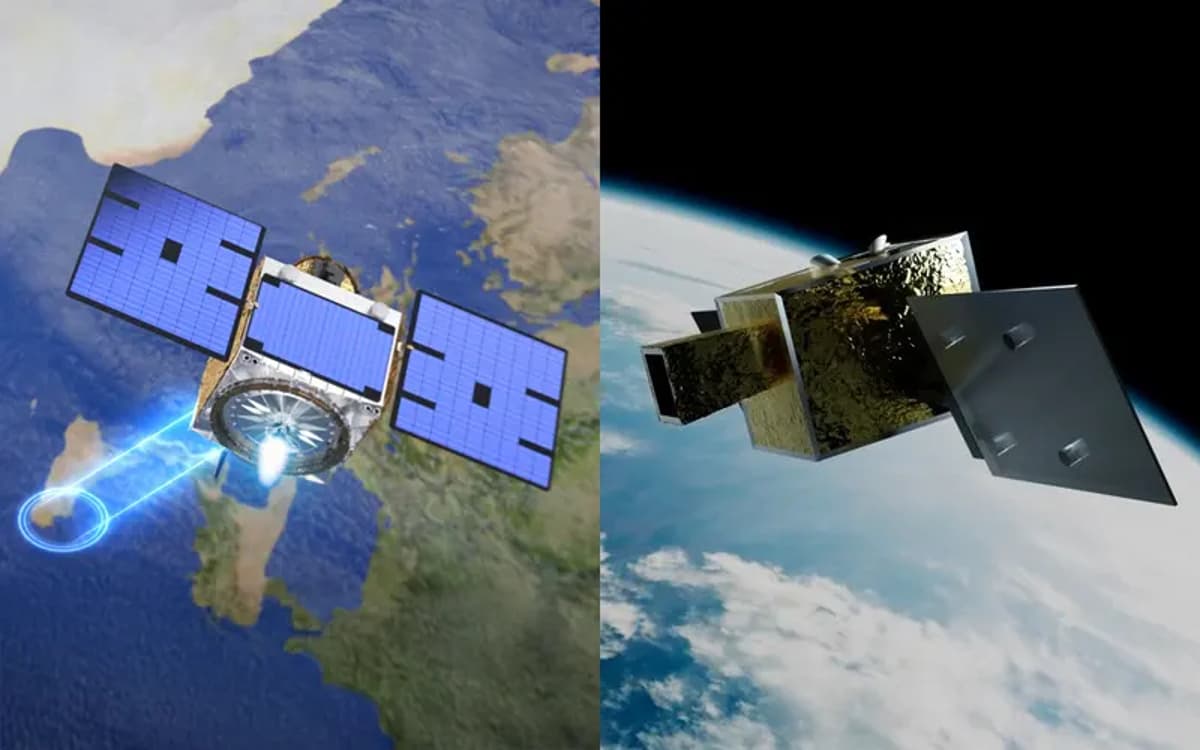
ESA Greenlights Two Budget-Friendly Earth Observation Missions
Key Takeaways
- •HiBiDiS targets under‑storey biodiversity with hyperspectral imaging
- •SOVA‑S will map atmospheric gravity waves using shortwave infrared
- •Both must launch within three years under €35 M budget
- •Contracts expected by year‑end after Member State approval
- •Scout class aims for rapid, low‑cost Earth science breakthroughs
Pulse Analysis
The European Space Agency’s recent greenlight for the HiBiDiS and SOVA‑S Scout missions underscores a strategic shift toward rapid, cost‑effective Earth observation. By capping development at €35 million (about $38 million) and a three‑year timeline, ESA’s FutureEO‑derived Scout programme aims to bypass the lengthy, multi‑billion‑dollar cycles that have traditionally dominated satellite projects. This model not only accelerates scientific return but also lowers entry barriers for emerging European aerospace firms, fostering a more diversified industrial base.
HiBiDiS, built by Italian small‑satellite specialist SITAEL, will carry a hyperspectral sensor designed to penetrate forest canopies and quantify understory plant diversity. Such data are vital for climate‑change monitoring, conservation planning, and carbon‑stock assessments. Meanwhile, OHB Czechspace’s SOVA‑S will capture shortwave infrared imagery of gravity waves between 80 and 120 km altitude, offering near‑global daily coverage of atmospheric dynamics that influence weather forecasting and space‑weather models. Both missions illustrate how niche scientific objectives can be met with compact platforms, delivering high‑value datasets without the expense of larger flagship satellites.
The broader implication for the European space sector is a validation of agile, low‑budget satellite development as a viable path to market relevance. By empowering smaller contractors and streamlining procurement through Member State consensus, ESA is cultivating a competitive ecosystem that can rival commercial players like Planet and Maxar. As the Scout class matures, we can expect a cascade of specialized missions—ranging from precision agriculture to climate monitoring—further cementing Europe’s role in the next generation of Earth observation services.
ESA Greenlights Two Budget-Friendly Earth Observation Missions
Comments
Want to join the conversation?