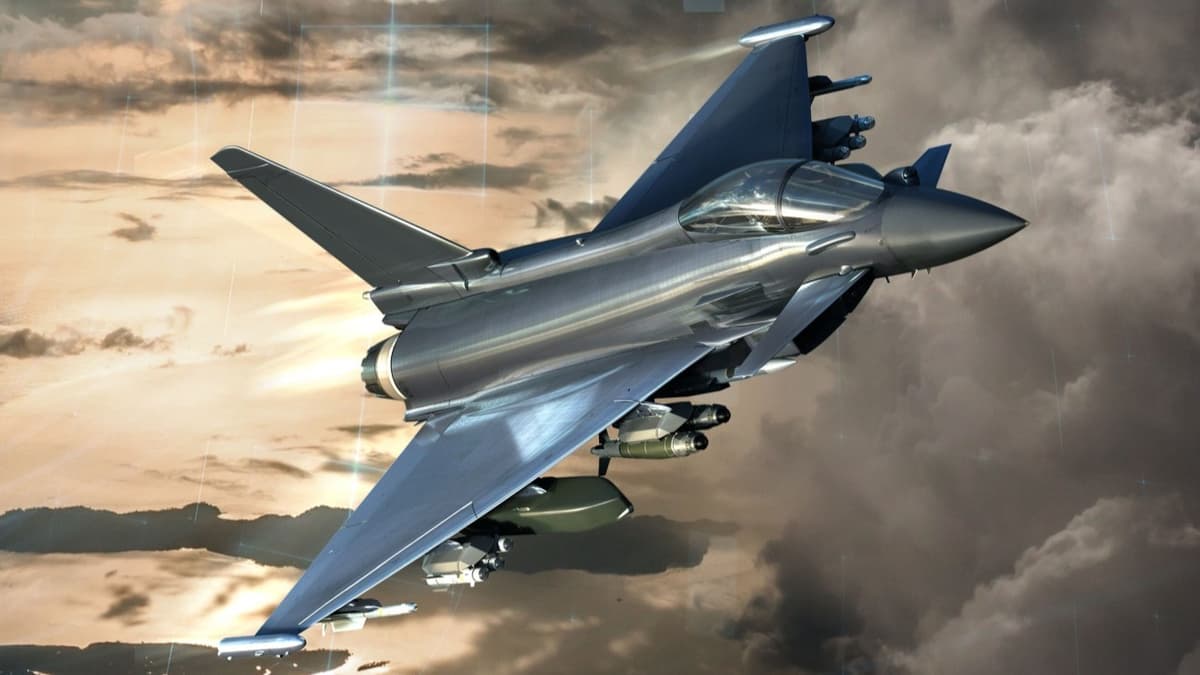
The AMK upgrade expands the Typhoon’s combat envelope and weapons flexibility, reinforcing NATO’s air‑defence capability and extending the aircraft’s service life. It also dovetails with Germany’s Tranche 5 and EK SEAD programs, ensuring a seamless transition to next‑generation air power.
The renewed Aerodynamic Modification Kit represents a strategic inflection point for the Eurofighter Typhoon, a platform already central to European air‑defence. By re‑engineering the fuselage strakes, leading‑edge root extensions, and flaperons, the AMK reshapes airflow to delay separation, delivering a reported 25% lift increase and double‑digit gains in roll rate. These aerodynamic gains translate into tighter turning radii and higher angle‑of‑attack margins, directly enhancing survivability in contested environments where modern threats demand rapid, high‑G manoeuvres.
Beyond pure performance, the AMK serves as a modular gateway for next‑generation weaponry. Its design accommodates anti‑radiation missiles like the AGM‑88E AARGM and future standoff munitions, streamlining certification pathways for new external loads. This flexibility dovetails with the Typhoon’s Phase 4 Enhancement (P4E) roadmap, which includes advanced AESA radar, automated sensor‑management, and upgraded cockpit interfaces. By integrating these capabilities, operators can field a more lethal, network‑centric aircraft without awaiting a clean‑sheet replacement.
Strategically, the AMK aligns with Germany’s Tranche 5 procurement and the development of the Eurofighter EK SEAD variant, positioning the Typhoon as a bridge to the Future Combat Air System (FCAS). The upgrade not only extends the service life of existing fleets into the 2060s but also reinforces NATO’s collective security posture amid evolving air‑defence challenges. As European allies seek cost‑effective modernization, the AMK offers a proven, incremental path to maintain air superiority while capitalising on existing industrial partnerships across Airbus, BAE Systems, and Leonardo.
Eurofighter and NETMA signed a contract for the development, testing, and certification of the Aerodynamic Modification Kit to be installed on the Typhoon
Eurofighter and the NATO Eurofighter and Tornado Management Agency (NETMA) have announced the signing of a contract for the development, testing, and certification of the Aerodynamic Modification Kit (AMK) to be installed on the Typhoon. The new contract marks a resurgence for the AMK, which already completed a flight‑test campaign in 2015.
The development of the AMK is considered part of the evolution of the Typhoon, which is expected to be the backbone of European air defence into the 2060s. The goal is to keep the platform operationally effective in modern scenarios, especially as new threats are proliferating and diverging from those the Eurofighter was originally designed to face.
“Signing the AMK contract marks a major milestone for the Eurofighter programme, further enhancing the jet’s long‑term capability.”
— Jorge Tamarit‑Degenhardt, Chief Executive Officer of Eurofighter
Eurofighter’s statement explains that the AMK will allow faster integration of new weapons and certification of new external loads, including future anti‑radar missiles, which enable the suppression and destruction of enemy air‑defence radars. Currently, the variant planned to receive anti‑radar weapons is the Eurofighter EK (Elektronischer Kampf/Electronic Warfare), a dedicated SEAD/DEAD (Suppression/Destruction of Enemy Air Defence) variant being developed for the Luftwaffe and planned to use the AGM‑88E Advanced Anti‑Radiation Guided Missile (AARGM).
The statement also mentions a “core customer,” without identifying it: “Additional capabilities like cutting‑edge air‑to‑ground weapons and air‑to‑air missiles will be integrated for the core customer in the AMK variant. Future integrations involve, among other, the latest version of standoff missiles.” This could refer to Germany, which, as part of its Tranche 5 order, plans to introduce the Taurus NEO, the latest variant of the Taurus KEPD 350 currently in development.
Image caption: The Eurofighter IPA 7 (Instrumented Production Aircraft 7) during testing of the Aerodynamic Modification Kit, whose components can be recognised by the darker colour. (Image credit: Airbus Defence and Space)
The AMK is said to provide an “enhanced target acquisition and improved close‑quarters combat capabilities,” thanks to extensions to the fuselage strakes, the flaperons and the leading‑edge root, which Eurofighter says result in “a noticeable increase in maximum wing lift.” Notably, the components mentioned are the same that were modified for the initial variant of the AMK.
The AMK development and production will be conducted by Eurofighter partner companies Airbus, BAE Systems, and Leonardo. The kit is currently planned to be part of the Eurofighter Typhoon’s Phase 4 Enhancement (P4E).
The Aerodynamic Modification Kit was initially developed and tested by Airbus as part of a wider Eurofighter Enhanced Manoeuvrability (EFEM) programme. The programme included roughly five years of studies, followed by a flight‑test campaign in 2015, during which pilots from Germany, Italy and the UK flew 36 sorties from Manching, Germany, on the IPA 7.
The kit included modified fuselage strakes (changing from a rectangular to a triangular shape), new leading‑edge root extensions (LERX, which connect the leading edge closer to the root with the sides of the engines’ inlets) and larger flaperons. According to a description on Eurofighter’s website, the AMK generates “even higher longitudinal stability.” The goal was to increase the maximum lift created by the wing by 25 %, resulting in higher turn rates, a tighter turning radius, and improved nose‑pointing capability at low speeds.
To achieve this, the kit “reshapes” the airflow to delay separation from the aircraft’s surface, providing controllability while flying at the edges of the flight envelope. Flight testing demonstrated angle‑of‑attack values up to 45 % higher and roll rates up to 100 % greater than the standard aircraft, as well as an increase of the maximum take‑off weight (MTOW) by several hundred kilograms.
Image caption: A Eurofighter of the German Air Force in “standard” configuration, without the components of the AMK. (Image credit: Stefano D’Urso/The Aviationist)
“This programme has been a tremendous success with very impressive results – in some areas even better than we expected,” said Eurofighter test pilot Raffaele Beltrame. “We saw angle‑of‑attack values around 45 % greater than on the standard aircraft, and roll rates up to 100 % higher, all leading to increased agility. The handling qualities appeared to be markedly improved, providing more manoeuvrability, agility and precision while performing tasks representative of in‑service operations.”
As previously reported by The Aviationist, German Chancellor Olaf Scholz announced during the opening of the ILA Berlin Air Show 2024 the order of Eurofighter Tranche 5 by the end of 2025, in addition to the 38 aircraft ordered as part of Project Quadriga. Scholz described the deal as part of the commitment to maintaining and expanding arms‑production capacity, as well as strengthening Germany’s commitment to NATO.
“This new order is further proof of the Eurofighter’s importance to the German Air Force and the strategic role it plays in our country’s air defence and NATO capabilities,” said Mike Schoellhorn, CEO of Airbus Defence and Space.
Airbus said in its press release that it will equip the 20 Eurofighters with the latest sensors, including the new electronic E‑Scan radar, also known as the European Common Radar System (ECRS) Mk 1 AESA radar.
In parallel, Airbus will add new electronic‑warfare capabilities by integrating the Saab Arexis sensor suite in existing and newly built aircraft. This modification, although not specifically mentioned, is part of the Eurofighter EK (Electronic Combat) configuration.
Image caption: The new artwork released for the German Eurofighter Tranche 5 contract. (Image credit: Airbus)
These new aircraft will likely be in the Phase 4 Enhancement (P4E) configuration, announced last year. P4E includes a number of developments, such as an automated sensor‑management capability for all Typhoon radars that will allow exploitation of the new AESA radar to perform multiple simultaneous tasks while reducing pilot workload.
The package also includes an improved cockpit interface and enhanced Radio‑Frequency Interoperability (RFIO), which will improve survivability and lethality. While the development of a Large‑Area Display for the Typhoon has been confirmed, it is unknown whether it will be included in the new cockpit interface.
With these upgrades, the Eurofighter is planned to remain in service with the German Air Force until the 2060s. The German Ministry of Defence previously confirmed that the Tranche 5 Eurofighters will be used to gradually transfer the capabilities of the ageing Tornado ECR (Electronic Combat and Reconnaissance).
Moreover, the Eurofighter is planned to operate alongside the Future Combat Air System (FCAS), scheduled to be operational from 2040. Within the FCAS ecosystem, the Eurofighter will operate in a network with both current and future crewed and uncrewed aircraft.
“The continued evolution of the Eurofighter serves as an essential technological and operational bridge to a Future Combat Air System (FCAS), ensuring a seamless transition to the next generation of air power. With these additional Eurofighters, Germany strengthens its ability to conduct surveillance of its airspace and secure NATO’s skies, supporting Germany in its role as a reliable partner for collective security,” added Schoellhorn.
Image caption: A Luftwaffe Eurofighter flying formation during a training mission. (Image credit: German Air Force)
In addition to Tranche 5, Germany has also approved a contract to continue work on the Eurofighter EK. This variant was initially green‑lighted by the German Government in 2023, after Airbus announced its development as the Eurofighter ECR (Electronic Combat/Reconnaissance) in 2019.
The Eurofighter EK is a dedicated Suppression of Enemy Air Defences (SEAD) variant being developed as the successor to the Tornado ECR. Airbus will equip 15 German Eurofighters for electronic combat, which will be NATO‑certified by 2030 and then replace the Tornado ECR in the SEAD role.
The Eurofighter EK will use the AGM‑88E AARGM, the Saab Arexis electronic‑warfare suite and other technologies developed by small and medium‑sized enterprises and a start‑up. Notably, these include an AI solution that can analyse radar data on‑board and quickly determine precise self‑protection measures.
Comments
Want to join the conversation?
Loading comments...