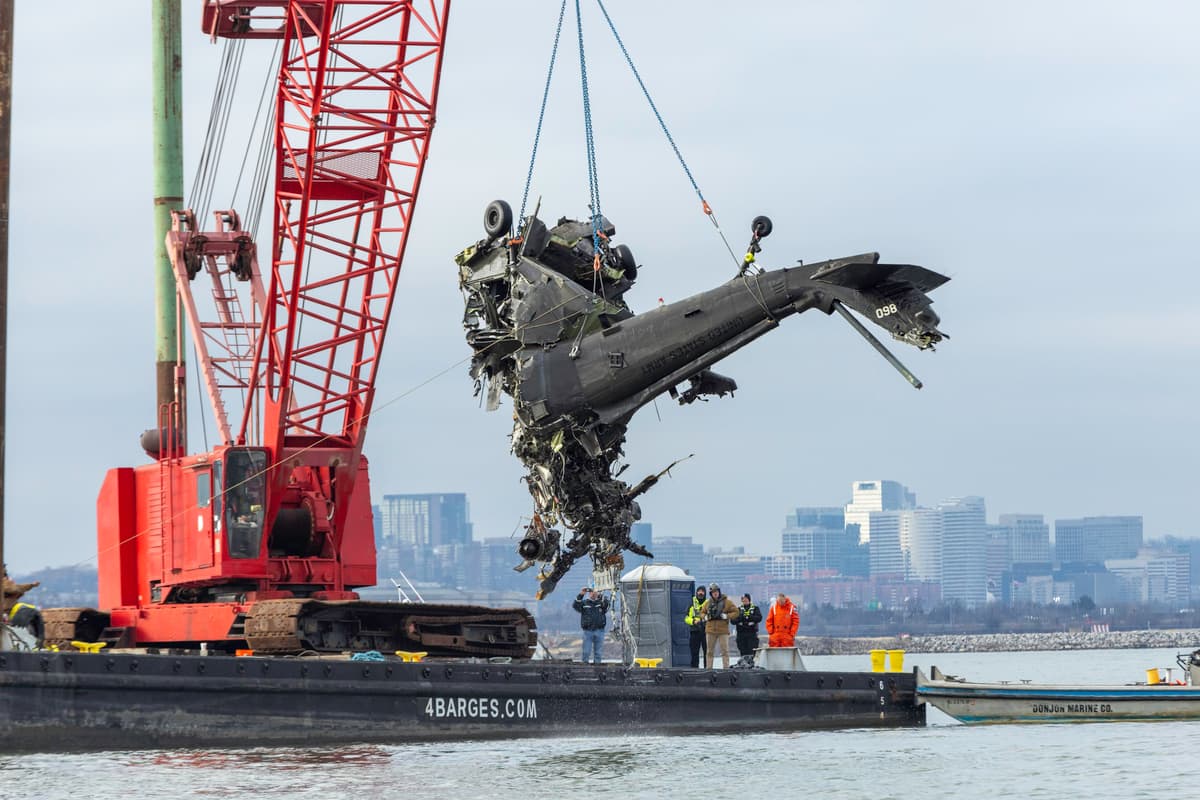
FAA Details First Official Response to D.C. Crash Safety Recommendations
Key Takeaways
- •FAA fully addressed seven of 30+ NTSB recommendations
- •Over half of recommendations targeted for completion by end‑2027
- •ADS‑B In mandate remains pending, tied to upcoming rulemaking
- •FAA to review DCA arrival‑hour limits after 2027 analysis
- •DOT OIG audit of FAA safety culture scheduled for Sep 2026
Pulse Analysis
The January 2025 tragedy over Washington, D.C., exposed deep‑seated flaws in how the FAA manages congested airspace around Ronald Reagan Washington National Airport. The NTSB issued nearly three dozen recommendations covering everything from arrival‑rate caps to mandatory ADS‑B In displays, aiming to prevent a repeat of the visual‑separation failures that contributed to the crash. Industry observers have long watched the FAA’s willingness to act, recognizing that the agency’s safety posture sets the baseline for both commercial carriers and general‑aviation operators nationwide.
In its May 2026 response, the FAA confirmed full compliance with seven recommendations and pledged to address more than half of the remaining items by the close of 2027. The most contentious issues remain ADS‑B In equipage and the rollout of ACAS X, the advanced version of the Traffic Collision Avoidance System. While the agency says it will "initiate rulemaking" on ADS‑B In, the timeline is tied to congressional action, leaving operators uncertain about when new equipment will be required. Simultaneously, the FAA is slated to evaluate the hourly arrival limit at DCA after a 2027 analysis, a metric the NTSB flagged as a key congestion driver.
The broader impact reaches beyond the FAA’s internal reforms. The DOT’s Office of Inspector General will audit the FAA’s safety culture in September 2026, signaling heightened oversight. Meanwhile, lawmakers remain split between the Senate‑backed ROTOR Act and the House‑passed ALERT Act, both seeking to codify many NTSB recommendations. The outcome will shape the regulatory environment for ADS‑B In, ACAS X, and other safety tools, influencing investment decisions for airlines, OEMs, and technology providers aiming to stay ahead of evolving compliance requirements.
FAA details first official response to D.C. crash safety recommendations
Comments
Want to join the conversation?