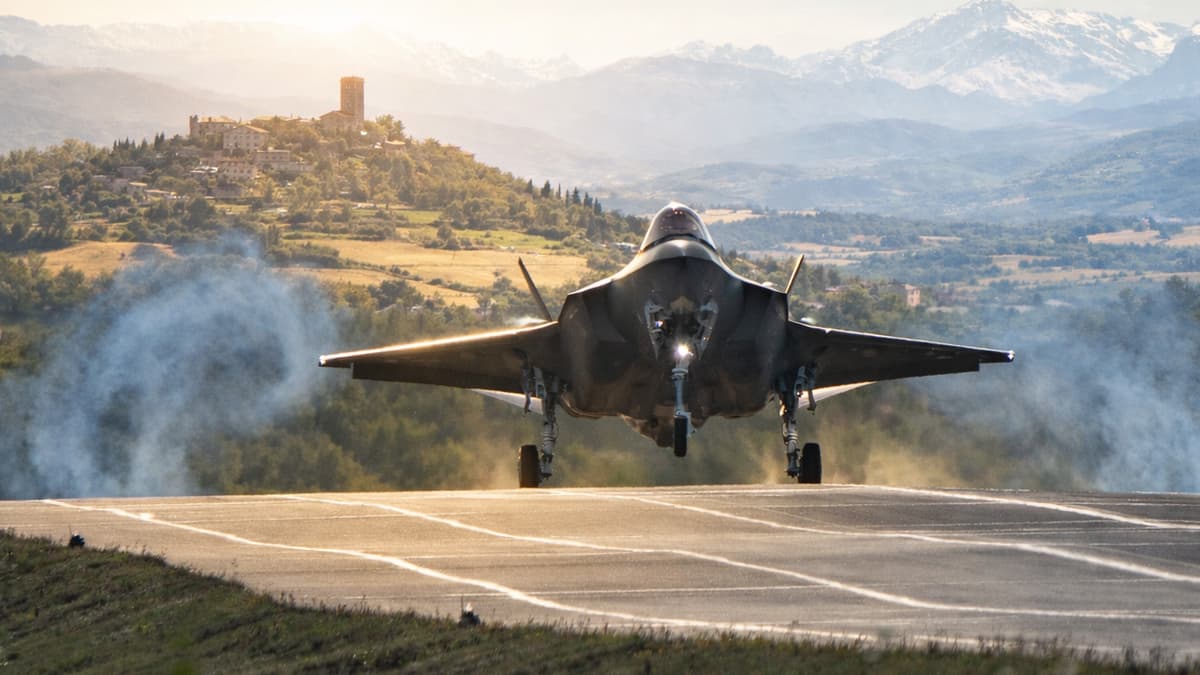
Italy Evaluating F-35 Highway Operations To Boost Fleet Survivability
•February 13, 2026
0
Key Takeaways
- •Italy studies highway F‑35 operations for survivability
- •Dispersed runway concept counters precision strike threats
- •F‑35’s landing gear supports short‑field, road use
- •NATO exercises prove feasibility for 5th‑gen jets
- •Civil‑military coordination required for rapid highway closures
Summary
Italy’s air force is assessing the use of highway strips to land and operate its F‑35A fighters if traditional bases become vulnerable. The idea, voiced by Lt. Gen. Silvano Frigerio at a Rome geopolitics forum, mirrors Cold‑War dispersal tactics and recent NATO drills that have demonstrated road‑runway feasibility for 5th‑generation jets. No formal program or timeline has been announced, but the evaluation reflects growing concerns over precision‑guided attacks on fixed airfields. Italy’s extensive motorway network could become a contingency asset, pending civil‑military coordination and infrastructure upgrades.
Pulse Analysis
Italy’s push to evaluate highway operations for its F‑35 fleet underscores a strategic shift toward distributed basing in Europe’s volatile security environment. The peninsula’s central Mediterranean location makes its airfields prime targets for long‑range precision weapons, prompting planners to revisit Cold‑War‑era concepts of using public roadways as auxiliary runways. By pre‑identifying suitable motorway segments, the Italian Air Force aims to complicate adversary targeting cycles, preserving air‑defense capability even if primary airfields are degraded. This approach aligns with broader NATO resilience initiatives that seek to mitigate runway‑denial tactics through flexible, hard‑to‑track launch points.
Technically, the F‑35’s robust landing gear and short‑field performance make road operations plausible, yet the aircraft’s sophisticated logistics chain presents challenges. Maintenance crews must manage foreign‑object debris, protect low‑observable coatings, and ensure secure data links in austere settings. Recent NATO exercises, such as BAANA 2024 in Finland, have demonstrated that fifth‑generation fighters can safely launch from improvised strips, but they also highlighted the need for rapid runway preparation, mobile support equipment, and reliable command‑and‑control connectivity. Italy will need to invest in portable maintenance kits, hardened communication nodes, and coordinated traffic‑control protocols with civilian authorities to translate the concept from theory to practice.
If Italy moves forward, the implications extend beyond its borders. Successful implementation could encourage other NATO members to adopt similar dispersed basing models, fostering interoperability and shared best practices for road‑runway operations. It may also influence future procurement decisions, emphasizing platforms that can thrive in low‑infrastructure environments. However, the timeline hinges on political approval, funding allocations, and the establishment of legal frameworks for rapid highway closures. Monitoring Italy’s progress will provide valuable insight into how modern air forces balance cutting‑edge technology with the timeless need for survivable, flexible basing options.
Comments
Want to join the conversation?