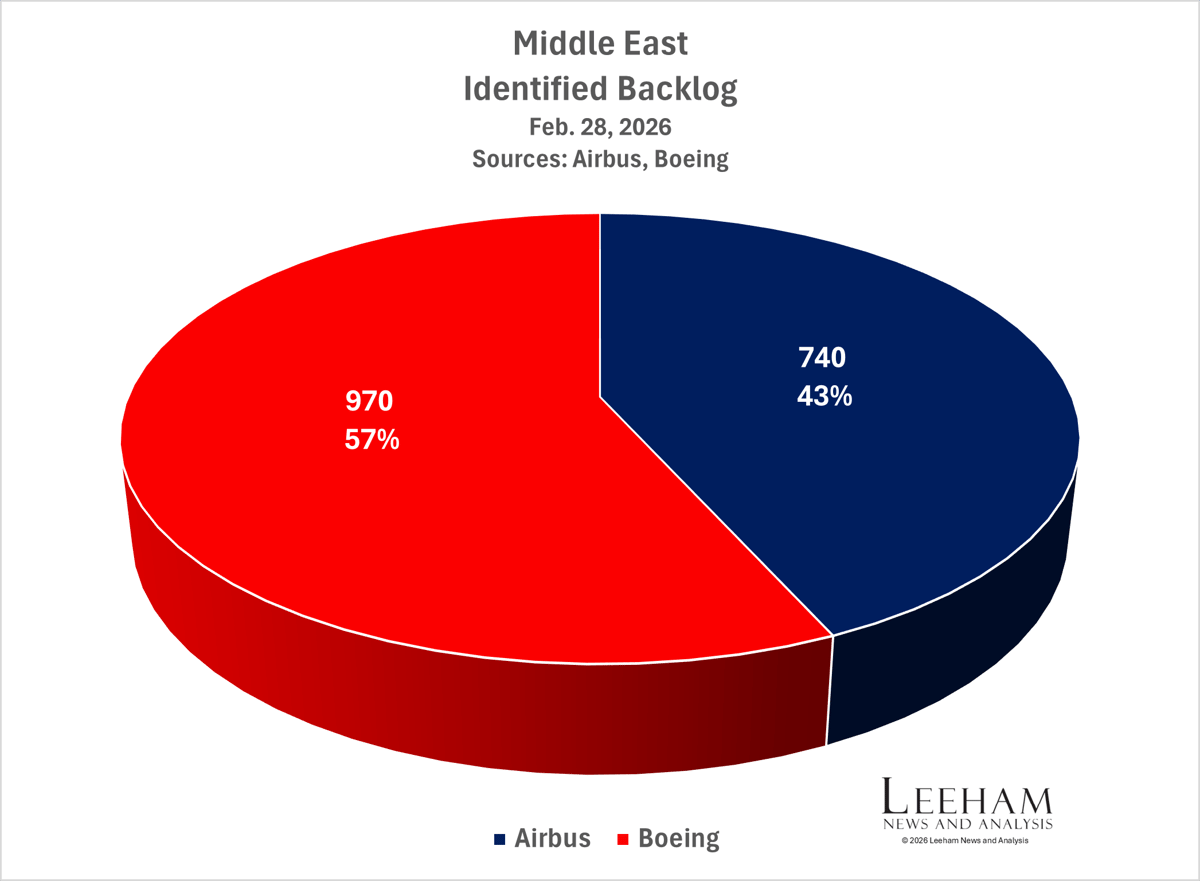
Middle East Conflict Impact on Airbus, Boeing
•March 10, 2026
0
Key Takeaways
- •Gulf states reconsider US defense and aircraft contracts.
- •Boeing's 777X faces heightened risk amid regional instability.
- •Airbus may absorb redirected A320/737 orders.
- •Middle Eastern airline demand could stay depressed for years.
- •Supply chain disruptions raise aircraft pricing and delivery delays.
Summary
The escalating Iran‑Israel conflict is prompting Gulf states to reconsider US‑linked defense and commercial aviation contracts, putting major aircraft orders under review. Boeing’s flagship 777X program now faces heightened risk as regional airlines delay fleet expansion, while Airbus could capture redirected A320 and 737 orders. Analysts expect Middle Eastern carrier demand to remain subdued for at least a year, creating supply‑chain bottlenecks and pricing pressure across the aerospace sector. The broader geopolitical shift underscores the vulnerability of aerospace revenue streams to regional instability.
Pulse Analysis
The Middle East’s volatile security environment is reshaping the strategic calculus of both governments and airlines. As Tehran’s actions intensify, Gulf nations are weighing the cost of continued reliance on US security guarantees against the economic fallout of strained ties. This reassessment extends beyond defense, directly influencing commercial aviation contracts that have long underpinned the region’s growth, and prompting a broader re‑evaluation of risk exposure among multinational aerospace firms.
For Boeing, the fallout is immediate and tangible. The 777X, a high‑margin, long‑range platform, depends heavily on orders from carriers operating out of the Gulf, and any cancellation or delay threatens the program’s cash flow and production schedule. Conversely, Airbus stands to benefit from a potential shift of A320 and 737 family orders, leveraging its flexible supply chain to absorb demand spikes. However, the redirection of orders does not fully offset the loss of larger, high‑value jets, leaving both manufacturers to navigate a fragmented market with uneven order books.
The ripple effects extend to suppliers, financiers, and investors. Disrupted delivery timelines can trigger penalty clauses, inflate inventory costs, and compress margins across the aerospace ecosystem. Moreover, heightened pricing volatility may accelerate lease‑back arrangements and push airlines toward newer, more fuel‑efficient models, reshaping fleet strategies for years to come. Stakeholders are therefore closely monitoring diplomatic developments, as any de‑escalation could restore confidence, while prolonged conflict may cement a new, more cautious ordering paradigm in the global aviation market.
Comments
Want to join the conversation?