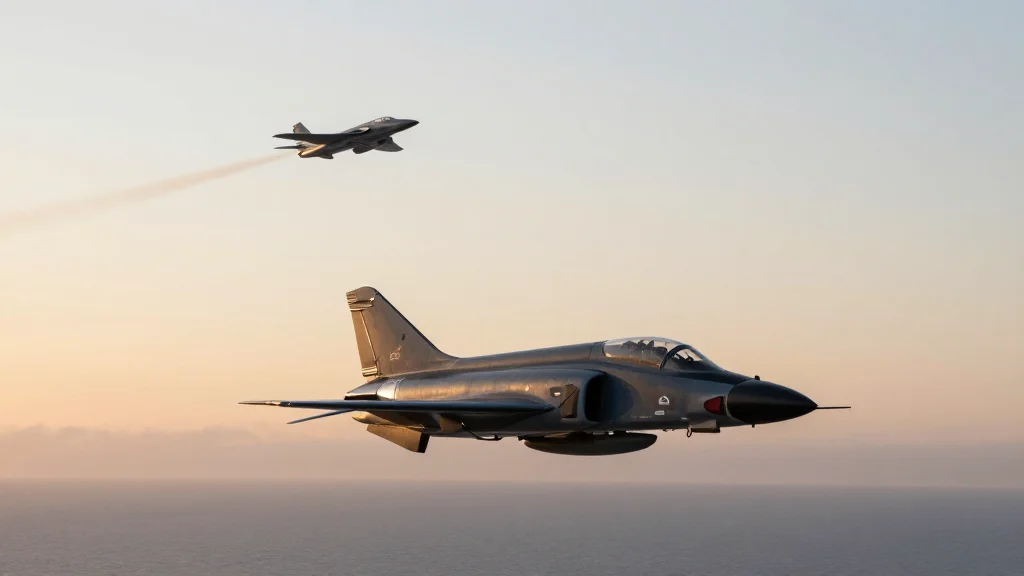
Navy F-4 Pilot Recalls His Phantom Radar Screen Going Black because of High Speed of an SR-71 He and His RIO Tried to Intercept While It Was Exiting Chinese Airspace
Key Takeaways
- •SR‑71’s Mach‑3+ speed blacked out F‑4 radar during 1970s interception
- •Navy BARCAP missions kept fighters airborne 24/7 over Gulf of Tonkin
- •Radar antenna elevation hit limit before display failure
- •Pilot could not visually spot SR‑71 despite radar lock
- •Event shows limits of 1970s air‑combat sensor technology
Pulse Analysis
The SR‑71 Blackbird remains a benchmark of aerospace engineering, capable of cruising above 80,000 feet at speeds exceeding Mach 3.5. Its design, rooted in the Skunk Works’ revolutionary approach, combined a titanium airframe with the J58 turbo‑ramjet engine, allowing it to outrun any interceptor of its era. When the aircraft breached Chinese airspace in the early 1970s, the sheer kinetic energy of its passage presented a unique challenge for the Navy’s F‑4 Phantom radars, which were calibrated for sub‑Mach‑2 targets. The rapid closure rate caused the radar’s tracking loop to overload, resulting in a sudden loss of display—a phenomenon still cited by veterans as a vivid illustration of the Blackbird’s dominance.
During the Vietnam conflict, the U.S. Navy maintained a constant Barrier Combat Air Patrol (BARCAP) over the northern Gulf of Tonkin, positioning fighters like the F‑4B to intercept any hostile or unauthorized aircraft. These missions were as much about deterrence as they were about rapid response, with carriers and guided‑missile cruisers coordinating intercepts via Air Intercept Controllers. The encounter with the SR‑71, however, was outside the typical threat envelope; the aircraft’s altitude and speed placed it beyond the visual and electronic reach of the Phantoms, forcing crews to confront the limits of their own technology. This episode underscores how reconnaissance platforms could shape tactical doctrines, prompting later upgrades in radar processing and the development of faster, more capable interceptors.
The legacy of that radar blackout extends into modern air‑dominance strategies. Contemporary fighters now employ active electronically scanned array (AESA) radars with higher refresh rates and adaptive signal processing, designed to track hypersonic threats that would have crippled legacy systems. Yet the SR‑71 story serves as a reminder that speed can be a decisive defensive asset, compelling adversaries to invest in counter‑measure technologies. For defense analysts and aerospace engineers, the anecdote reinforces the importance of designing sensors that can handle extreme closure velocities, a consideration that is increasingly relevant as hypersonic weapons enter service worldwide.
Navy F-4 pilot recalls his Phantom radar screen going black because of high speed of an SR-71 he and his RIO tried to intercept while it was exiting Chinese airspace
Comments
Want to join the conversation?