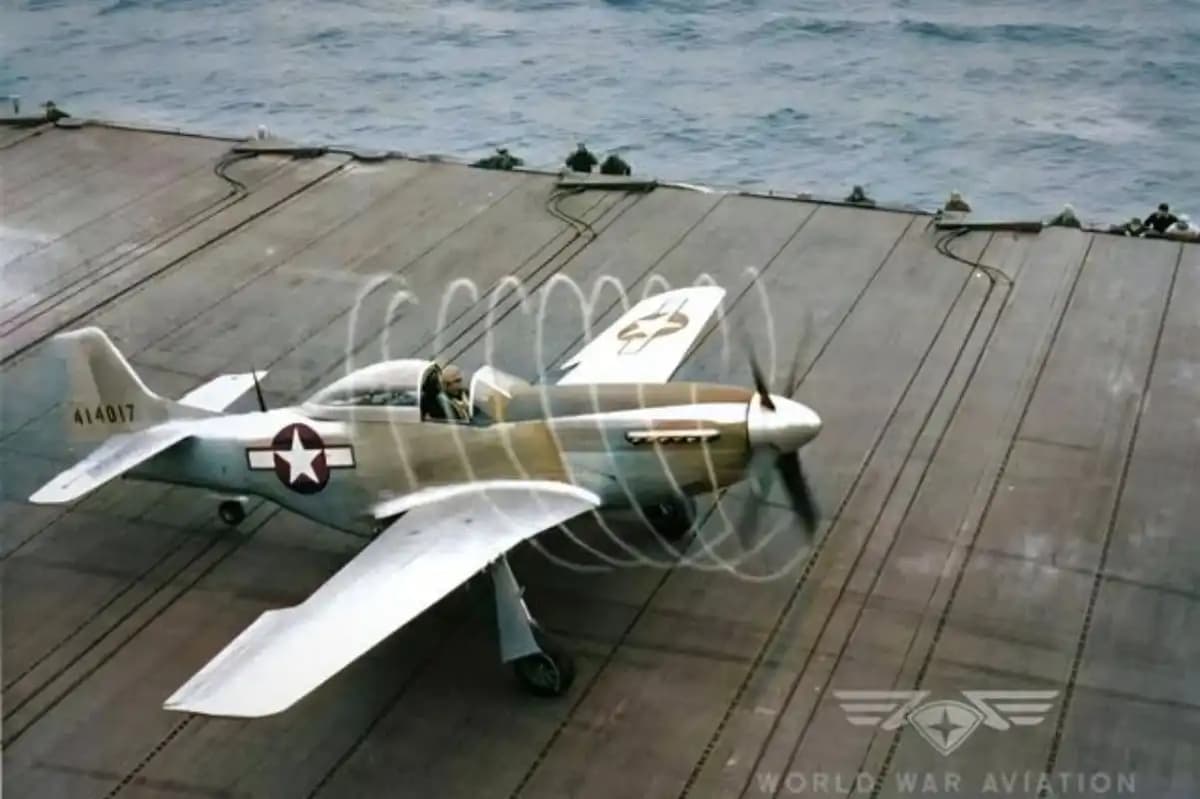
P-51D “Seahorse:” The Mustang Carrier Testing and Why It Was Unsuited for Service on US Navy Flat Tops
Key Takeaways
- •Project Seahorse modified a P‑51D for carrier trials in 1944
- •Lt. Robert M. Elder performed multiple landings and takeoffs on USS Shangri‑La
- •Tests showed the Mustang lacked folding wings, catapult hook, and corrosion protection
- •Navy ultimately pursued the FJ Fury and jet fighters for carrier use
- •P‑51’s long range later served Army Air Forces, not Navy carrier ops
Pulse Analysis
The strategic dilemma of the mid‑1940s was clear: B‑29 Superfortresses could strike the Japanese mainland, but they lacked fighter escort over the vast Pacific. Existing Navy fighters did not have the range to operate from carriers positioned close enough to provide protection, prompting planners to consider the Army’s proven long‑range P‑51 Mustang. By late 1943 the Mustang had become the premier escort for the USAAF, and its impressive 7.5‑hour endurance sparked the secret Project Seahorse, a bid to retrofit the aircraft for carrier operations.
Project Seahorse centered on a single P‑51D‑5‑NA (s/n 44‑14017) that received naval‑specific modifications, including a simulated carrier deck at Mustin Field and the installation of arresting gear. On 15 November 1944, Lt. Robert M. Elder, a seasoned Navy pilot, executed three landings and four takeoffs from USS Shangri‑La without catapult assistance. While the aircraft managed to launch and recover, the tests exposed fundamental incompatibilities: the wing structure could not fold for storage, the airframe lacked a catapult hook, and the fuselage was not hardened against the corrosive maritime environment. These deficiencies meant the Mustang could not meet the rigorous demands of carrier warfare.
The outcome of Seahorse reinforced a pivotal shift in naval aviation doctrine. Rather than retrofitting existing land‑based fighters, the Navy accelerated development of carrier‑optimized jets, culminating in the North American FJ Fury and later the F‑4 Phantom. The episode also underscored the importance of designing aircraft around carrier constraints—deck space, arresting gear, and corrosion resistance—from the outset. Though the P‑51 continued to dominate the Army’s long‑range escort role, its brief flirtation with carrier service provided valuable lessons that shaped the post‑war evolution of the US Navy’s air power.
P-51D “Seahorse:” the Mustang Carrier Testing and why it was unsuited for service on US Navy flat tops
Comments
Want to join the conversation?