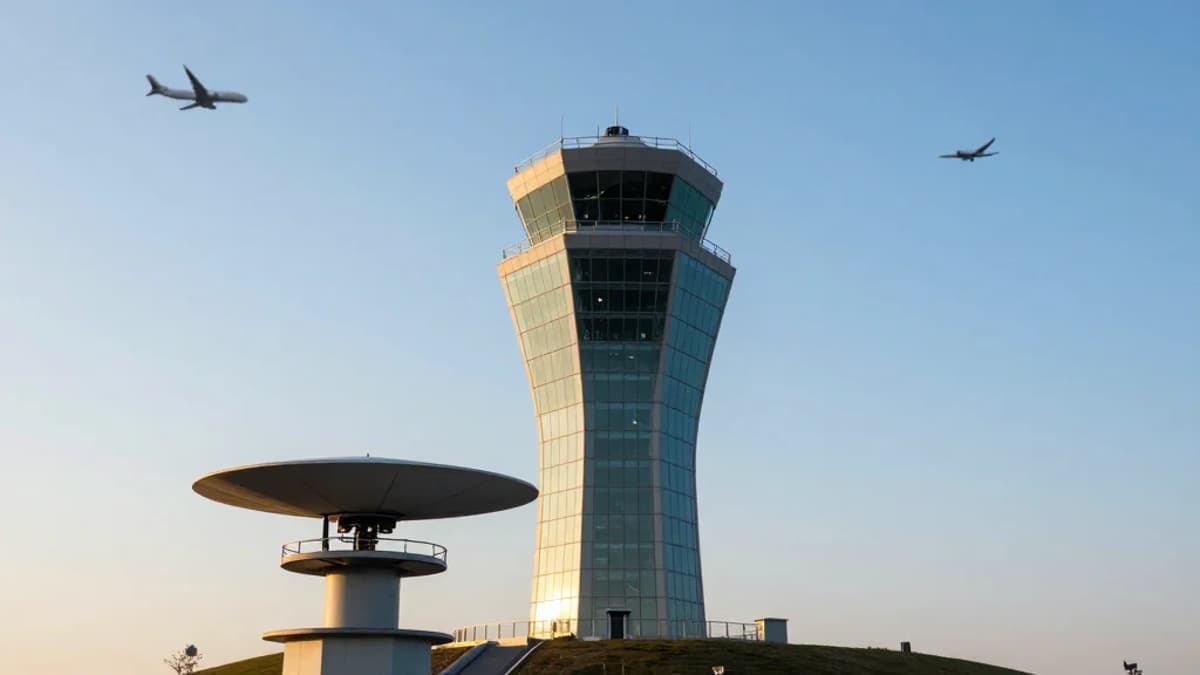
Privatizing Air Traffic Control: Why Canada’s Success Story Won’t Work Here
Key Takeaways
- •US airspace twice Canada's size, adds complexity.
- •FAA budget depends on federal appropriations, not user fees.
- •Controller unions strongly oppose any privatization effort.
- •NAV CANADA funded by airline fees, US lacks similar mechanism.
- •Fragmented private control could weaken national safety oversight.
Summary
Recent commentary reignites calls to privatize the U.S. Federal Aviation Administration’s air traffic control system, citing Canada’s NAV CANADA as a benchmark of efficiency and cost savings. The article argues that while Canada’s model reduced delays and operating expenses, the United States faces a vastly larger and more complex airspace, a budget tied to federal appropriations, and entrenched labor unions. It highlights structural and political differences that could undermine any attempt to replicate Canada’s success. Ultimately, the piece warns that a wholesale privatization could jeopardize safety oversight and operational cohesion.
Pulse Analysis
The debate over privatizing the Federal Aviation Administration’s air traffic control (ATC) system has resurfaced as industry leaders seek cost reductions and performance gains. Proponents point to Canada’s 1996 transition to NAV CANADA, a not‑for‑profit corporation funded by airline user fees, which has been credited with shorter flight delays and lower operating costs. This success story is frequently invoked as a template for the United States, where aging infrastructure and rising demand have strained the public‑run system.
However, the U.S. aviation environment diverges sharply from Canada’s. The United States manages roughly twice the airspace volume, encompassing multiple service regions, a denser network of airports, and a higher traffic mix of commercial, cargo, and general aviation flights. Funding for the FAA relies on congressional appropriations rather than a unified fee structure, limiting the fiscal flexibility that underpins NAV CANADA’s model. Moreover, powerful labor unions representing controllers and pilots have historically resisted privatization, fearing job security erosion and diminished safety standards. The political landscape adds another layer of complexity, with bipartisan scrutiny over any shift that could fragment national oversight.
Given these constraints, policymakers are more likely to pursue incremental reforms than a full‑scale privatization. Initiatives such as modernizing the NextGen system, expanding public‑private partnerships for technology upgrades, and introducing performance‑based funding mechanisms can deliver efficiency gains without dismantling the centralized safety framework. By recognizing the structural differences that separate the U.S. from Canada, stakeholders can craft targeted solutions that enhance ATC performance while preserving the robust regulatory oversight essential to aviation safety.
Privatizing Air Traffic Control: Why Canada’s Success Story Won’t Work Here


Comments
Want to join the conversation?