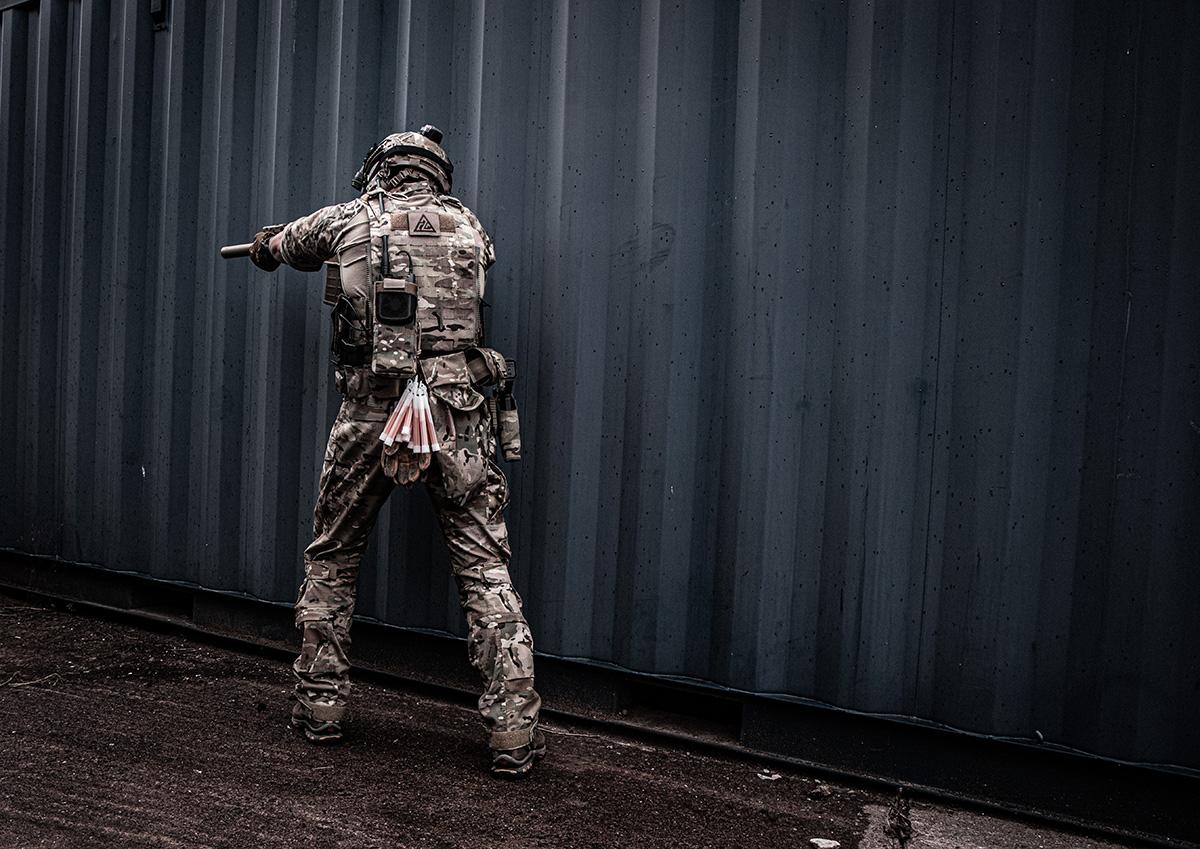
Thales Readies Storm 2 Wearable Counter-Drone Jammer
•March 10, 2026
0
Key Takeaways
- •2 kg wearable jammer for individual soldiers.
- •Reactive jamming activates only on detected RF threats.
- •Covers 20 MHz‑6 GHz, targeting common drone bands.
- •Up to 10 W output, ~4 hour battery life.
- •Enables dispersed troops to counter drones without heavy gear.
Summary
Thales is set to unveil Storm 2, a two‑kilogram soldier‑worn electronic‑warfare node that detects and jams hostile radio signals used by drones and radio‑triggered explosives. The system employs a software‑defined radio covering 20 MHz‑6 GHz and delivers up to 10 watts of reactive jamming power, conserving battery life by activating only when a threat is detected. With an endurance of roughly four hours, Storm 2 offers a lightweight alternative to traditional man‑pack jammers, aiming to protect dismounted troops without compromising mobility. The device is already being trialed by several armed forces ahead of its formal debut at the Future Soldier Technology conference.
Pulse Analysis
The rapid diffusion of commercial drones has reshaped the battlefield, giving adversaries a low‑cost means to conduct surveillance, deliver payloads, or trigger improvised explosive devices. Traditional electronic‑countermeasure solutions are vehicle‑mounted or bulky man‑packs, limiting their utility for infantry operating in small, mobile units. Thales’ Storm 2 addresses this gap by delivering a compact, soldier‑wearable jammer that aligns with the growing demand for individual‑level counter‑UAS capability across NATO and partner forces.
Storm 2’s technical edge lies in its software‑defined radio architecture, which spans a broad 20 MHz‑6 GHz spectrum to engage the 2.4 GHz and 5.8 GHz ISM bands commonly used by commercial drones, as well as less‑standard frequencies employed in adaptive threat tactics. The reactive‑jamming approach keeps the device dormant until hostile emissions are detected, slashing power consumption and reducing the unit’s electromagnetic signature. With up to 10 watts of output and an estimated four‑hour battery endurance, the system balances effective jamming radius with a lightweight two‑kilogram form factor, markedly lighter than legacy man‑packs.
Operationally, Storm 2 enables infantry squads to maintain electronic protection without sacrificing maneuverability, a critical advantage in contemporary conflicts where forces are often dispersed, as seen in Ukraine’s recent engagements. By decentralising electronic warfare, armies can mitigate single‑point failures and integrate jamming capability directly into existing soldier systems. The ongoing trials and expressed interest from multiple armed forces suggest that wearable EW solutions like Storm 2 will become a staple of future soldier kits, driving a broader shift toward modular, on‑the‑move electronic defense.
Comments
Want to join the conversation?