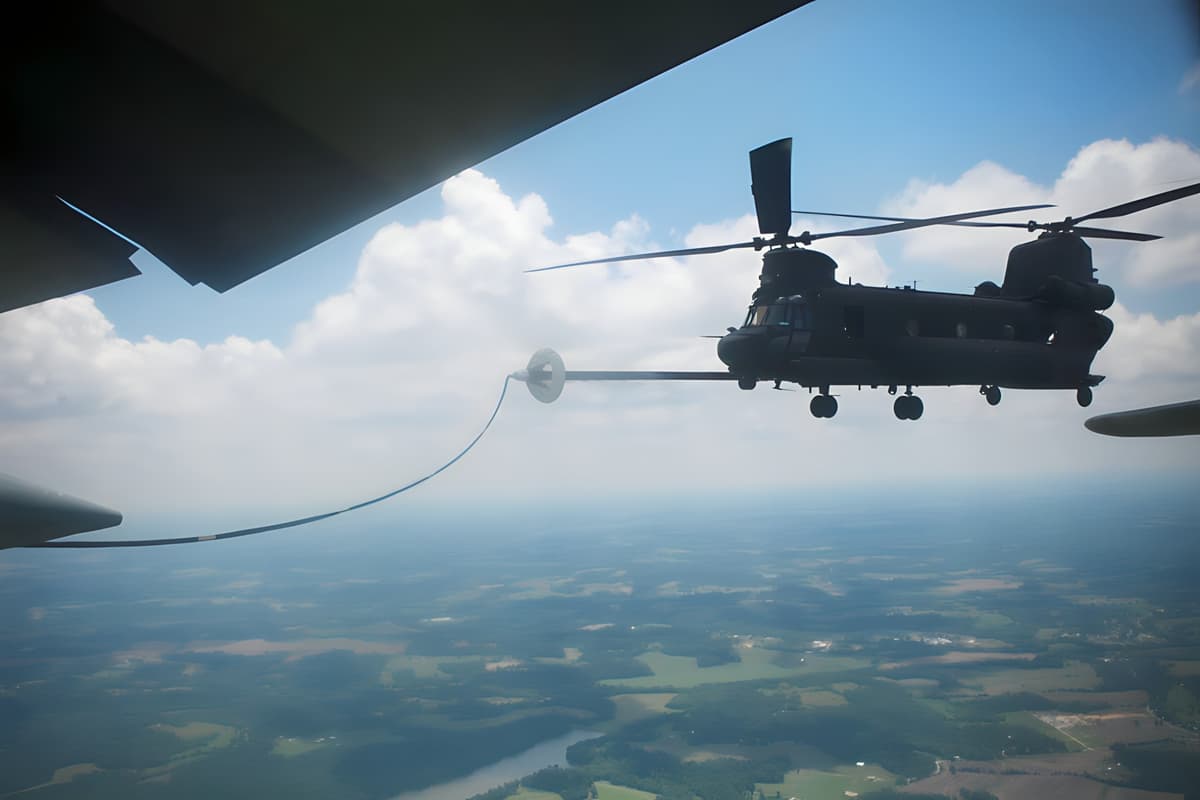
UK Confirms New Chinooks to Get Aerial Refuelling Equipment
•February 27, 2026
0
Why It Matters
Equipping Chinooks with aerial refuelling extends their operational reach while the UK’s reliance on US tankers underscores strategic partnership and contract flexibility.
Key Takeaways
- •New H‑47(ER) Chinooks include built‑in refuelling receiver
- •UK will rely on US KC‑130 for refuelling
- •RAF tankers not required; AirTanker contract excludes rotary wing
- •Using RAF aircraft wouldn't breach exclusivity provisions
- •Extended range enhances Chinook operational flexibility across theatres
Pulse Analysis
The Ministry of Defence’s decision to outfit the next‑generation Chinook H‑47(ER) with a full air‑to‑air refuelling receiver reflects a broader push to increase the Royal Air Force’s rotary‑wing endurance. Historically, Chinooks have been limited by fuel capacity, constraining long‑range missions in austere environments. By integrating a standard receiver, the new variant can accept fuel mid‑flight, theoretically matching the range of fixed‑wing assets and opening new possibilities for rapid deployment, humanitarian assistance, and high‑intensity combat support across Europe and beyond.
Strategically, the UK has opted to depend on the US Marine Corps’ KC‑130 for refuelling rather than re‑tasking its own A400M Atlas or Voyager A330 tankers. This choice sidesteps the exclusivity provisions of the Future Strategic Tanker Aircraft contract, which restricts AirTanker’s obligations to fixed‑wing platforms. Leveraging the KC‑130 not only preserves the commercial arrangement with the AirTanker consortium but also deepens interoperability with NATO allies, ensuring that UK rotary‑wing forces can tap into a proven, readily available aerial refuelling fleet without renegotiating existing contracts.
Operationally, the extended‑range Chinook promises greater flexibility for the British Army and RAF, enabling sustained lift capabilities in contested or remote theatres without the need for forward fuel caches. While the current plan does not commit RAF tankers to the role, the exemption from exclusivity means future integration remains feasible, potentially reducing reliance on US assets over time. This development aligns with a global trend of equipping heavy‑lift helicopters with aerial refuelling, enhancing force projection, and ensuring the UK maintains a resilient, adaptable air‑mobility posture in an increasingly contested airspace.
UK confirms new Chinooks to get aerial refuelling equipment
0
Comments
Want to join the conversation?
Loading comments...