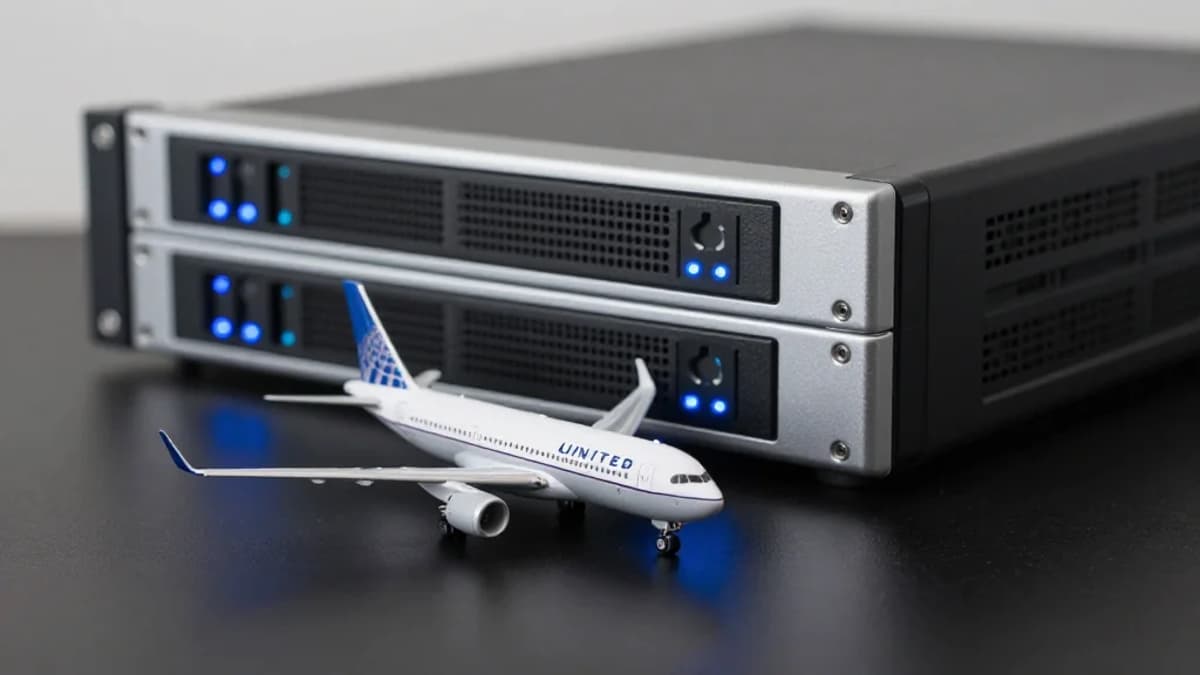
United Airlines Clears Massive Tech Upgrade That Took Nearly All Critical Services Offline and Grounded Planes
Key Takeaways
- •United performed 4.5‑hour full system shutdown
- •Legacy mainframes from 1960s being replaced with cloud
- •Flight bookings, check‑in, MileagePlus unavailable during outage
- •Some flights retimed, others cancelled; operations resumed early
- •Upgrade aims to boost resilience, future tech innovations
Summary
United Airlines executed a four‑and‑a‑half‑hour, full‑system shutdown on Wednesday to advance one of the largest technology upgrades in its history. The outage disabled flight booking, check‑in, MileagePlus accounts and even the customer‑service line, forcing flight retimes and cancellations. The carrier is migrating decades‑old mainframe systems, some dating to the 1960s, to a new cloud‑based architecture after spending hundreds of millions. United confirmed the upgrade completed on schedule, with operations resuming earlier than expected.
Pulse Analysis
United Airlines’ recent four‑and‑a‑half‑hour blackout underscores the pressure legacy carriers face to modernize antiquated IT infrastructure. The airline’s core systems, built on mainframes from the 1960s, have become a liability, contributing to past operational meltdowns across the industry. By investing hundreds of millions in a cloud‑first strategy, United is dismantling a patchwork of legacy applications and consolidating data and transaction processing in a scalable environment. This shift not only reduces maintenance costs but also positions the carrier to leverage emerging technologies such as AI‑driven scheduling and real‑time passenger personalization.
The immediate impact of the outage was visible to travelers: booking portals, check‑in kiosks, and MileagePlus accounts vanished, and the call center went dark. United’s decision to ground and retime flights reflects a calculated risk: a short‑term service disruption in exchange for long‑term operational stability. In a fiercely competitive, low‑margin market, airlines cannot afford prolonged downtime caused by outdated hardware. The successful completion of the upgrade, ahead of schedule, signals that United’s execution capabilities are maturing, a reassuring sign for investors and partners wary of legacy‑related volatility.
Looking ahead, United’s cloud migration lays the groundwork for a new wave of digital enhancements. With a modernized backend, the airline can more readily integrate advanced analytics, predictive maintenance, and seamless omnichannel experiences for passengers. This transformation aligns with broader industry trends where carriers are betting on technology to differentiate service, improve on‑time performance, and unlock ancillary revenue streams. United’s bold move may set a benchmark for other legacy airlines grappling with similar modernization challenges.
United Airlines Clears Massive Tech Upgrade That Took Nearly All Critical Services Offline and Grounded Planes


Comments
Want to join the conversation?