United Airlines Teases New ‘Coastliner’ Airplane But What Exactly Is It?
•January 30, 2026
0
Why It Matters
The move strengthens United’s capacity on high‑yield coast‑to‑coast routes, improving product offering while retiring less efficient jets, which could boost profitability and competitive positioning.
Key Takeaways
- •40 A321neos dedicated to transcontinental premium routes
- •Will replace aging Boeing 757‑200s on coast‑to‑coast flights
- •Features 20 lie‑flat business seats, 12 premium economy
- •Operates between LAX/SFO and Newark/JFK hubs
- •United aims to boost east‑west capacity in 2026
Pulse Analysis
United’s Coastliner announcement reflects a broader industry shift toward narrow‑body aircraft that can deliver premium service on long domestic legs. The Airbus A321neo, already praised for its fuel efficiency and range, offers United a cost‑effective platform to retire older Boeing 757‑200s while maintaining cabin comfort. By configuring 161 seats with a 1‑1 business cabin, 2‑2 premium economy, and 3‑3 economy, United aligns product density with demand on high‑yield East‑West corridors, a segment traditionally dominated by wide‑body jets.
The Coastliner’s intended routes—Los Angeles and San Francisco to Newark and New York JFK—target the most profitable transcontinental market in the United States. With 40 aircraft, United could operate roughly 60 round‑trip flights daily, increasing frequency and flexibility for business travelers. The lie‑flat business seats and dedicated premium economy cabin differentiate United from rivals still using legacy 757s, potentially capturing market share from airlines that rely on older fleets or lower‑density configurations.
Beyond United’s network, the Coastliner signals how legacy carriers are leveraging the A321neo’s extended range to compete with low‑cost carriers on premium routes while reducing operating costs and emissions. The shift supports United’s 2026 growth targets and aligns with industry pressure to modernize fleets for sustainability. As the aircraft enter service, analysts will watch load factors, yield performance, and the impact on United’s overall profitability, making the Coastliner a bellwether for future narrow‑body premium strategies.
United Airlines Teases New ‘Coastliner’ Airplane But What Exactly Is It?
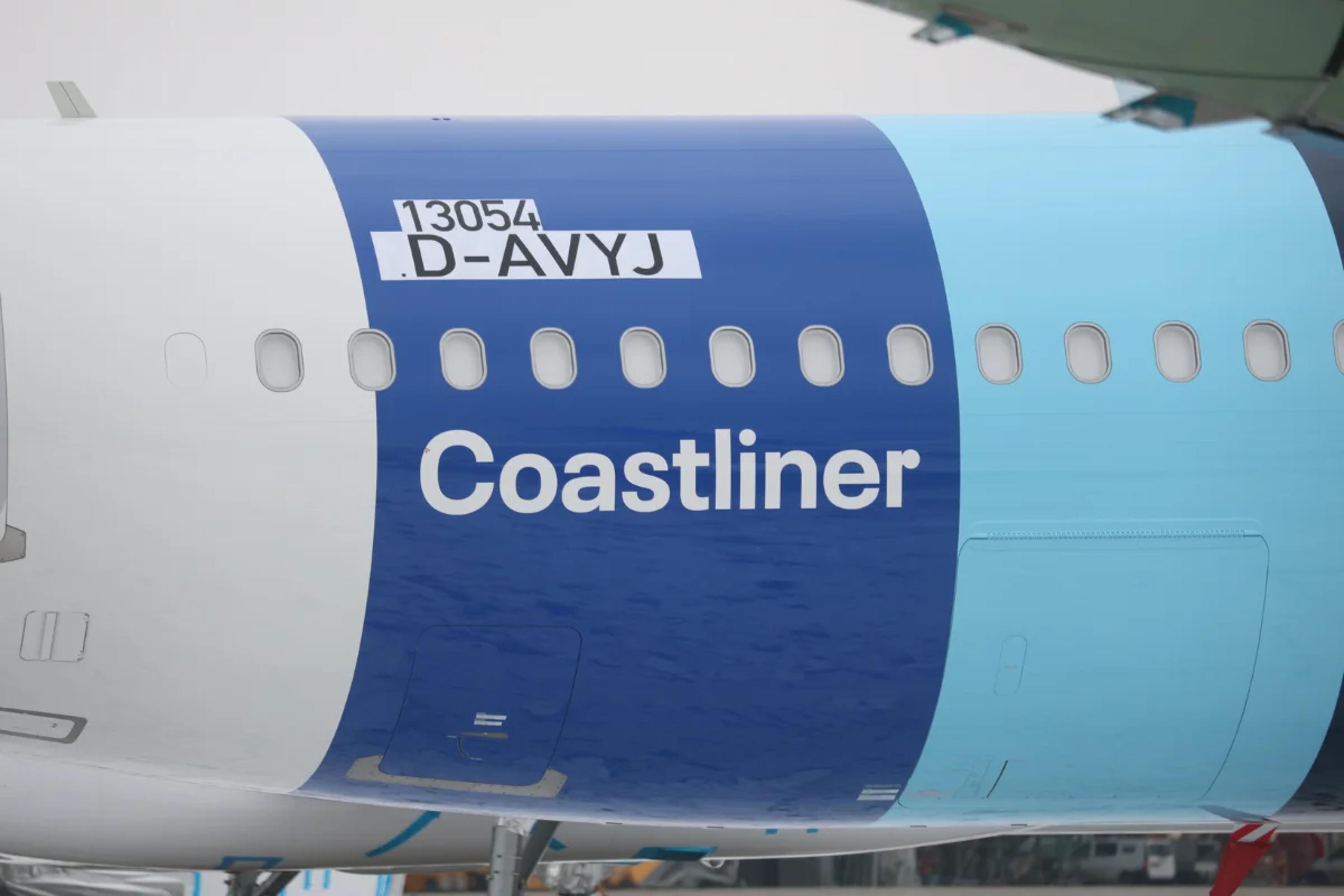
United Airlines is teasing a type of airplane that is due to join its fleet in the coming months, and while the Chicago-based carrier is keeping the details very under wraps, we now know that the aircraft will go by the name of ‘Coastliner.’
The question is: What exactly is a Coastliner?
While nothing has been confirmed (yet), we’re starting to get a good sense of what this aircraft is from various insider sources, including the ever-reliable JonNYC, who has been sharing some information on X.
UA "Coastliner" livery https://t.co/8oVwrESP3Z
— JonNYC (@xJonNYC) January 29, 2026
United’s Coastliner is a regular Airbus A321neo, of which the airline has many on order. The Coastliner version will be a subfleet of United’s A321neo order, comprising 40 aircraft that will operate transcontinental flights from Los Angeles and San Francisco to New York area airports.
Inside, United plans to equip its Coastliners with a total of 161 seats, comprising 20 fully-flat Business Class seats in a 1-1 configuration, 12 Premium Economy seats in a 2-2 configuration, and finally, 129 economy class seats in a standard 3-3 configuration.
Given the fact that United is planning to dedicate as many as 40 of its new A321neos to the Coastliner fleet, you can expect the airline to use these planes to replace the existing Boeing 757-200s that operate premium transcontinental routes, as well as other widebody planes that it has tied up in these markets.
To give a sense of just how big this sub-fleet is, analysts suggest that 40 A321s could operate at least 60 round-trip flights between the East and West coasts. They’ll connect Los Angeles and San Francisco with United’s hub in Newark, as well as New York JFK when the airline returns to the airport.
Spotted at the @Airbus factory
Just wait until you see what's inside… pic.twitter.com/RFN9kXUr3d
— United Airlines (@united) January 29, 2026
News of United’s Coastliner first emerged on Thursday when photos of the aircraft emerging from the paint workshop at the Airbus factory in Hamburg were shared online.
In response, United shared a video of the plane getting painted, but the airline remained tightlipped on all the remaining details.
For example, we can’t yet confirm the inside configuration, despite how reliable multiple sources are, nor can we confirm exactly what routes these planes will fly or when they will enter into service.
What we do know is that United chief executive Scott Kirby has been teasing some big announcements for 2026, and a revamped approach to transcontinental flights would certainly be something to shout about.
Quick facts:
-
Aircraft: Airbus A321neo
-
Code: internally known as the A321LF
-
Capacity: 161 seats including 20 lie-flat Business Class seats and 12 Premium Economy Seats.
-
Routes: Likely Los Angeles and San Francisco to Newark and New York JFK
-
Entry into service: TBC
The post United Airlines Teases New ‘Coastliner’ Airplane But What Exactly Is It? appeared first on PYOK.
0
Comments
Want to join the conversation?
Loading comments...