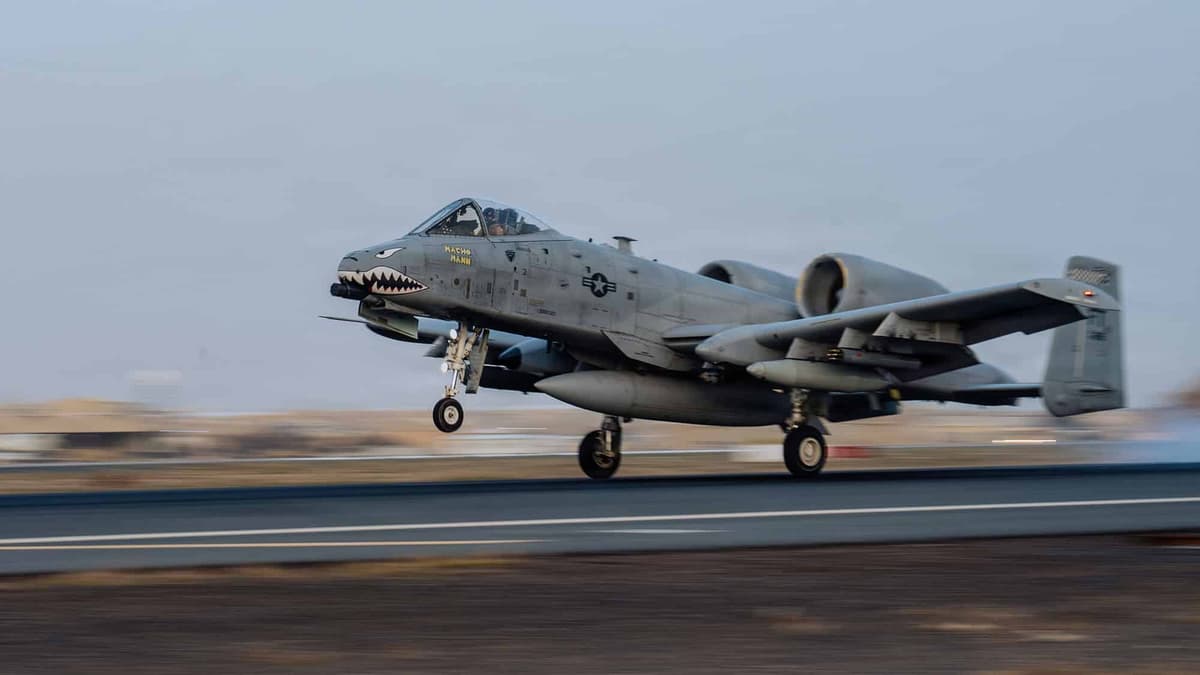
U.S. Air Force Confirms A-10 Thunderbolt II Service Life Extended to 2030
Key Takeaways
- •USAF extends A‑10 service life to 2030 for two squadrons
- •Congress blocks retirement, keeping fleet above 103 aircraft
- •New probe‑and‑drogue refuel kit enables A‑10 aerial refueling
- •A‑10s used in Operation Epic Fury for low‑threat strikes
- •Final A‑10 pilot class graduated, ensuring crew pipeline
Pulse Analysis
The A‑10 Thunderbolt II, affectionately known as the Warthog, has long been a cornerstone of U.S. close‑air support. After the Air Force’s FY2026 budget sought to retire the entire fleet, Congress intervened through the National Defense Authorization Act, mandating a minimum inventory of 103 aircraft. This legislative push forced the service to announce a service‑life extension through 2030 for two active units and a third unit through 2029, effectively preserving the platform’s combat relevance while the Pentagon reshapes its broader fighter procurement strategy.
Operationally, the A‑10 has proven its adaptability despite concerns over vulnerability in high‑tech threat environments. Recent deployments in Operation Epic Fury demonstrated the aircraft’s utility as a precision‑strike and drone‑interdictor platform against Iran‑backed militia groups in Iraq and Syria. A notable upgrade—a probe‑and‑drogue refueling system—now allows the Warthog to refuel from a wider range of tankers, mitigating reliance on the KC‑46 and enhancing sortie rates. These enhancements, coupled with its rugged airframe and GAU‑8 Avenger cannon, keep the A‑10 valuable for low‑threat, high‑precision missions where newer, more expensive jets would be overkill.
Looking ahead, the extension underscores a broader tension between legacy aircraft sustainment and next‑generation fighter acquisition. By retaining the A‑10, the Air Force maintains a cost‑effective solution for close‑air support while the defense industrial base scales up production of platforms like the F‑35 and upcoming sixth‑generation fighters. The move also buys time for Congress and the Pentagon to assess long‑term fleet composition, potentially paving the way for further extensions if budget constraints or operational needs dictate. In the meantime, the A‑10’s continued presence ensures that U.S. warfighters retain a proven, battle‑tested tool for asymmetric conflict scenarios.
U.S. Air Force Confirms A-10 Thunderbolt II Service Life Extended to 2030
Comments
Want to join the conversation?