Aerospace Blogs and Articles
  • All Technology
  • AI
  • Autonomy
  • B2B Growth
  • Big Data
  • BioTech
  • ClimateTech
  • Consumer Tech
  • Crypto
  • Cybersecurity
  • DevOps
  • Digital Marketing
  • Ecommerce
  • EdTech
  • Enterprise
  • FinTech
  • GovTech
  • Hardware
  • HealthTech
  • HRTech
  • LegalTech
  • Nanotech
  • PropTech
  • Quantum
  • Robotics
  • SaaS
  • SpaceTech
AllNewsDealsSocialBlogsVideosPodcastsDigests

Aerospace Pulse

EMAIL DIGESTS

Daily

Every morning

Weekly

Sunday recap

NewsDealsSocialBlogsVideosPodcasts
AerospaceBlogsU.S. F-35C Shoots Down Iranian Drone Heading for USS Lincoln
U.S. F-35C Shoots Down Iranian Drone Heading for USS Lincoln
Aerospace

U.S. F-35C Shoots Down Iranian Drone Heading for USS Lincoln

•February 3, 2026
0
The Aviationist
The Aviationist•Feb 3, 2026

Why It Matters

The engagement demonstrates the carrier‑based F‑35’s growing role in ship‑self‑defence and raises the stakes of U.S.–Iran naval tensions, reinforcing deterrence in a critical maritime corridor.

Key Takeaways

  • •F‑35C downed Iranian Shahed‑139 near USS Lincoln.
  • •Drone approached carrier 500 miles off Iran, intent unclear.
  • •Incident followed IRGC threat to merchant vessel in Hormuz.
  • •Lincoln CSG redeployed from Indo‑Pacific to Middle East.
  • •Highlights carrier‑based F‑35 combat role in contested waters.

Pulse Analysis

The interception underscores the expanding combat envelope of the carrier‑based F‑35C. Operating from the flight deck of USS Abraham Lincoln, the stealth fighter can scramble within minutes, fuse sensor data, and engage low‑observable threats with AIM‑9X or AIM‑120 missiles. By neutralizing the Shahed‑139 before it reached the flight deck, the Navy demonstrated that fifth‑generation aircraft are now integral to ship‑self‑defence, not just air‑to‑ground strike platforms. This capability reinforces the carrier strike group’s ability to project power while safeguarding its most valuable asset – the carrier itself.

The Shahed‑139, Iran’s medium‑altitude long‑endurance UAV, mirrors the U.S. MQ‑1 Predator in shape but can carry up to four missiles, according to open‑source estimates. Its deployment in the Arabian Sea reflects Tehran’s strategy of using swarming drones to test adversary resolve and gather intelligence. The aggressive trajectory toward Lincoln, despite de‑escalatory signals, suggests a willingness to blur the line between surveillance and kinetic threat. Coupled with simultaneous IRGC boat harassment of the Stena Imperative, the episode signals a coordinated pressure campaign in the Strait of Hormuz corridor.

From a strategic perspective, the incident may prompt a recalibration of rules of engagement for carrier groups operating near contested waterways. The successful use of an F‑35C for air‑to‑air interception validates ongoing investments in integrating stealth fighters with ship‑based radar and combat systems. It also sends a clear deterrent message to regional actors: any hostile UAV approaching a U.S. carrier will be met with decisive force. As the Lincoln CSG continues its Middle East deployment, policymakers will weigh the risk of escalation against the need to maintain freedom of navigation and protect commercial shipping.

U.S. F-35C Shoots Down Iranian Drone Heading for USS Lincoln

Title: An Iranian Shahed‑139 drone was shot down by a U.S. F‑35C as it approached the USS Abraham Lincoln in the Arabian Sea

Date: February 3, 2026


An Iranian drone was shot down by the U.S. military on Feb. 3, 2026, according to a U.S. official cited by Reuters. The unmanned aircraft, a Shahed‑139, was flying towards the USS Abraham Lincoln (CVN‑72) as it was sailing in the Arabian Sea, prompting the intercept.

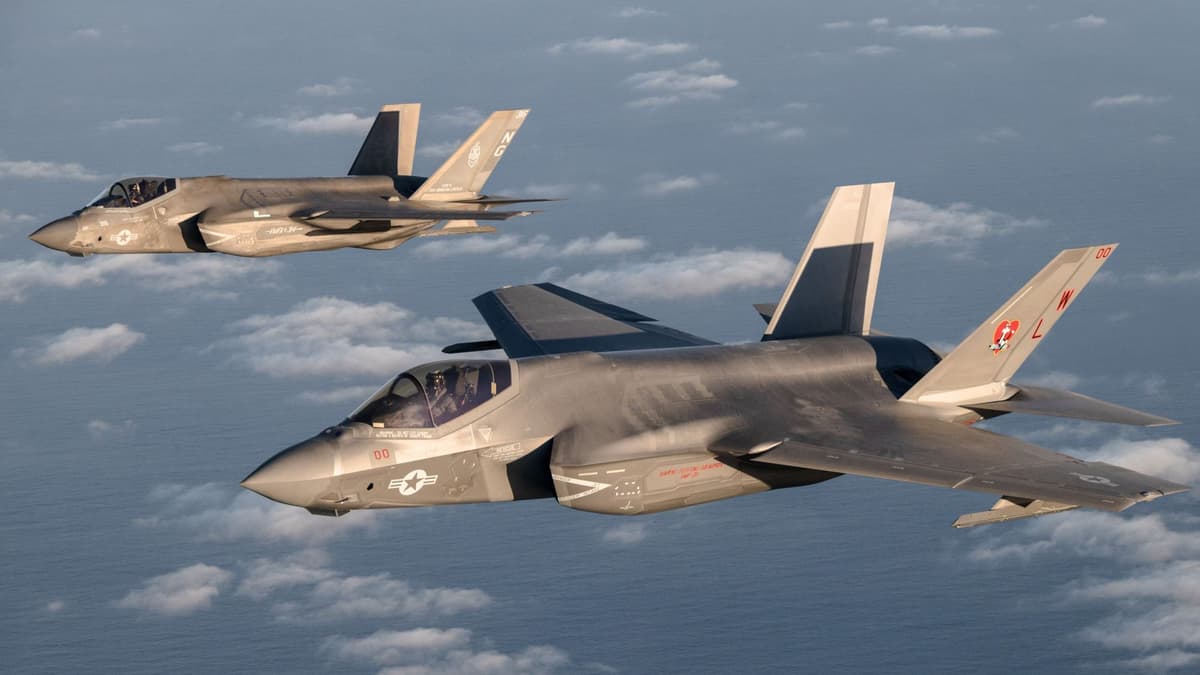
The official specified that an F‑35 Lightning II was scrambled to intercept the drone and later shot it down. The USS Lincoln is currently assigned Carrier Air Wing (CVW) 9, which includes among its squadrons the Marine Fighter Attack Squadron (VMFA) 314, flying the F‑35C.

“The Iranian Shahed‑139 drone was flying towards the Lincoln and was shot down by a F‑35 U.S. fighter jet.” – Phil Stewart, Feb 3 2026

Update 21:00 UTC

According to U.S. Navy Captain Tim Hawkins, a U.S. Central Command (CENTCOM) spokesperson, the unmanned aircraft was “aggressively” approaching the aircraft carrier “with unclear intent.” The Shahed‑139 “continued to fly toward the ship despite de‑escalatory measures taken by U.S. forces operating in international waters,” with Hawkins adding that the carrier was sailing about 500 miles from Iran’s southern coast.

It is unclear which de‑escalatory measures were used. However, it can be assumed that the F‑35s scrambled to intercept the drone could also have been used to attract the attention of the drone’s operators to signal it away from the area before the order to open fire was issued.

“Iranian Shahed‑139 was reportedly intercepted by the American F‑35.” – Special Kherson Cat, Feb 3 2026

After the drone did not deviate from its course, “an F‑35C fighter jet from Abraham Lincoln shot down the Iranian drone in self‑defense and to protect the aircraft carrier and personnel on board,” confirmed Hawkins.

Details about the shoot‑down are currently limited, and it is unclear how close the drone came to the ship or whether it was carrying weapons. The weapon employed against the drone was not disclosed, although the F‑35C can employ the AIM‑9X Sidewinder IR‑guided short‑range air‑to‑air missile, the AIM‑120 AMRAAM, and the GPU‑8/A 25 mm gun pod.

A Marine Corps F‑35C Lightning II attached to Marine Fighter Attack Squadron (VMFA) 314 prepares to make an arrested landing on the flight deck of Nimitz‑class aircraft carrier USS Abraham Lincoln (CVN 72). – U.S. Marines, Jan 30 2026

The incident was not isolated. A few hours later the Islamic Revolutionary Guard Corps (IRGC) harassed a U.S.–flagged and –crewed merchant vessel in the Strait of Hormuz. “Two IRGC boats and an Iranian Mohajer drone approached M/V Stena Imperative at high speeds and threatened to board and seize the tanker,” Hawkins said.

“Six Iranian gunboats armed with .50 cal machine guns approached the American‑flagged, Danish‑owned oil tanker M/T STENA IMPERATIVE earlier today near the Strait of Hormuz in a threatening manner…” – OSINTdefender, Feb 3 2026

The spokesperson added that the Arleigh Burke‑class guided‑missile destroyer USS McFaul (DDG‑74) responded, escorting the vessel “with defensive air support from the U.S. Air Force.” The M/V Stena Imperative is now proceeding safely away from the area.

Shahed‑139

The Shahed‑139 is a medium‑altitude long‑endurance (MALE) unmanned aerial vehicle developed by Iran, visually similar to the U.S.‑made MQ‑1 Predator. It features a conventional fuselage, rear‑mounted pusher propeller, and straight wings optimized for long‑endurance surveillance and strike missions.

“Not one, but 2 new Shahed UAVs were unveiled

• Shahed‑139 (pic 1‑2): New MALE UAV, possibly MQ‑1 derived. Similar to Kaman‑22 design‑wise

• Shahed‑147 (pic 3): New jet‑powered HALE UAV…” – Iran Defense commentary (unofficial), Nov 19 2023

Images released by state media have shown the drone carrying an electro‑optical/infrared (EO/IR) sensor and possibly a small radar. There are no photos of the aircraft carrying weapons; however, because the Shahed‑139 is a further development of the Shahed‑129 armed drone, it is believed it might be able to carry a payload of four missiles.

The Shahed‑129, based on the Israeli Hermes 450 design, was first unveiled in 2012. It is claimed to have an endurance of 24 hours and an operative range up to 2,000 km.

“According to Tasnim it was a Shahed 129 and not a Shahed 139 that was shot down today. The drone successfully transmitted its surveillance and reconnaissance images to the center, but then lost communication.” – MenchOsint, Feb 3 2026

In 2013 an armed variant emerged. The IRGC claimed the drone can carry eight bombs/missiles, although only four were shown in photos. This variant is claimed to have an endurance of 24 hours with a range of 1,700 km and a ceiling of 24,000 feet.

Lincoln CSG

Following rising tensions after the violent crackdown on protests in Iran, the USS Abraham Lincoln (CVN 72) Carrier Strike Group (CSG) was retasked from operational cruise in the Indo‑Pacific to quickly move to the CENTCOM Area of Responsibility (AOR). The CSG arrived in the Middle East in late January, with CENTCOM saying it “is currently deployed to the Middle East to promote regional security and stability.”

Together with the USS Lincoln are Carrier Air Wing (CVW) 9, embarked on the carrier, and destroyers USS Frank E. Petersen, Jr. (DDG‑121), USS Spruance (DDG‑111) and USS Michael Murphy (DDG‑112). CVW 9 consists of eight squadrons flying F‑35C Lightning II, F/A‑18E/F Super Hornets, EA‑18G Growlers, E‑2D Hawkeyes, CMV‑22B Ospreys and MH‑60R/S Sea Hawks.

This is a developing story; the article will be updated as more details emerge.

Read Original Article
0

Comments

Want to join the conversation?

Loading comments...