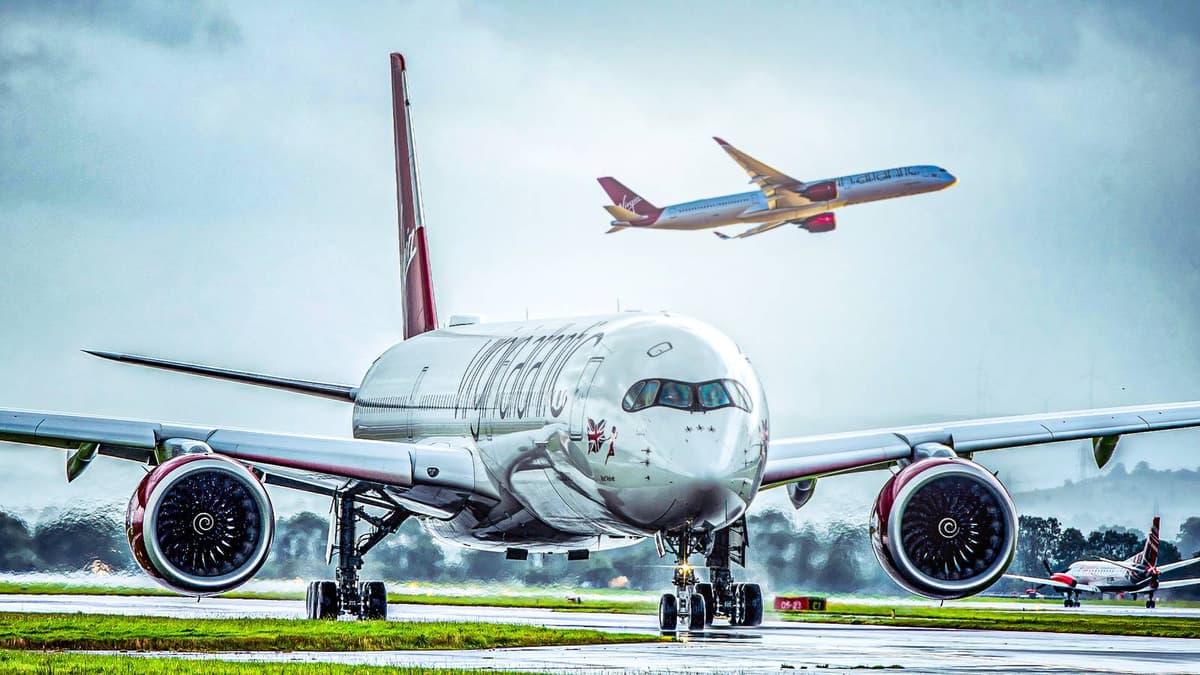
16 Hours To Nowhere: Virgin Atlantic Suspends Middle East Routes After Dramatic Dubai U-Turn
•March 8, 2026
0
Companies Mentioned

Why It Matters
The suspension underscores how geopolitical volatility can instantly disrupt high‑margin long‑haul routes, impacting airline revenue and passenger connectivity across the Gulf region.
Key Takeaways
- •Virgin Atlantic halts LHR‑Dubai flights through March
- •Drone attacks forced flight diversion to Budapest
- •Airspace closures also affect Emirates, Qatar, Etihad
- •Riyadh service paused despite recent launch
- •Safety concerns drive airline route suspensions
Pulse Analysis
The Middle East’s escalating conflict has reignited a longstanding vulnerability in global aviation: reliance on contested airspace. Drone strikes, missile threats, and rapid airspace closures force carriers to reroute or cancel flights, inflating fuel costs and eroding schedule reliability. Regulators and airlines now prioritize real‑time threat intelligence, integrating satellite monitoring and diplomatic channels to assess risk. This heightened security posture not only protects passengers but also safeguards brand reputation, a critical factor as travelers become increasingly risk‑aware.
Virgin Atlantic’s abrupt suspension of its London‑Dubai corridor illustrates the commercial fallout of such instability. The airline’s flagship Airbus A350‑1041, configured with 16 business, 56 premium economy, and 325 economy seats, represents a significant revenue stream that will now sit idle for weeks. By also pausing the Riyadh service—launched only a year ago—Virgin signals a cautious approach to market expansion in volatile regions. Competitors like Emirates and Qatar Airways face similar dilemmas, balancing market share against operational safety, while the loss of capacity may push premium travelers toward alternative carriers or overland routes.
Looking ahead, the industry is likely to diversify routing strategies and invest in flexible fleet deployment to mitigate geopolitical shocks. Airlines may increase reliance on hub‑and‑spoke models that can absorb regional disruptions without sacrificing network integrity. Moreover, insurers and governments are expected to refine risk‑sharing mechanisms, potentially lowering the financial burden of sudden suspensions. For investors and business travelers, understanding these dynamics is essential, as route volatility can influence ticket pricing, supply chain logistics, and broader economic ties between Europe and the Gulf.
16 Hours To Nowhere: Virgin Atlantic Suspends Middle East Routes After Dramatic Dubai U-Turn
0
Comments
Want to join the conversation?
Loading comments...