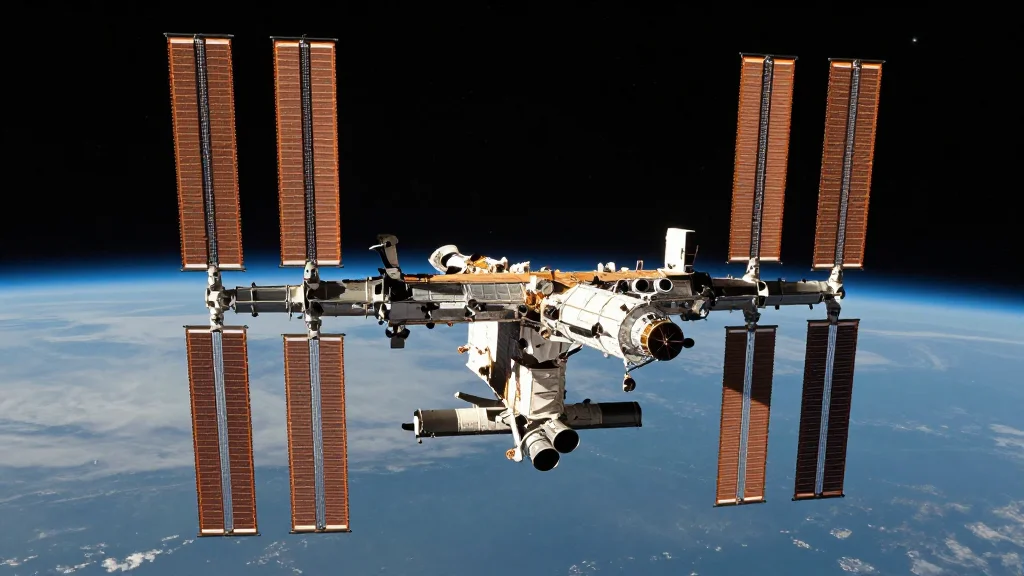
25 Years of the International Space Station: Legacy, Science, and the Road Ahead
Why It Matters
The ISS’s legacy demonstrates how sustained orbital research can translate into tangible Earth benefits and de‑risk commercial space activities, shaping the next era of lunar and Martian exploration.
Key Takeaways
- •ISS hosted over 290 crew members conducting continuous microgravity experiments.
- •Microgravity tissue‑chip studies accelerated cancer‑therapy candidate data return.
- •Materials‑science research on ISS improved semiconductor and alloy manufacturing on Earth.
- •Commercial firms now use low‑Earth orbit as a strategic R&D platform.
- •NASA plans seamless transition to private stations, avoiding U.S. presence gap.
Pulse Analysis
The International Space Station’s quarter‑century of service stands as a benchmark for large‑scale, multinational engineering projects. By coordinating the budgets, standards, and objectives of fifteen partner nations, the ISS proved that complex hardware can be built, launched, and operated in orbit for decades. This collaborative model is now informing the architecture of upcoming lunar gateways and deep‑space habitats, where shared risk and pooled expertise will be essential to keep costs manageable and timelines realistic.
Beyond its structural achievements, the ISS has become a unique laboratory where microgravity amplifies physical and biological processes. Experiments with tissue‑chips and organoids have cut the development cycle for cancer therapies, while materials‑science studies have yielded insights that enhance semiconductor yields and alloy strength on Earth. The transition from pure fundamental science to applied, market‑driven projects reflects a broader industry trend: low‑Earth orbit is increasingly viewed as a commercial R&D hub, attracting pharmaceutical, metal‑processing, and consumer‑goods firms seeking the advantages of near‑zero‑gravity environments.
Looking ahead, NASA’s strategy to hand over low‑Earth‑orbit operations to private stations aims to preserve continuous U.S. presence while fostering a competitive commercial market. This approach reduces reliance on government‑only logistics and encourages innovation in life‑support, waste‑recycling, and long‑duration health monitoring—technologies that will be critical for Artemis lunar missions and eventual crewed journeys to Mars. The ISS’s final five years therefore serve as a proving ground, extracting maximum scientific value and seeding the next generation of space‑based enterprises.
25 Years of the International Space Station: Legacy, Science, and the Road Ahead
Comments
Want to join the conversation?
Loading comments...