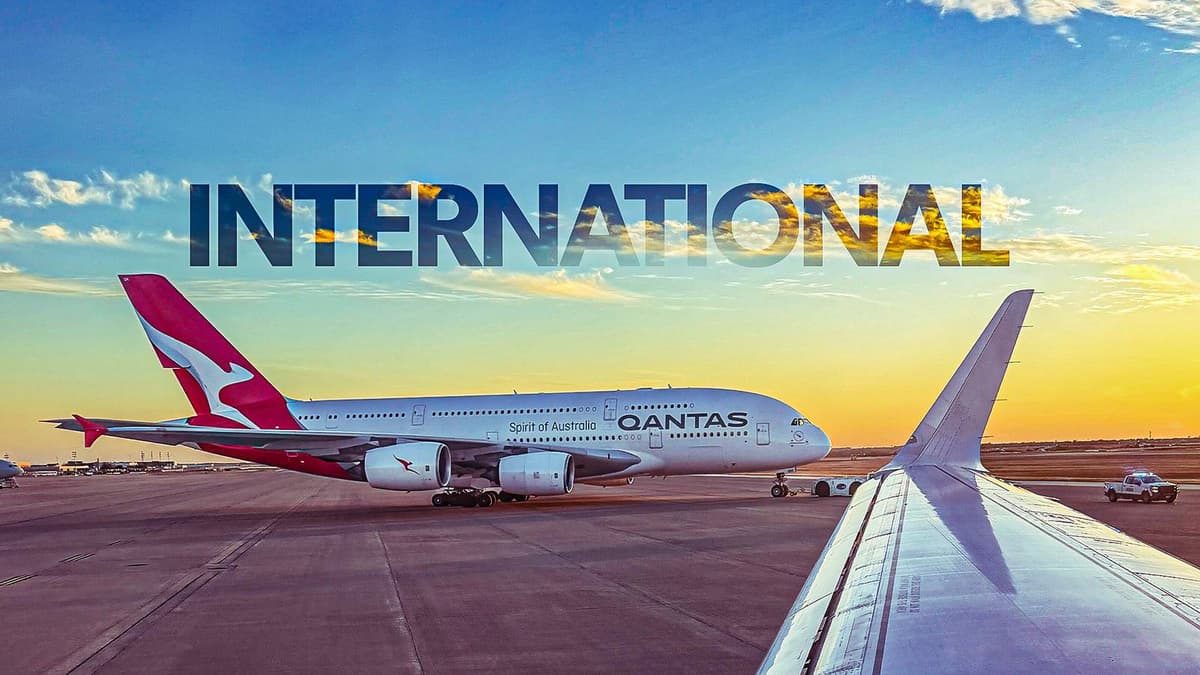
7 Longest Nonstop International Flights From The US In 2026
Companies Mentioned
Why It Matters
The expansion of nonstop ultra‑long‑haul routes strengthens US connectivity to high‑growth Asia‑Pacific markets and boosts airline revenue from premium cabins. It also signals confidence in next‑generation aircraft efficiency and demand for point‑to‑point travel.
Key Takeaways
- •Singapore Airlines A350‑900ULR flies 8,250 nm NY–Singapore, 18.7‑hour block.
- •Qantas uses A380 on DFW‑Sydney, 7,450 nm, 17‑hour eastbound.
- •United’s Houston‑Sydney 787‑9 links central US to Australia nonstop.
- •Air New Zealand’s Auckland‑JFK 787‑9 ranks third longest at 7,650 nm.
- •Multiple carriers employ A350, 787, A380 for US ultra‑long‑haul routes.
Pulse Analysis
The surge in ultra‑long‑haul nonstop flights from the United States reflects a broader industry shift toward point‑to‑point connectivity, enabled by the efficiency gains of next‑generation aircraft. Airbus’s A350‑900ULR and Boeing’s 787‑9 Dreamliner deliver the range and fuel‑burn improvements needed to sustain 15‑plus‑hour sectors without compromising economics. As airlines replace older four‑engine types with twin‑engine models, they can offer more seats, especially in premium cabins, while meeting stricter emissions standards, making these routes viable for both carriers and environmentally conscious travelers.
Airlines are leveraging distinct hub strategies to capture market share across the Pacific. Qantas positions Dallas/Fort Worth as a deep‑U.S. gateway, pairing the A380’s capacity with strong demand for premium services, while United’s Houston‑Sydney link taps central U.S. traffic that previously required West‑Coast connections. Singapore Airlines’ dual New York‑Singapore flights showcase how a single aircraft type can dominate a niche market, and Air New Zealand’s Auckland‑JFK service adds competitive pressure by offering a direct West‑East link that rivals legacy carriers. This diversification of aircraft and hub usage intensifies competition for high‑value business travelers.
Looking ahead, the success of these routes could catalyze further expansion into underserved city pairs, especially as airlines experiment with even longer sectors using ultra‑long‑range variants. The operational data from current services will inform decisions on cabin configuration, pricing, and ancillary revenue models, while regulatory bodies monitor noise and emissions impacts. For passengers, the promise of a single‑stop journey between the U.S. and Asia‑Pacific destinations enhances convenience and reduces travel fatigue, reinforcing the premium market’s growth trajectory. As demand stabilizes, we may see more carriers adopt similar strategies, reshaping the trans‑Pacific aviation landscape.
7 Longest Nonstop International Flights From The US In 2026
Comments
Want to join the conversation?
Loading comments...