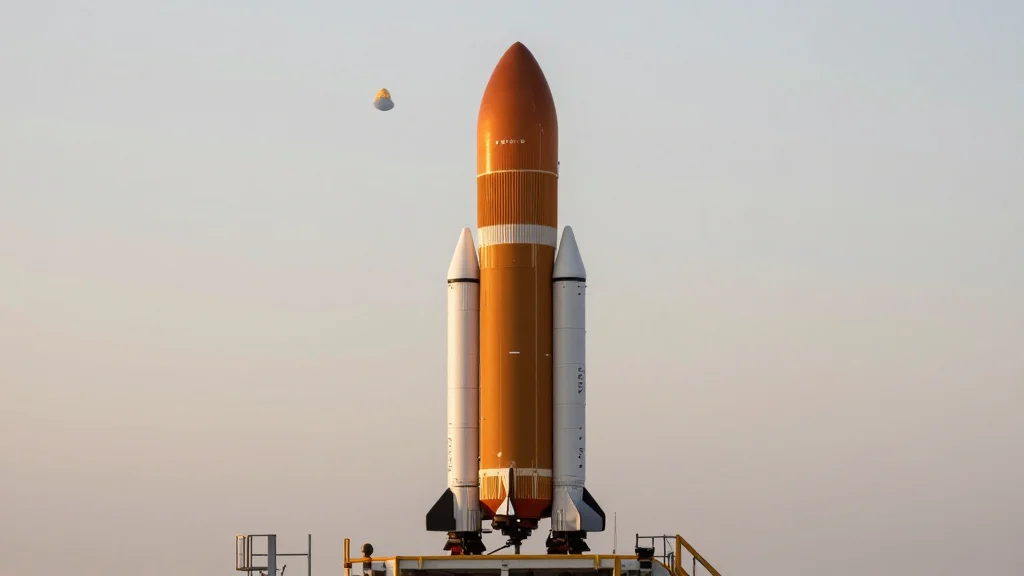
A Review of India’s Government Space Program Suggests It Is Behind Schedule
Why It Matters
The delay jeopardizes India’s timeline for a crewed mission and undermines confidence among commercial and strategic partners, potentially weakening its position in the global launch market.
Key Takeaways
- •ISRO’s PSLV failures halted Gaganyaan’s unmanned orbital tests.
- •Only one of 18 planned 2026 launches completed by April.
- •Investigation delays push manned mission from early 2027 to later.
- •ISRO’s recent communications lack detailed failure analysis.
- •Reduced transparency raises concerns for international partners and investors.
Pulse Analysis
India’s ambitious human‑spaceflight program, Gaganyaan, has hit a critical snag. The Indian Space Research Organisation (ISRO) planned two unmanned orbital test flights of its crew capsule before a crewed launch slated for early 2027. Both tests were tied to the reliability of the Polar Satellite Launch Vehicle (PSLV), but a pair of PSLV failures earlier this year forced a full investigation that has yet to produce a public report. As a result, the first orbital test, originally scheduled for March, remains on hold, casting doubt on the 2027 timeline and threatening the broader 2026 launch manifest of 18 missions.
The stalled investigation is more than a scheduling inconvenience; it signals deeper systemic issues at ISRO. The agency has completed only one launch in the first four months of 2026, far short of its aggressive target. Moreover, ISRO’s recent communications have been unusually opaque, offering no technical details on the distinct causes of the two failures. This lack of transparency erodes confidence among domestic stakeholders and international customers who rely on ISRO’s proven track record for satellite deployment and launch services. Funding agencies may reassess budgets if risk mitigation remains unclear.
Looking ahead, ISRO must accelerate root‑cause analysis and restore open reporting to regain momentum. A swift resolution could enable the postponed Gaganyaan tests to resume by late 2026, preserving the crewed mission’s original window. In the competitive global launch market, delays risk ceding commercial opportunities to rivals such as SpaceX and Arianespace, especially as private players seek reliable, cost‑effective access to orbit. Strengthening internal review processes and engaging external experts may not only fix the PSLV issues but also signal to investors that India’s space program remains on a credible trajectory.
A review of India’s government space program suggests it is behind schedule
Comments
Want to join the conversation?
Loading comments...