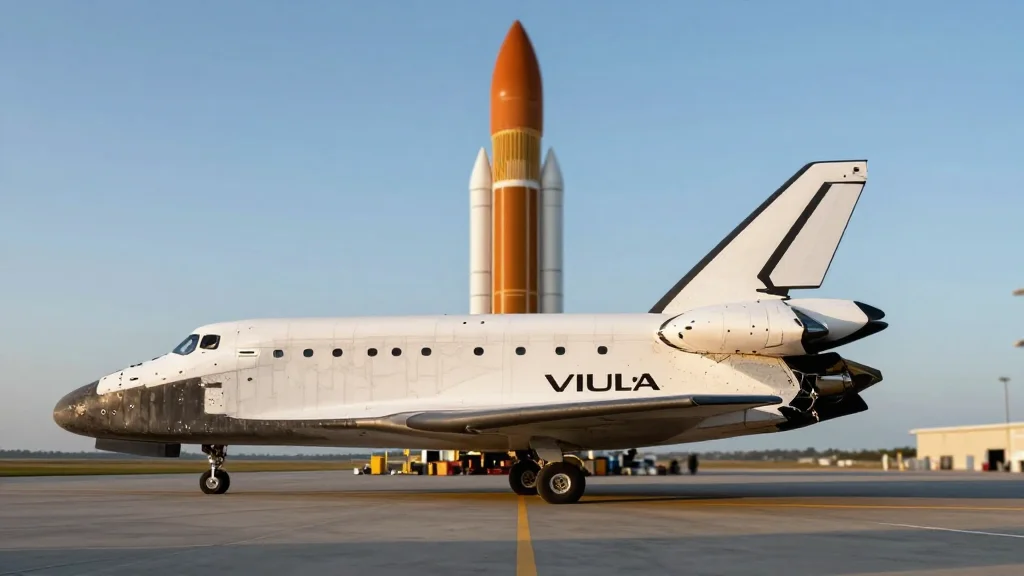
After NASA Contract Change, Sierra Space Seeks Path Forward for Dream Chaser

Why It Matters
The contract change strips Dream Chaser of guaranteed revenue, forcing Sierra to secure new customers, while its runway‑landing capability could fill niche defense and commercial‑station needs.
Key Takeaways
- •NASA removed mandatory ISS cargo flights for Dream Chaser.
- •First flight planned for late 2026 on ULA Vulcan Centaur.
- •Sierra pivots Dream Chaser toward defense and commercial station services.
- •Potential customers include Pentagon, Orbital Reef, and satellite‑servicing missions.
- •Competition from SpaceX Starship threatens Dream Chaser’s market relevance.
Pulse Analysis
The Dream Chaser program, born from Sierra Nevada’s 2014 vision, was originally tied to NASA’s Commercial Resupply Services contract, promising at least seven ISS deliveries. With the agency’s decision to retire the station by decade’s end, NASA clarified it is no longer obligated to award those missions, leaving Sierra without a guaranteed revenue stream. This contractual pivot underscores a broader shift in low‑Earth‑orbit logistics, where legacy cargo pathways are giving way to emerging commercial habitats and defense‑focused operations.
In response, Sierra Space is rebranding Dream Chaser as a versatile platform for national‑security and commercial‑station applications. Its ability to carry both pressurized and unpressurized payloads, execute precise orbital maneuvers, and return to a runway makes it attractive for satellite servicing, on‑orbit manufacturing, and rapid payload turnover for the Pentagon. Partnerships such as supplying inflatable habitats for Blue Origin’s Orbital Reef further illustrate a strategic alignment with the nascent commercial‑station ecosystem, where a winged vehicle can complement capsule‑based logistics.
The upcoming inaugural flight, slated for late 2026, will launch on a United Launch Alliance Vulcan Centaur from Kennedy Space Center and conclude with a runway landing at Vandenberg. Successful completion will serve as a technology demonstrator and a proof point for future contracts, whether with the U.S. Space Force or private station operators. Investors will watch the test closely; a smooth flight could unlock new revenue streams, while delays or performance gaps may accelerate a pivot toward alternative ventures or even a strategic exit. The outcome will shape Sierra’s position in a rapidly evolving space market.
After NASA contract change, Sierra Space seeks path forward for Dream Chaser
Comments
Want to join the conversation?
Loading comments...